

An industrial cardboard baler compresses high volumes of loose cardboard into tied bales, but selecting the wrong machine can create bottlenecks, excess labor, and rejected loads. I often see buyers compare only pressing force or price. I recommend matching the baler to the cardboard stream, required throughput, bale specifications, and downstream workflow instead.
An industrial cardboard baler is a production-scale recycling machine that compresses loose cardboard, cartons, or OCC into dense, tied bales for easier storage, handling, transport, and recycling1. I do not define it by one force or motor rating. I define it by its ability to meet sustained operating demand under stated material and workflow conditions.
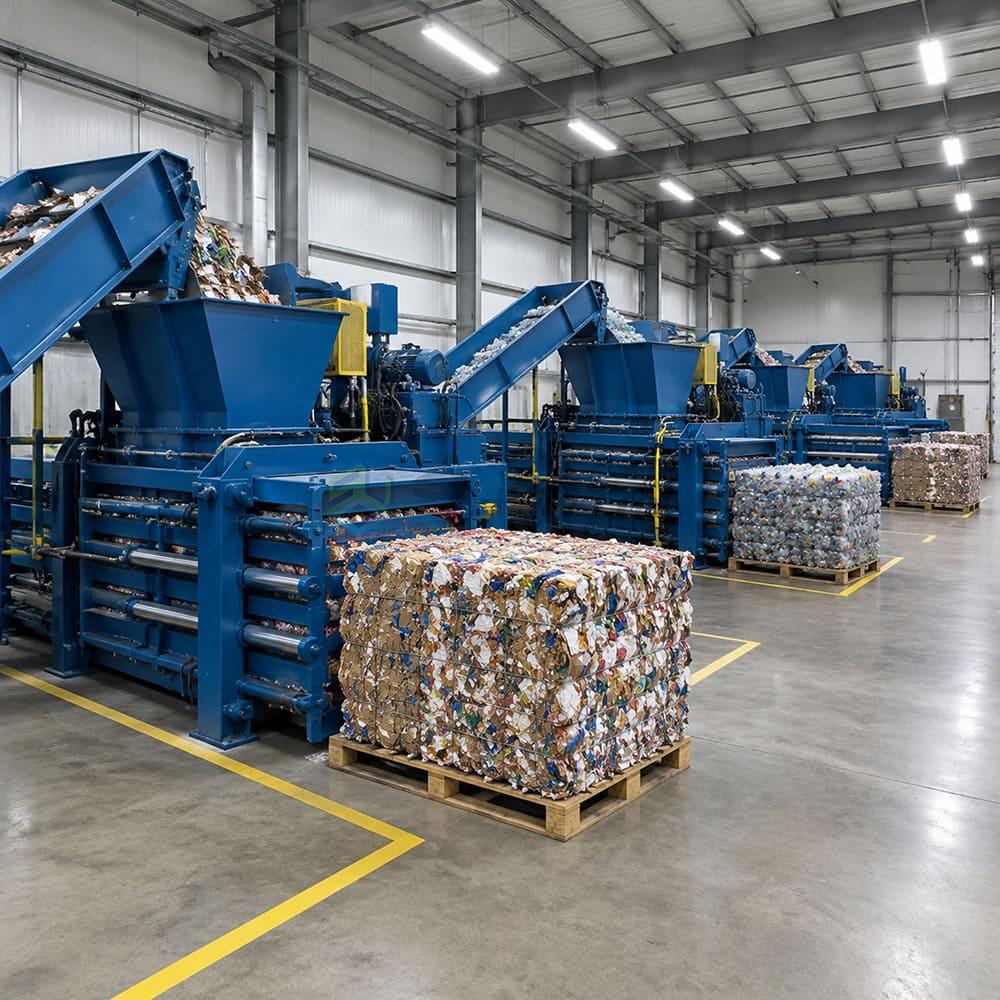
That definition sounds straightforward, but it leaves an important procurement question unanswered. Buyers still need to determine which baler configuration fits their operation. I start that process by examining the material, volume, labor, feeding method, bale requirements, and downstream acceptance criteria.
How Does an Industrial Cardboard Baler Work?
Loose cardboard occupies valuable floor and container space. When workers handle it manually, the operation can also become slow and inconsistent. I use the baling cycle to explain how an industrial cardboard baler converts that difficult material stream into repeatable units that a facility can store, move, and sell more efficiently.
An industrial cardboard baler receives loose material through a loading chamber or feed opening. A hydraulic system moves a platen or ram against the cardboard and compresses it inside the chamber.2 After the machine reaches the selected bale condition, workers or an automatic system tie the bale before the machine ejects it for handling.
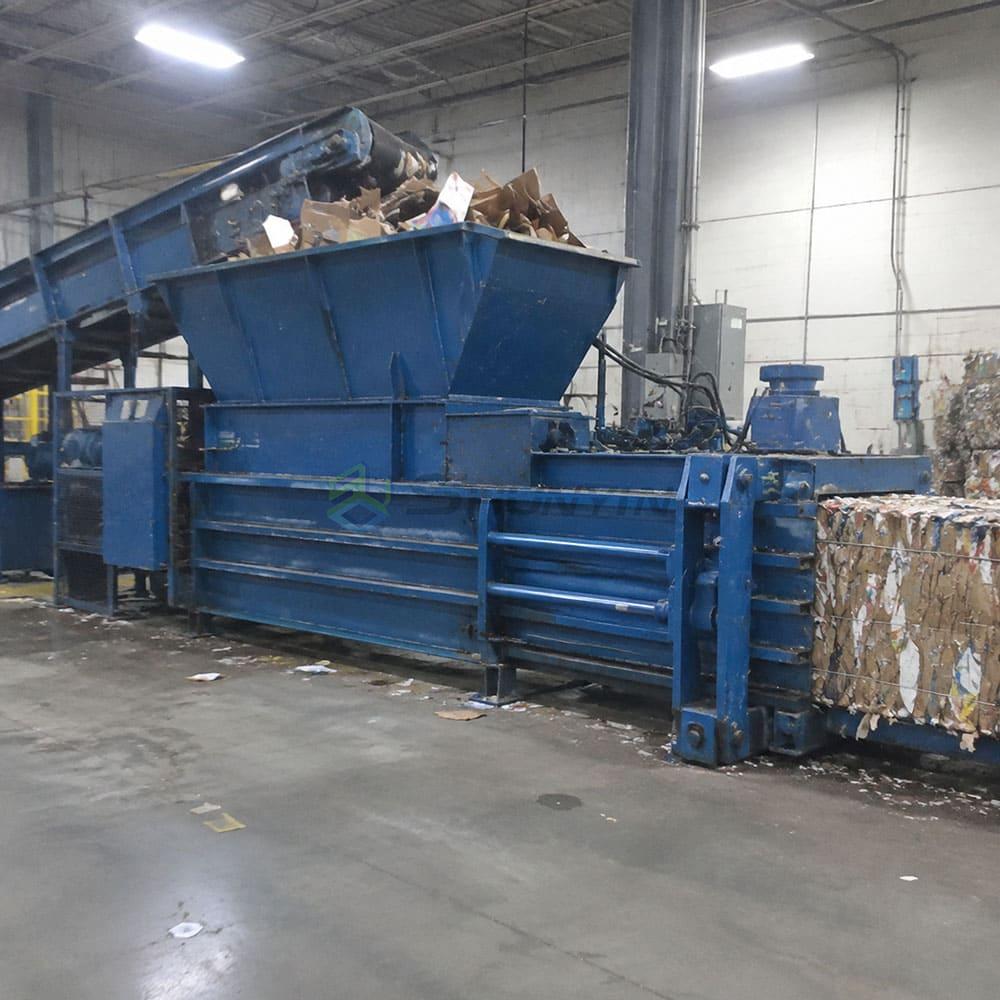
I Break the Process Into Five Stages
Although designs differ, I usually explain the process in five basic stages:
- Material enters the machine. Workers, conveyors, forklifts, or other feeding systems deliver flattened cartons, boxboard, or OCC.
- The chamber fills. The controls initiate a cycle manually or automatically, depending on the baler configuration.
- The ram compresses the material. The hydraulic system applies pressure while the chamber controls the shape of the forming bale.
- The machine or operator ties the bale. Wire, plastic strapping, or another approved tying material holds the compressed cardboard together.
- The finished bale leaves the chamber. The facility then weighs, labels, stores, stacks, or loads it according to its handling procedure.
I advise buyers to examine each stage rather than focusing only on the compression cycle. A baler can have a short nominal cycle but still deliver poor practical throughput3 if material arrives irregularly, workers must flatten boxes manually, or the discharge area remains blocked.
I Treat the Baler as Part of a Material-Handling System
An industrial cardboard baler rarely works in isolation. Its actual performance depends on the equipment and labor around it. I consider the following interfaces during an initial project discussion:
- The distance between cardboard generation points and the baler
- The type and condition of incoming cardboard
- The conveyor width and speed, if a conveyor supplies the machine
- The hopper dimensions and loading height
- The number of available operators
- The time needed for tying and bale changeover
- The bale discharge direction
- The capacity of forklifts, pallet trucks, or bale clamps
- The available storage and truck-loading space
I once discussed a project where the buyer initially asked for a faster press. After reviewing the workflow, the larger issue appeared upstream: workers delivered mixed batches to the loading point at irregular intervals. A higher nameplate capacity alone would not have removed that bottleneck.
I therefore ask suppliers to describe the complete operating cycle, including loading, compression, tying, ejection, and restart. I also ask them to state the cardboard condition used for any quoted output. Those details make performance comparisons more meaningful.
What Materials Can an Industrial Cardboard Baler Process?
Buyers sometimes describe every paper-based waste stream as “cardboard.” That description can hide major differences in density, moisture, dimensions, and contamination. I recommend identifying the material precisely because a dry, flattened OCC stream behaves differently from bulky cartons, coated packaging, or mixed paper containing non-cardboard items.
I primarily use an industrial cardboard baler for corrugated cartons, old corrugated containers, cardboard offcuts, boxboard, and similar packaging waste. Some models can also process waste paper, plastic film, PET bottles, or textiles, but I verify each material with the manufacturer because chamber, tying, feeding, and hydraulic requirements can differ.
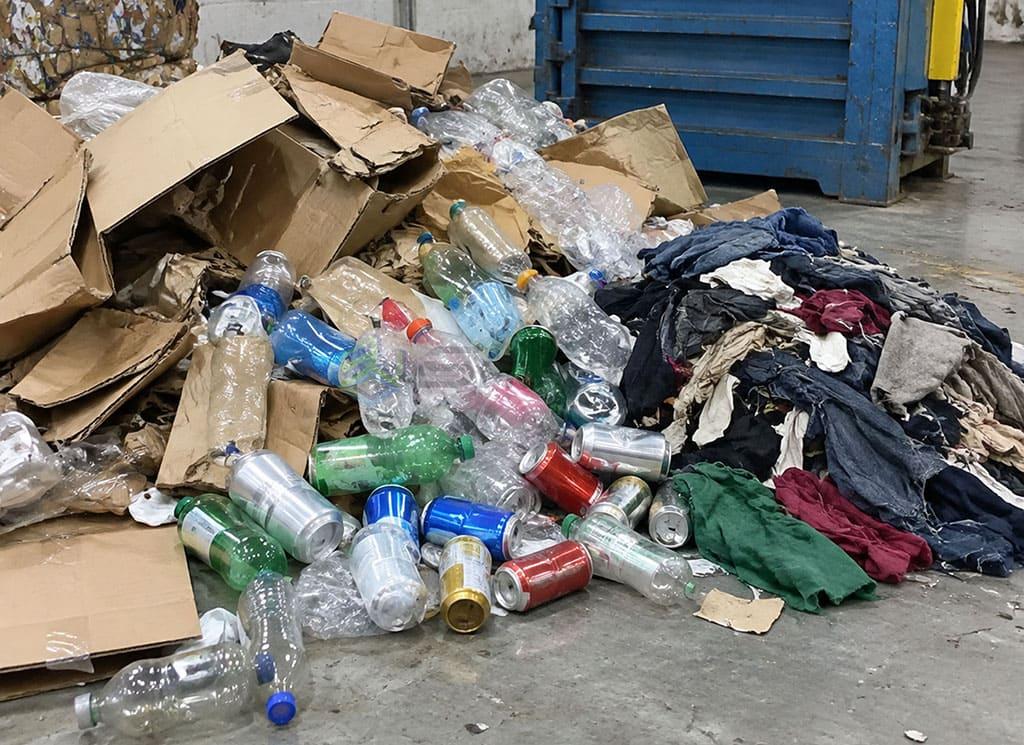
I Examine More Than the Material Name
I use the following questions to describe the feedstock:
- Is the cardboard flattened, shredded, folded, or intact?
- Is the stream dry, damp, or exposed to rain?
- Does it contain plastic film, foam, wood, metal, or general waste?
- What are the largest carton dimensions?
- Does the material arrive continuously or in batches?
- Does the cardboard include waxed, laminated, or heavily printed packaging?
- What is the estimated loose bulk density?
- Does the facility sort the stream before baling?
These variables influence chamber filling, bale consistency, equipment wear, and achievable output.4 Moist cardboard may compress differently from dry OCC, while contamination can affect both machine operation and the recycler’s acceptance of the finished bale5.
I do not assume that one successful test with clean, dry cardboard proves identical performance with every OCC stream.
I Recommend a Representative Material Test
When practical, I ask a prospective supplier to test material that represents the buyer’s actual waste. A useful test should record more than the final bale photograph. I look for documented conditions such as:
| Test item | What I ask the supplier to record | Why I use it |
|---|---|---|
| Material description | Cardboard type, moisture condition, contamination, and preparation | I need to judge whether the test resembles the actual stream |
| Feed method | Manual, conveyor, loader, or other method | I use it to assess loading efficiency |
| Test duration | Number of cycles, bales, or operating hours | I avoid relying on one unusually favorable cycle |
| Bale dimensions | Length, width, and height | I compare the bale with handling and buyer requirements |
| Bale weight | Individual weights and variation | I evaluate consistency rather than one maximum value |
| Tying method | Wire or strap type and number of ties | I check compatibility with bale integrity requirements |
| Throughput basis | Input rate, finished bales, and included delays | I can compare like-for-like output claims |
I treat manufacturer tests as application guidance, not as independent laboratory evidence. If a project involves unusual materials, high production risk, or regulated safety requirements, I recommend that the buyer involve a qualified engineer or other suitable professional.
Which Industrial Cardboard Baler Type Should I Choose?
A buyer can lose time by treating vertical, horizontal, and automatic balers as interchangeable versions of the same product. I see each configuration as a distinct production solution. I select the category only after I understand material flow, operating hours, labor availability, site layout, and finished-bale requirements.
I generally consider a vertical baler for lower or intermittent volumes with manual loading6. I consider a horizontal semi-automatic baler when throughput and bale size requirements increase but manual tying remains acceptable. I consider a fully automatic horizontal industrial cardboard baler when continuous feeding, reduced manual intervention, and higher sustained output justify the added complexity.
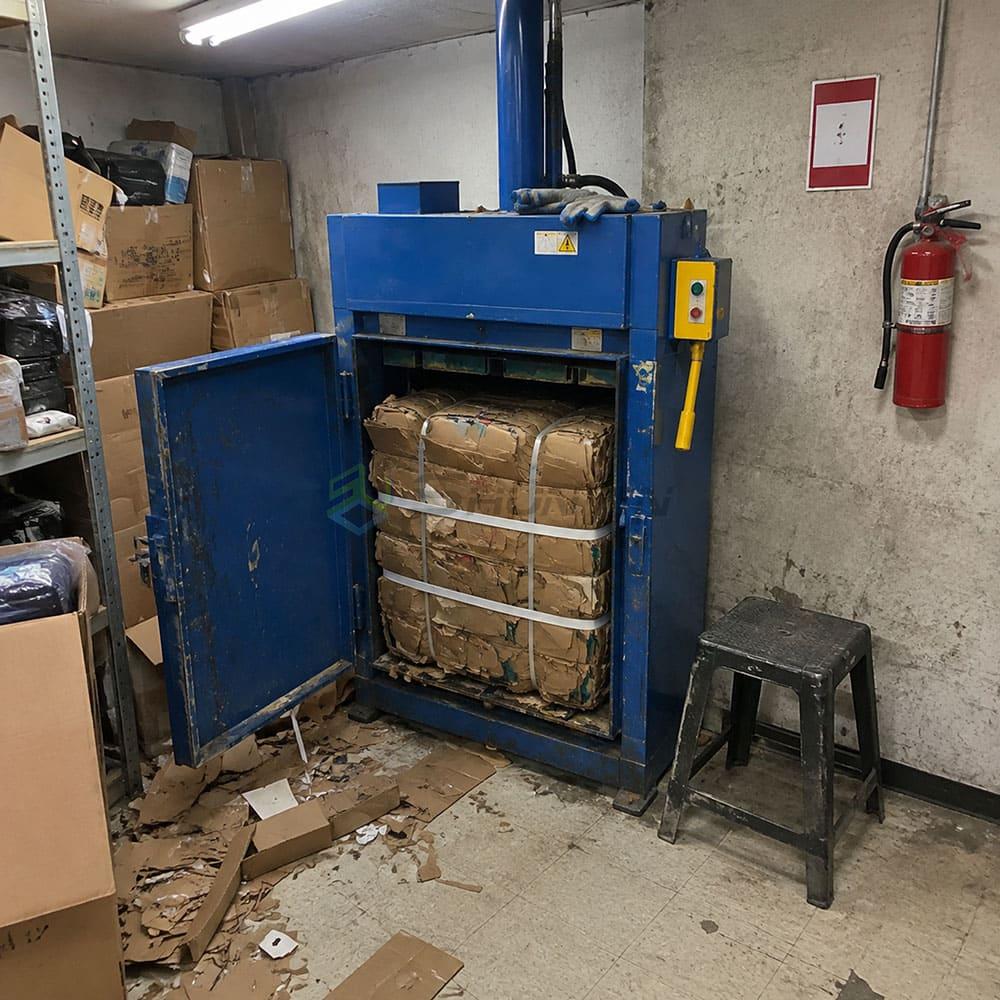
I Compare Configurations by Workflow
| Baler configuration | Typical operational fit | Labor considerations | Main evaluation point |
|---|---|---|---|
| Vertical baler | Intermittent cardboard generation and limited floor space | I usually expect manual loading, tying, and bale removal tasks | I verify whether cycle time and chamber size can prevent accumulation |
| Semi-automatic horizontal baler | Moderate or growing material flow | I expect mechanized feeding with some manual tying or bale handling | I examine whether manual tasks restrict practical throughput |
| Fully automatic horizontal baler | Sustained or continuous high-volume processing | I expect automated tying and integration with feeding equipment | I review system uptime, controls, maintenance, and line balance |
| Closed-end horizontal baler | Applications requiring chamber-controlled compression and defined bale discharge | I assess loading and tying arrangements by model | I check whether the batch-style process suits the site |
| Channel baler | Continuous material flow and automated bale formation | I examine operator oversight, wire supply, and downstream handling | I evaluate sustained production under representative conditions |
I use these categories as an initial framework rather than a universal rule. Machine designs vary among manufacturers. The supplier should confirm the exact feeding, tying, pressure-control, and discharge arrangement for the proposed model.
I Avoid Choosing by Pressing Force Alone
Compression force matters, but I do not use it as a complete definition of industrial performance.7 Two balers with similar stated force can differ in:
- Chamber and feed-opening dimensions
- Ram face area and pressure distribution
- Hydraulic cycle design
- Motor and pump configuration
- Tying system
- Bale length control
- Cooling provisions
- Duty cycle
- Control logic
- Material feeding efficiency
I also avoid treating motor power as a direct substitute for output. A larger motor does not automatically produce a better production result. System design, material behavior, operator practice, and downtime all influence actual performance.
During supplier selection, I request a model-specific technical sheet and general arrangement drawing. I also ask the supplier to identify optional features rather than including them ambiguously in a standard description. This approach helps me compare equivalent configurations and avoid price differences caused by missing conveyors, oil coolers, wire systems, access platforms, or safety devices.
How Should I Calculate Industrial Cardboard Baler Throughput?
Throughput creates one of the largest purchasing risks. A machine that cannot keep pace with cardboard generation causes floor accumulation, overtime, and inefficient handling.8 However, an oversized machine may add capital cost, power requirements, and maintenance complexity. I therefore calculate demand before I compare rated capacities.
I estimate required industrial cardboard baler throughput from the measured cardboard volume or mass generated during representative operating periods. I then account for peak flow, feeding time, tying, ejection, changeovers, and reasonable operating interruptions. I compare this requirement with supplier output data obtained under clearly stated material and test conditions.
I Start With Measured Production Data
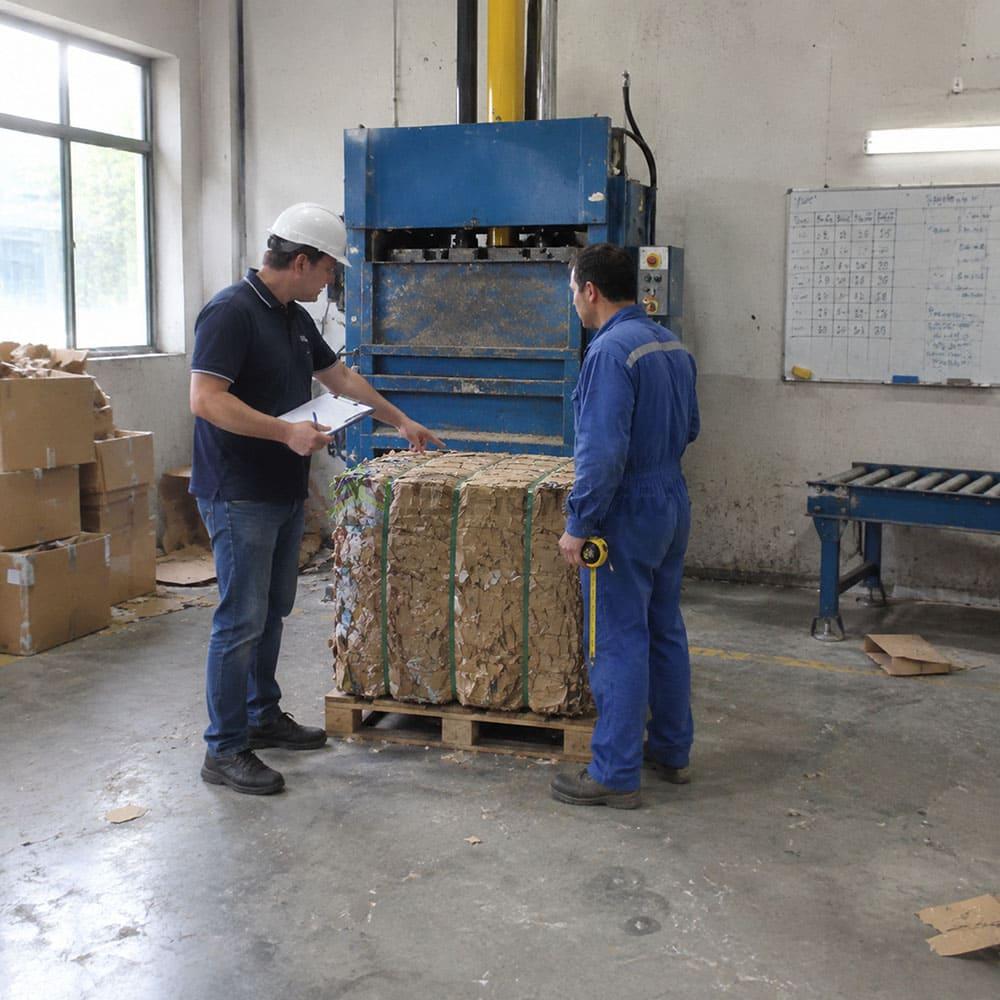
I prefer measured weights over visual estimates. Cardboard volume can be misleading because intact boxes contain substantial empty space.9 If weighing every batch is not practical, I suggest that a facility record representative container weights over several normal shifts.
For example, I might review a hypothetical plant that generates:
- 6,000 kg of cardboard per day
- Two eight-hour production shifts
- Most cardboard during 12 active generation hours
- A peak hourly rate 30% above the average
I would calculate the basic average as:
6,000 kg ÷ 12 hours = 500 kg per active hour
I would then apply the observed peak factor:
500 kg × 1.30 = 650 kg per peak hour
I would not immediately conclude that any machine advertised above 650 kg per hour will work. I would first determine whether the supplier’s rating includes loading delays, tying, bale discharge, wire replacement, and routine stops. I would also compare the tested material with the plant’s actual cardboard.
I Separate Theoretical and Practical Capacity
I ask suppliers to distinguish among several types of output claims:
| Capacity term | My interpretation | My follow-up question |
|---|---|---|
| Theoretical capacity | A calculated rate based on ideal cycle assumptions | Which delays and material conditions did the calculation exclude? |
| Tested capacity | Output observed during a stated trial | What material, feed method, duration, and staffing did the test use? |
| Recommended operating capacity | A supplier’s proposed range for normal use | What duty cycle and maintenance assumptions support the range? |
| Buyer-required capacity | The actual site demand, including peaks | Which measured production records support this figure? |
Bale weight also affects the calculation. If a facility needs 6,000 kg per day and expects 500 kg bales, it needs approximately 12 bales per day. However, I still verify whether the selected machine can produce that bale weight consistently with the actual material.
I never treat a maximum bale-weight statement as a guaranteed result. Bale weight can change with moisture, cardboard grade, feeding consistency, bale length, and compression settings.10 I ask for a realistic range tied to stated conditions.
What Specifications Should I Compare When Buying an Industrial Cardboard Baler?
Long specification sheets can create false confidence. Buyers may compare dozens of values without identifying which ones affect the project. I prefer a requirements-based comparison. I first define the operational outcome, and then I ask each supplier to document how its proposed industrial cardboard baler meets that outcome.
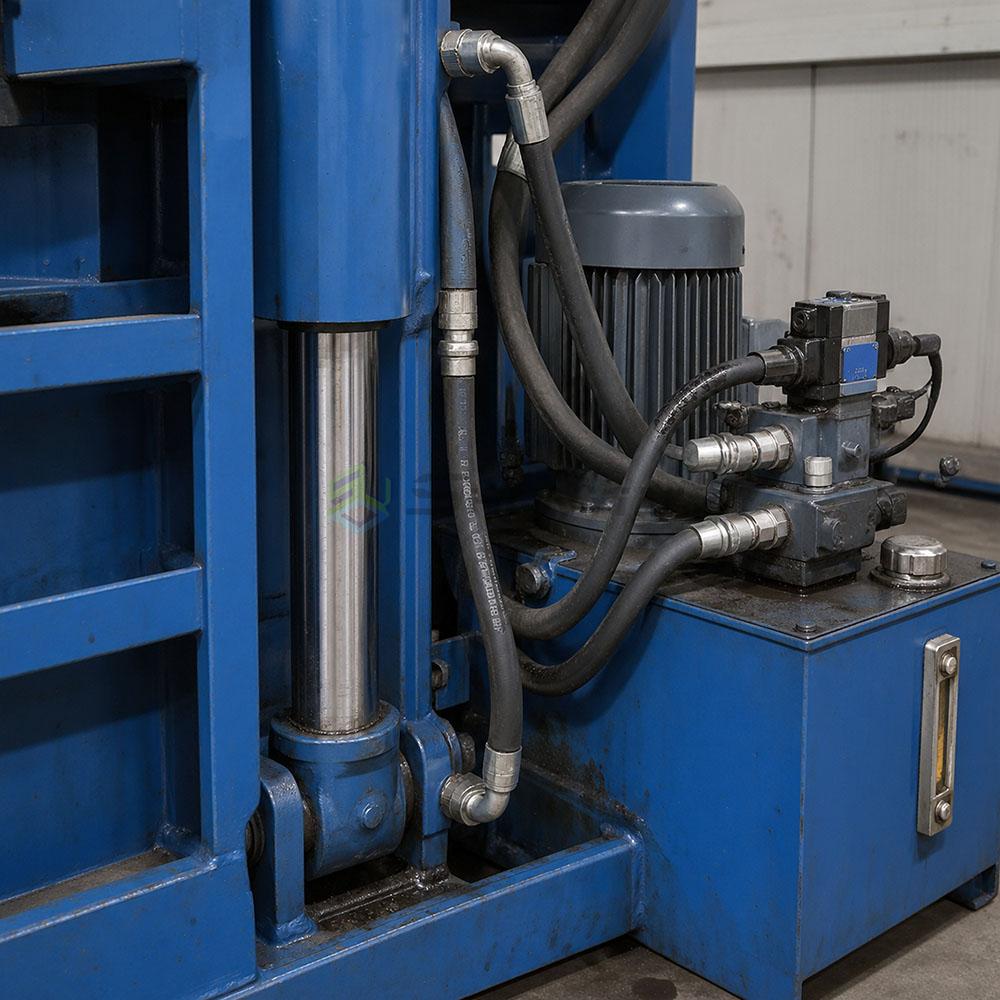
I compare feed opening, chamber dimensions, bale size, expected bale-weight range, tested throughput, tying method, installed power, controls, duty conditions, safety provisions, and maintenance access. I also evaluate the supplier’s manufacturing quality controls, documentation, spare-parts plan, warranty terms, commissioning support, and evidence behind performance claims.
I Use a Procurement Checklist
I divide my evaluation into four groups.
1. Process Requirements
- Cardboard grades and contamination levels
- Average and peak hourly input
- Daily operating hours
- Loading method
- Target bale size and weight
- Downstream recycler or mill requirements
- Available labor
- Required automation level
2. Equipment Specifications
- Feed-opening dimensions
- Chamber dimensions
- Main compression force
- Bale dimensions and adjustable length range
- Tying material and number of ties
- Cycle description
- Hydraulic oil capacity and cooling arrangement
- Installed motor power and electrical standard
- Control-system components
- Noise information, when available
- Machine footprint, operating clearance, and foundation requirements
3. Manufacturing and Quality Documentation
- Material certificates for specified critical components, when applicable
- Welding procedures and inspection records
- Hydraulic and electrical schematics
- Assembly and pre-shipment inspection checklists
- Factory acceptance test scope
- Component brand and model list
- Machine serial-number identification
- Operation and maintenance manuals
- Spare-parts list
4. Commercial and Support Terms
- Scope of supply
- Included and excluded auxiliary equipment
- Production and delivery schedule
- Packaging and shipping method
- Installation responsibilities
- Commissioning support
- Operator and maintenance training
- Warranty coverage and exclusions
- Remote support arrangements
- Recommended spare-parts package
I Verify Safety and Certification Claims
I treat certificates and declarations as documents that buyers should verify, not as automatic proof that a machine suits every site. Requirements differ by destination, application, and installation. I ask the supplier to provide applicable documents, identify the exact machine model covered, and explain which standards or directives the documentation references.
I also check whether the proposed guarding, emergency stops, interlocks, lockout provisions, warning labels, and access controls match the final configuration. A certificate for a base machine may not cover every conveyor, platform, or site modification.11
For application-specific safety, electrical integration, structural loading, or regulatory compliance, I recommend review by qualified local professionals. I see supplier documentation as one part of due diligence, not a replacement for that review.
I Compare Suppliers With the Same Data Sheet
I send each shortlisted supplier the same material and project information. I then request a written response against the same acceptance criteria. This method reduces vague comparisons.
I also look for suppliers that state assumptions openly. A restrained answer such as “the expected range depends on dry OCC and continuous conveyor feeding” gives me more useful information than an unsupported maximum output claim.
Frequently Asked Questions
What is the difference between a cardboard baler and a cardboard compactor?
I use a cardboard baler to produce tied bales that can be handled, stored, transported, or sold to a recycler. I use “compactor” as a broader term for equipment that reduces material volume, sometimes inside a container.12 I verify the discharge format because not every compactor produces a transportable bale.
How much space does an industrial cardboard baler require?
I calculate space from more than the machine footprint. I include loading access, bale discharge clearance, operator areas, maintenance access, electrical cabinets, conveyors, wire storage, and forklift movement. I request a general arrangement drawing from the supplier and ask a qualified professional to verify the final site layout.
How heavy is a cardboard bale?
I cannot assign one standard weight to every cardboard bale. Weight depends on bale dimensions, cardboard type, moisture, preparation, compression settings, and feeding consistency. I ask the downstream recycler for its preferred bale specifications and request a realistic model-specific weight range under representative test conditions.
Can one industrial baler process cardboard and plastic?
Some balers can process multiple recyclable materials, but I do not assume that every model can do so effectively. I check chamber design, material retention, tying requirements, bale integrity, contamination controls, and supplier test data for each material. I also confirm whether changeovers affect production or maintenance.
How do I know whether I need a vertical or horizontal baler?
I usually consider a vertical baler for intermittent, lower-volume collection and a horizontal baler for larger or more continuous flows. However, I make the final choice from measured throughput, loading method, labor, floor layout, required bale specifications, and downstream handling rather than from volume labels alone.
Conclusion
An industrial cardboard baler is a production solution for converting loose cardboard into tied, manageable bales, but no single machine fits every waste stream. I recommend defining the material, average and peak throughput, loading workflow, bale requirements, and recycler acceptance criteria before comparing models. I also verify supplier claims against stated test conditions, drawings, quality documents, and support terms. Contact our team with your cardboard type, daily volume, operating hours, and target bale specifications, and we can help you prepare a preliminary baler selection.
"Material Recovery Facilities for Municipal Solid Waste", https://nepis.epa.gov/Exe/ZyPURL.cgi?Dockey=30004DDZ.TXT. Government waste-management guidance describes baling as the compression and binding of recyclable material into dense units, reducing its storage volume and facilitating handling and transport. Evidence role: definition; source type: government. Supports: Government waste-management guidance should define balers as equipment that compresses recyclable material into bound bales and explain the resulting handling and transport benefits.. ↩
"Night Shift Health and Safety Workbook", https://obis.osha.gov/dte/grant_materials/fy07/sh-16627-07/night_shift_s_h_workbook.pdf. Occupational-safety descriptions of baling machinery identify the hydraulically powered ram or platen as the component that compresses material within the baling chamber. Evidence role: mechanism; source type: government. Supports: An occupational-safety or engineering source should document that baling machines use hydraulically driven rams or platens to compress material in a chamber.. ↩
"A Hierarchical structure of key performance indicators for ...", https://tsapps.nist.gov/publication/get_pdf.cfm?pub_id=919754. Production-systems research shows that realized throughput depends on the capacity and availability of the complete process, so nominal machine cycle time alone does not account for feeding, handling, changeover, or downstream constraints; this principle is general and does not quantify the loss for a particular baler installation. Evidence role: mechanism; source type: research. Supports: Production-systems research should show that line throughput is governed by bottlenecks, availability, and supporting operations rather than by one machine's nominal cycle time alone.. Scope note: General production-systems evidence explains the mechanism but does not establish the throughput of any specific baler or facility. ↩
"(PDF) The Design and Fabrication of a Horizontal Hand Baler", https://www.academia.edu/65946065/The_Design_and_Fabrication_of_a_Horizontal_Hand_Baler. Studies of fibrous-material compaction report that moisture, initial bulk density, particle or package geometry, and material composition influence compression behavior and final bale density; effects on wear and hourly output remain dependent on machine design and operating conditions. Evidence role: mechanism; source type: paper. Supports: Research on fibrous-material compaction should relate moisture, initial bulk density, material composition, and preparation to compression behavior and final bale properties.. Scope note: Compaction studies can support the material-property mechanism, but they may not directly measure wear or throughput in industrial OCC balers. ↩
"How Do I Recycle Common Recyclables", https://www.epa.gov/recycle/how-do-i-recycle-common-recyclables. Recovered-paper specifications define limits for prohibited materials, outthrows, moisture, and other unwanted content in OCC bales, providing a basis for downgrading or rejecting contaminated loads; such specifications support the acceptance claim more directly than the separate claim about machine operation. Evidence role: general_support; source type: institution. Supports: Recovered-paper specifications should establish limits or categories for prohibitive materials, outthrows, moisture, and other unwanted content that affect acceptance.. Scope note: Industry specifications establish bale-quality and acceptance criteria but do not by themselves prove that a particular contaminant will disrupt a particular baler. ↩
"(PDF) The Design and Fabrication of a Horizontal Hand Baler", https://www.academia.edu/65946065/The_Design_and_Fabrication_of_a_Horizontal_Hand_Baler. Public-sector recycling-equipment guidance generally associates vertical balers with smaller or intermittent material streams and manual loading or tying; actual capacity and labor requirements vary by model and installation. Evidence role: general_support; source type: government. Supports: A public-sector recycling-equipment guide should describe vertical balers as typically serving smaller or intermittent waste streams with greater manual involvement.. Scope note: This is a typical-use classification rather than a universal engineering boundary between vertical and horizontal balers. ↩
"Dynamic Calculation of the Forces Acting on the Hydraulic ...", https://www.academia.edu/116796914/Dynamic_Calculation_of_the_Forces_Acting_on_the_Hydraulic_Cylinder. Hydraulic engineering defines actuator force as a function of fluid pressure and effective piston area, whereas machine throughput additionally depends on displacement, cycle timing, geometry, controls, and material handling; these principles explain why force ratings alone cannot establish baler output. Evidence role: mechanism; source type: education. Supports: Engineering references should establish that hydraulic force is determined by pressure and effective piston area, while overall production also depends on stroke, cycle time, chamber geometry, and material flow.. Scope note: The hydraulic relationship supports the reasoning but does not compare the performance of specific baler models. ↩
"Queueing Models", https://people.cs.pitt.edu/~lipschultz/cs1538/08_queueing.pdf. Queueing theory predicts that material awaiting service will accumulate when its sustained arrival rate exceeds effective processing capacity; additional handling or overtime may follow operationally, but those consequences depend on site policy and available storage. Evidence role: mechanism; source type: education. Supports: Queueing or production-systems sources should show that a process is unstable when the long-run arrival rate exceeds its service capacity, causing work-in-process to grow.. Scope note: The accumulation mechanism is general, while overtime and handling costs are facility-specific outcomes. ↩
"Volume-to-Weight Conversion Factors, April 2016", https://www.epa.gov/sites/default/files/2016-04/documents/volume_to_weight_conversion_factors_memorandum_04192016_508fnl.pdf. Waste-characterization guidance assigns substantially different bulk-density factors to loose, flattened, and compacted cardboard, demonstrating that a visual volume estimate cannot reliably substitute for measured mass. Evidence role: mechanism; source type: government. Supports: Waste-characterization guidance should show that loose cardboard has variable bulk density and that volume-to-mass conversion depends on whether cartons are intact, flattened, or compacted.. ↩
"Effect of roller layout on biomass bales quality ... - BioResources", https://bioresources.cnr.ncsu.edu/resources/effect-of-roller-layout-on-biomass-bales-quality-and-baling-energy-consumption-during-rotary-compression/. Compaction studies show that bale density is influenced by moisture content, material composition, applied pressure, and dimensional settings; because bale mass is the product of density and volume, these variables can change finished-bale weight. Evidence role: mechanism; source type: paper. Supports: Compaction research should demonstrate that bale density and mass respond to moisture, material composition, applied pressure, and bale dimensions.. Scope note: Research on fibrous or recovered-paper compaction supports the physical relationship, but model-specific weight ranges still require representative baler tests. ↩
"EN EN - European Union", https://webgate.ec.europa.eu/circabc-ewpp/rest/download/6038c25e-6620-4bb5-8823-731789ad5068. Official machinery-compliance guidance states that combining machines into an integrated assembly or making a substantial modification may require a new risk assessment and conformity evaluation, so documentation for the original unit does not necessarily establish compliance of the completed installation. Evidence role: general_support; source type: government. Supports: Official machinery guidance should explain that system integration or substantial modification can create new conformity-assessment responsibilities beyond those applicable to the original machine.. Scope note: The legal effect depends on the destination jurisdiction, the scope of the original declaration, and whether the alteration meets the applicable definition of an assembly or substantial modification. ↩
"High-pressure Compaction & Bailing Of Solid Waste", https://nepis.epa.gov/Exe/ZyPURL.cgi?Dockey=2000PVVW.TXT. Waste-management guidance distinguishes balers that compress and bind material into removable bales from compactors that reduce material volume, often within a container, without necessarily producing a tied bale. Evidence role: definition; source type: government. Supports: Waste-management guidance should distinguish balers, which form bound bales, from compactors that reduce waste volume in a chamber or receiving container.. ↩