

A large cardboard baler can solve serious storage and transport problems, but the term often causes confusion. Buyers may assume that “large” automatically means a fully automatic horizontal machine. That assumption can increase cost and complexity. I prefer to define the equipment by its required bale output, processing volume, and operating method.
A large cardboard baler is a hydraulic recycling machine selected to produce the required cardboard bale size, weight, and density at a buyer’s target processing volume. It is not a standardized machine category. Depending on the application, it may be a heavy-duty vertical baler, a semi-automatic horizontal baler, or a fully automatic horizontal baling system.
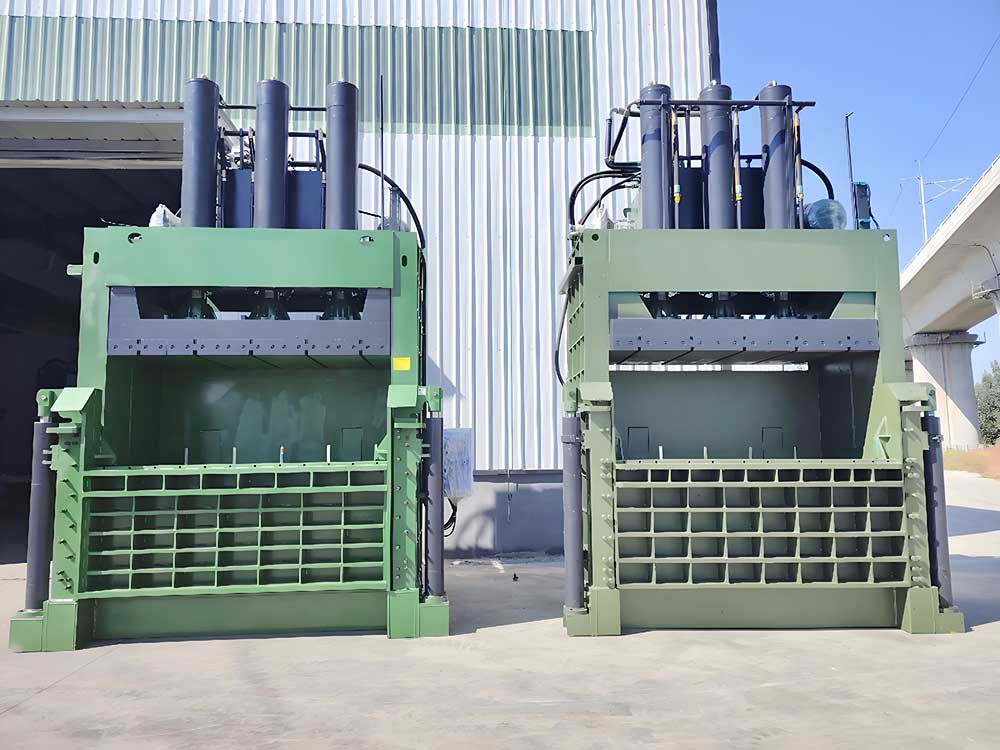
The correct selection begins with the job, not the machine layout. I first ask how much cardboard the customer processes, how the material is loaded, what bale the downstream buyer accepts, and how many operators are available. These answers usually narrow the options quickly.
How Should I Define a Large Cardboard Baler?
The word “large” sounds precise, but it has no single meaning in this context. One supplier may use it for machine dimensions, while another may mean press force or bale weight. That ambiguity can lead buyers to compare equipment that performs very different jobs.
I define a large cardboard baler by the output and operating task it must achieve. The main criteria are target bale dimensions, weight and density, daily cardboard volume, feeding method, tying process, available labor, and downstream handling requirements. Machine size, compression force, and horizontal or vertical construction are important, but none defines “large” by itself.
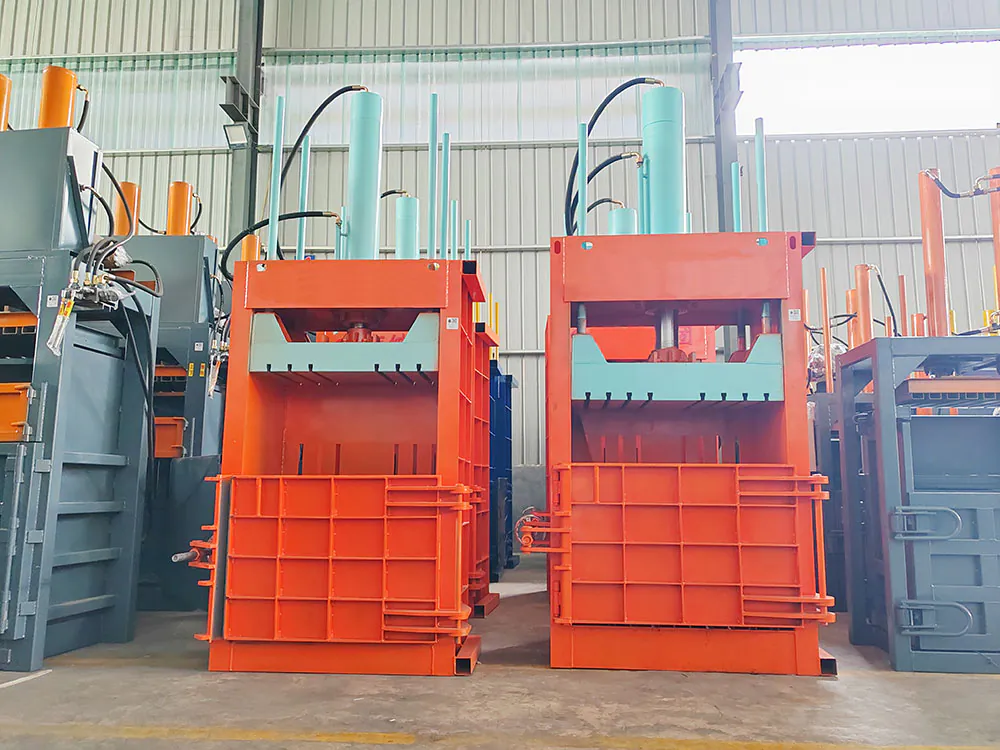
“Large” Should Describe the Required Result
I have seen buyers begin an inquiry by asking for the biggest press in a product range. I understand the instinct. A physically bigger machine appears more capable. However, oversized equipment may bring higher purchase costs, greater power requirements, a larger installation footprint, and maintenance systems that the operation does not need.1
I start by translating “large” into measurable requirements:
-
What material will enter the baler?
I distinguish flattened corrugated cardboard, loose boxes, cardboard trim, mixed waste paper, and contaminated packaging. Material condition affects feeding and compaction.2 -
How much material must the site process?
I ask for volume per hour, shift, and day. I also ask whether the flow is continuous or arrives in occasional peaks. A daily total alone can hide an important bottleneck.3 -
What bale dimensions are required?
I check whether the bale must fit a forklift attachment, storage layout, truck, container, conveyor, or paper mill specification. -
What bale weight and density does the buyer expect?
I treat these as targets rather than guaranteed values until we evaluate the material, moisture, preparation, operator practice, and machine configuration4. -
How will workers load and tie the bale?
I consider manual loading, conveyor feeding, forklift loading, automatic wire tying, and manual strapping. -
How will the site remove and store finished bales?
I review bale ejection, forklift access, floor condition, aisle width, and stacking practices.
Output Matters More Than Orientation
A horizontal machine is not automatically a large cardboard baler, and a vertical machine is not automatically small. I have worked with vertical designs that use an all-steel structure, a larger loading chamber, higher hydraulic pressure, and a powered or hydraulic bale-ejection system. Those features can support heavier-duty applications when the processing pattern is suitable.
At the same time, I do not select a machine from bale weight alone. A buyer may need a specific bale but also have a continuous stream of cardboard from a production line. In that case, feeding speed and workflow can make a horizontal system more appropriate.
| Evaluation factor | Question I ask | Why it matters |
|---|---|---|
| Processing volume | How much cardboard arrives per hour and per shift? | It helps determine practical throughput needs. |
| Material form | Are boxes flattened, loose, shredded, or mixed? | Material preparation affects loading and compaction. |
| Target bale | What dimensions, weight, and density are needed? | It aligns the baler with transport and buyer requirements. |
| Operating method | Will feeding and tying be manual or automatic? | It affects labor, cycle flow, and machine type. |
| Site conditions | What power, floor space, and handling equipment are available? | It prevents installation and workflow conflicts. |
| Downstream acceptance | What does the recycler or paper mill require? | It reduces the risk of producing unsuitable bales. |
I recommend that buyers obtain written bale requirements from their recycler, paper mill, or logistics partner. That document gives us a stronger basis for comparing solutions than the undefined label “large.”
Can a Vertical Machine Work as a Large Cardboard Baler?
Many buyers believe that a heavy cardboard bale always requires a fully automatic horizontal machine. That belief may eliminate a practical option before the operating conditions are studied. However, I also avoid making the opposite assumption that a vertical baler will suit every site.
A heavy-duty vertical machine can work as a large cardboard baler when its chamber, press system, frame, bale-ejection method, and operating cycle match the required output. It may suit businesses with manageable material flow and available operators. A horizontal baler remains preferable when continuous high-volume feeding or greater automation is operationally necessary.5
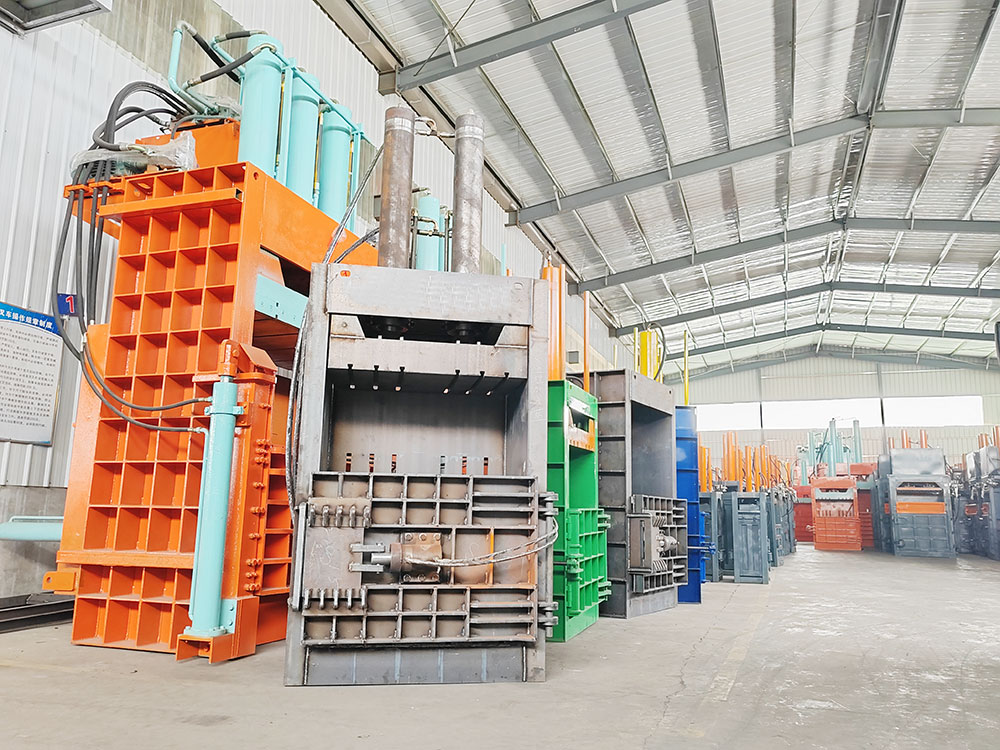
The German Customer Who Challenged the Usual Assumption
I once handled an inquiry from a customer in Germany who wanted to produce large, heavy cardboard bales. At the beginning of our discussion, the customer assumed that this requirement automatically called for a fully automatic horizontal baler.
Instead of immediately quoting that machine, I asked about the customer’s cardboard volume, target bale, operating method, available labor, and preferred feeding process. The answers indicated that full horizontal automation was not necessarily required for the actual task.
I recommended a heavy-duty all-steel vertical hydraulic baler with greater pressure, a larger chamber, and a bale-ejection device. The customer selected that configuration and later reported during follow-up that the machine was working well.
I present this as a selection example, not as laboratory proof or a universal rule. I do not use the case to claim that vertical equipment always replaces horizontal equipment. The case simply shows why I do not equate a large bale with one machine layout before I understand the operation.
Conditions That May Favor a Heavy-Duty Vertical Baler
I usually consider a vertical large cardboard baler when several of the following conditions apply:
- The cardboard arrives in batches rather than as a continuous production stream.
- The required daily volume fits a manual or semi-manual operating cycle.
- The business has operators available for loading and tying.
- The site needs a relatively compact installation footprint.
- A forklift can remove and handle the finished bales.
- The target bale can be produced within the machine’s verified chamber and pressing capability.
- The buyer does not need integration with a conveyor or sorting line.
- The business wants to avoid paying for unnecessary automation.
A vertical design can also be easier to introduce into a warehouse, packaging business, printing plant, or smaller recycling operation. However, “easier” does not mean installation planning can be skipped. I still confirm foundation requirements, ceiling clearance, electrical supply, hydraulic servicing space, bale removal paths, and operator protection.
Limits Buyers Should Consider
I would not recommend a vertical baler simply because its purchase price is lower. The operating cost must include labor and material handling.6 A machine that requires frequent manual intervention can become a bottleneck when cardboard arrives continuously.7
The buyer should examine:
- The number of loading and compression cycles
- The time needed for manual tying
- The method used to open the door safely
- The bale-ejection sequence
- The distance workers move loose cardboard
- The time that a forklift spends removing bales
- The effect of cardboard surges during busy periods
I ask suppliers to demonstrate the actual operating sequence. A video, live test, or factory acceptance test can reveal details that a brochure does not show. For an application-specific capacity or safety decision, I recommend review by a qualified engineer or safety professional.
When Is a Horizontal Large Cardboard Baler the Better Choice?
Under-automation can be as expensive as over-automation. A low-cost machine may interrupt production, require excessive handling, or create loose cardboard backlogs. When material arrives continuously, I give workflow and sustained processing needs more weight than the initial equipment price.
A horizontal large cardboard baler is usually the better choice when a site has continuous or high-volume cardboard flow, conveyor feeding, limited loading labor, or a need for repeated bales with less operator intervention. Semi-automatic and fully automatic models offer different levels of tying and control, so I match automation to the real workflow.
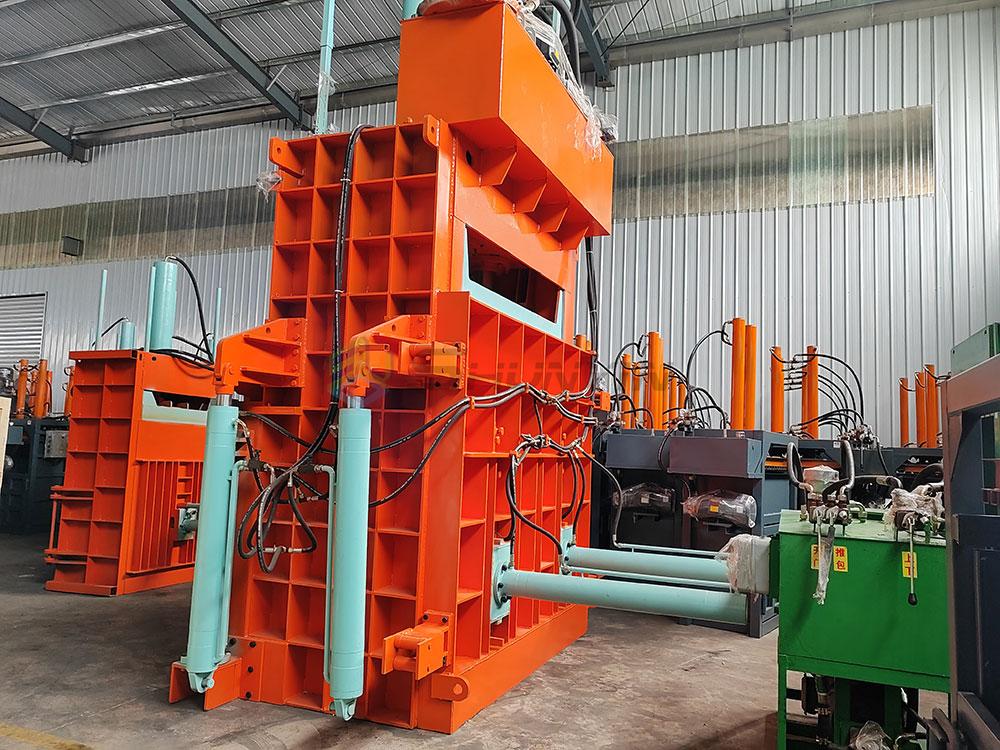
I Compare Workflow Before Automation Labels
A horizontal baler generally accepts material through a larger feed opening or hopper. The system may connect to a conveyor, sorting line, air transport system, or other material-handling equipment. This arrangement can reduce repeated manual loading and support a more continuous process.8
However, the word “horizontal” does not tell me whether the machine is semi-automatic or fully automatic. The tying system makes a major operational difference.
| Configuration | Typical operating approach | Potential fit | Point I verify |
|---|---|---|---|
| Heavy-duty vertical | Manual loading and tying, with assisted bale ejection | Batch flow and moderate operating demand | Labor time and bale-removal method |
| Semi-automatic horizontal | Conveyor or hopper feeding with operator involvement in tying | Higher volume without full tying automation | Downtime during tying and bale separation |
| Fully automatic horizontal | Continuous feeding with automatic wire tying | Sustained volume and integrated processing lines | Feed consistency, controls, wire use, and service support |
I avoid assigning fixed throughput numbers without material testing and machine-specific data. Cardboard condition can change real production.9 Flattened dry corrugated sheets behave differently from bulky boxes, wet OCC, coated packaging, or mixed paper.
Signs That Horizontal Automation May Be Justified
I look for operational signals rather than relying on a general preference:
- Loose cardboard accumulates faster than workers can load it.
- A conveyor already moves material through the facility.
- The operation runs multiple shifts.
- Manual tying repeatedly delays production.
- Labor availability is limited or expensive.
- Baling must keep pace with a manufacturing or sorting line.
- The buyer needs easier integration with upstream equipment.
- Cardboard peaks create safety or housekeeping problems.
- The business expects a realistic increase in processing volume.
A horizontal large cardboard baler can reduce handling stages, but the entire line must be balanced. A fast press does not solve a slow conveyor, undersized hopper, poor material preparation process, or restricted bale-removal area.
Total Cost Matters More Than Purchase Price
I encourage buyers to compare the total operating effect over a defined period instead of comparing quotations alone. The calculation should include:
- Equipment purchase price
- Conveyor and feed-system cost
- Freight, customs, and local transport
- Installation and commissioning
- Electrical and foundation work
- Operators per shift
- Wire or strapping consumption
- Hydraulic oil and filters
- Planned maintenance
- Wear parts and critical spares
- Expected downtime and technical support
- Bale handling and storage equipment
I also ask what happens if the machine stops. A fully automatic line may offer significant workflow benefits, but its controls, sensors, tying system, and peripheral equipment need suitable technical support. The buyer should confirm remote diagnostics, local service capability, spare-parts lead times, manuals, and operator training before purchase.
How Do I Evaluate a Large Cardboard Baler Supplier?
A suitable machine can still become a poor investment if the supplier does not understand the application. Vague quotations, unverified output claims, and incomplete installation information create avoidable risk. I believe supplier evaluation should test both manufacturing capability and the quality of the selection process.
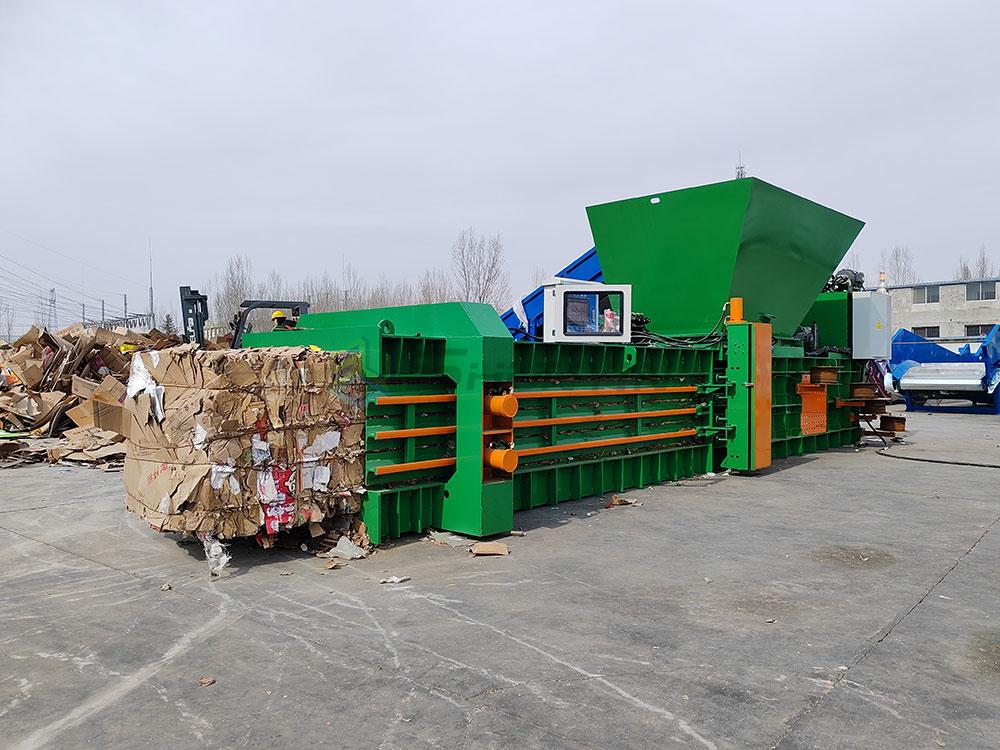
I evaluate a large cardboard baler supplier by checking whether the company collects detailed application data, explains its machine selection, provides verifiable technical documents, supports material testing, and defines installation and service responsibilities. I also compare frame construction, hydraulic components, controls, safety systems, spare-parts availability, warranty terms, and relevant certification documents.
Information I Expect Before a Recommendation
A responsible supplier should ask more than, “What bale weight do you need?” I normally request a structured set of details:
- Material type and composition
- Photos or videos of the cardboard
- Current loose-material volume
- Estimated volume per hour, shift, and day
- Number and length of operating shifts
- Peak material arrival rate
- Target bale dimensions
- Preferred bale weight and density
- Tying material and number of ties
- Loading method
- Available workers
- Forklift capacity and attachment type
- Installation dimensions
- Electrical voltage, frequency, and phase
- Local temperature and environmental conditions
- Downstream recycler or paper mill requirements
I treat bale weight and capacity claims carefully. Real output depends on feed consistency, moisture, cardboard grade, operator practice, hydraulic settings, and other variables. If the requirement is critical, I recommend a test with representative customer material and a written acceptance method.
Documents Buyers Should Request
I ask for documents early because they make different offers easier to compare. A procurement file may include:
- Technical data sheet
- General arrangement drawing
- Foundation and installation requirements
- Electrical and hydraulic diagrams
- Operating and maintenance manual
- Recommended spare-parts list
- Component brands and model references
- Warranty terms and exclusions
- Production and delivery schedule
- Inspection or factory acceptance test plan
- Packing and shipping details
- Relevant conformity or safety documents
Certifications should not be treated as marketing decoration. I recommend that buyers verify the certificate issuer, scope, model reference, applicable standards, issue date, and validity.10 Requirements vary by destination and installation. A qualified local professional should confirm which regulations apply to the final machine and worksite.
I Inspect Manufacturing Quality, Not Just Appearance
A clean paint finish can create a good first impression, but it does not prove long-term reliability. During a factory review, I focus on structural fabrication, hydraulic routing, electrical cabinet organization, guarding, and maintainability.
I look at:
- Steel plate and structural specifications
- Welding quality and inspection records
- Cylinder design and sealing components
- Hydraulic pump, valve, hose, and fitting selection
- Motor and electrical component brands
- Control cabinet labeling
- Emergency-stop positions11
- Door interlocks and access guards
- Wire-tying or strapping mechanisms
- Lubrication points
- Access for routine servicing
- Finished machine testing procedures
I also ask who will handle commissioning. The contract should state whether the supplier provides remote guidance, an on-site technician, or support through a local partner. It should clarify who pays for travel, accommodation, tools, lifting equipment, and local labor.
I consider a detailed supplier question a positive sign. It usually indicates that the company is selecting a solution rather than simply selling the largest available machine.
A buyer should ask a qualified engineer to review structural, electrical, hydraulic, and safety details when the project involves high throughput, automated lines, unusual materials, or local regulatory complexity.
Frequently Asked Questions
Is a large cardboard baler always a horizontal machine?
No. I select the layout according to cardboard volume, target bale, loading method, labor availability, and workflow. A heavy-duty vertical baler may suit batch processing or moderate demand. A horizontal baler may be more appropriate for continuous feeding, conveyor integration, or higher automation requirements.
Does higher compression force always create a heavier cardboard bale?
No. I also consider chamber dimensions, material type, moisture, cardboard preparation, filling consistency, compression cycle, and tying method. Press force is important, but it cannot predict the final bale by itself. I recommend representative material testing when bale performance is commercially critical.
What information should I send to a cardboard baler manufacturer?
I recommend sending material photos or videos, hourly and daily volume, shift pattern, target bale dimensions and weight, feeding method, available labor, site dimensions, power supply, forklift details, and downstream bale requirements. This information helps the manufacturer recommend and quote a suitable configuration.
Can a large cardboard baler process plastic or other recyclables?
Some balers can process cardboard, waste paper, PET bottles, plastic film, textiles, or other recyclables, but I never assume that one configuration suits every material. Each material behaves differently under compression. Buyers should confirm chamber design, pressure, tying, safety, and contamination requirements with the supplier.
How can I verify a supplier’s claimed baler capacity?
I ask for the test conditions behind the claim, including material type, feed method, bale dimensions, cycle definition, and operator involvement. I also request a video or factory acceptance test using representative material. The purchase agreement should define the performance criteria and the method used to verify them.
Conclusion
A large cardboard baler is best understood as a solution for producing the required bale size, weight, and density within a specific processing workflow. I do not define it only by machine dimensions, press force, or horizontal construction. A heavy-duty vertical machine may be enough for some operations, while continuous high-volume plants may justify horizontal automation. If you are comparing options, send us your cardboard type, processing volume, target bale, loading method, site details, and power supply. We can help you evaluate a suitable baling solution and prepare a clear technical proposal.
"Life Cycle Cost Manual for the Federal Energy ...", https://nvlpubs.nist.gov/nistpubs/hb/2020/NIST.HB.135-2020.pdf. Government life-cycle-cost guidance treats acquisition, energy use, operation, maintenance, and replacement as distinct components of equipment cost, supporting the concern that unnecessary capacity may impose costs beyond the purchase price; it does not establish that every larger baler will consume more energy in a given duty cycle. Evidence role: general_support; source type: government. Supports: Government life-cycle-cost or industrial energy guidance should establish that equipment selection should account for acquisition, energy, space, operation, and maintenance costs rather than capacity alone.. Scope note: The cost effect is application-specific and depends on utilization, control strategy, tariff structure, and maintenance arrangements. ↩
"Mechanical and physical properties of boards made from ...", https://bioresources.cnr.ncsu.edu/resources/mechanical-and-physical-properties-of-boards-made-from-recycled-paper/. Experimental research on paper and corrugated-board compression shows that moisture content, material structure, and initial packing condition affect mechanical response and compaction behavior; these findings support the stated relationship, although laboratory compression tests may not reproduce the feeding dynamics of a particular industrial baler. Evidence role: mechanism; source type: paper. Supports: Research on paper-based materials should show that moisture, geometry, composition, and initial bulk density influence compression behavior and the density achieved under load.. Scope note: Laboratory measurements of paper or board compression do not directly establish the throughput or bale density of a specific machine. ↩
"Capacity Planning for Production", https://online.aurora.edu/capacity-planning/. Capacity-planning and queueing theory show that equipment sized only to average demand can experience queues when arrivals are variable or concentrated in peaks; this supports considering hourly and peak flows, although the magnitude of any cardboard backlog depends on the site's actual arrival pattern and operating discipline. Evidence role: mechanism; source type: education. Supports: Capacity-planning and queueing sources should explain that variability and peak arrival rates can produce queues even when average daily demand appears to be within nominal capacity.. Scope note: General queueing principles do not determine the required capacity of a specific baling installation. ↩
"High-pressure Compaction & Bailing Of Solid Waste", https://nepis.epa.gov/Exe/ZyPURL.cgi?Dockey=2000PVVW.TXT. Studies of fibrous-material compaction indicate that achieved density depends on material moisture and arrangement as well as applied pressure and process conditions, supporting the treatment of bale weight as an application-specific outcome rather than a direct function of press force alone; operator effects may be inferred rather than measured directly. Evidence role: mechanism; source type: paper. Supports: Compaction research should document how moisture, packing arrangement, material composition, applied pressure, and process conditions influence the density of compressed fibrous materials.. Scope note: A general compaction study may not isolate operator practice or predict the finished weight of a commercial cardboard bale. ↩
"Resistance to Compaction/Baling of Recyclable Cardboard ...", https://www.academia.edu/123234311/Resistance_to_Compaction_Baling_of_Recyclable_Cardboard_Waste_Using_Stationary_Horizontal_Presses. Institutional descriptions of baling systems commonly associate horizontal presses with conveyor-fed or continuous processing and vertical presses with batch loading and greater operator involvement; this supports the general selection distinction but does not make horizontal orientation inherently superior at every throughput level. Evidence role: general_support; source type: institution. Supports: Neutral technical guidance should describe horizontal balers as compatible with conveyor-fed or continuous processes and vertical balers as more commonly associated with batch loading and greater manual involvement.. Scope note: Actual suitability depends on feed-opening dimensions, cycle time, tying system, labor, and the rated performance of the individual machine. ↩
"Life Cycle Cost Manual for the Federal Energy ...", https://nvlpubs.nist.gov/nistpubs/hb/2020/NIST.HB.135-2020.pdf. Life-cycle-cost frameworks evaluate equipment through both initial and recurring costs, including operation, labor, energy, maintenance, and replacement, supporting inclusion of labor and material handling in a baler comparison; the framework does not determine which baler type has the lowest cost without local inputs. Evidence role: definition; source type: government. Supports: An authoritative life-cycle-cost framework should define total cost as including acquisition and recurring operating, labor, energy, maintenance, and related costs.. Scope note: The relative importance of labor and handling costs varies by wage rates, shifts, utilization, and existing site infrastructure. ↩
"Ergonomic Guidelines for Manual Material Handling", https://www.cdc.gov/niosh/publications/numbered/2007-131.html. Production-flow research identifies the slowest constrained step as a determinant of system throughput, so recurring manual loading, tying, or removal can create queues when incoming material exceeds that step's service rate; this is a general mechanism rather than direct evidence for a particular baler installation. Evidence role: mechanism; source type: research. Supports: Production-systems research should show that labor-dependent process steps with finite cycle times can limit line throughput and create work-in-process queues.. Scope note: Whether manual intervention is the binding constraint requires site-specific cycle-time and arrival-rate measurements. ↩
"Mining Topic - Manual Materials Handling - NIOSH", https://archive.cdc.gov/www_cdc_gov/niosh/mining/topics/manualmaterialshandling.html. Occupational-safety guidance recognizes conveyors and other mechanical handling aids as means of reducing repeated manual material transfers, supporting the stated workflow benefit; the degree of labor reduction depends on how boxes are collected, prepared, and delivered to the conveyor. Evidence role: mechanism; source type: government. Supports: Occupational and material-handling guidance should show that conveyors mechanize repeated material transfers and can reduce manual carrying or loading tasks.. Scope note: Conveyor integration does not eliminate all manual handling and may introduce separate guarding, maintenance, and jam-clearing risks. ↩
"High-pressure Compaction & Bailing Of Solid Waste", https://nepis.epa.gov/Exe/ZyPURL.cgi?Dockey=2000PVVW.TXT. Compaction research shows that feedstock properties such as initial bulk density, moisture, and particle or sheet geometry affect loading and densification, providing a basis for expecting actual throughput to vary with cardboard condition; such studies do not validate any manufacturer's stated capacity. Evidence role: mechanism; source type: paper. Supports: Research should connect feedstock bulk density, moisture, geometry, and frictional or compression properties with compactor cycle loading and mass throughput.. Scope note: Machine-specific throughput also depends on hydraulic power, chamber volume, controls, feed equipment, and the definition used for a production cycle. ↩
"CE marking – obtaining the certificate, EU requirements", https://europa.eu/youreurope/business/product-rules-compliance/general-product-compliance/ce-marking/index_en.htm. Official conformity-assessment guidance requires machinery documentation to identify the responsible entity, product or model, applicable legislation or standards, and declaration details, supporting verification of a certificate's scope and provenance; the exact documents and legal effect differ by destination market and type of conformity procedure. Evidence role: general_support; source type: government. Supports: Official conformity-assessment guidance should explain the required contents of declarations or certificates and how to verify the responsible body, product scope, standards, and document validity.. Scope note: A formally valid certificate does not by itself prove safe installation, correct site integration, or continuing compliance after modification. ↩
"1928.57 - Guarding of farm field equipment, farmstead ...", http://www.osha.gov/laws-regs/regulations/standardnumber/1928/1928.57. Machinery-safety guidance identifies accessible stop controls, guarding, and control of hazardous motion as core protections for baling equipment, supporting review of emergency-stop locations; an emergency stop is a supplementary safeguard and does not replace guards, interlocks, lockout procedures, or risk assessment. Evidence role: expert_consensus; source type: government. Supports: Machinery-safety guidance should establish that balers require accessible controls, guarding, and means to stop hazardous motion in an emergency.. Scope note: Compliance depends on the complete control system and applicable jurisdiction, not merely on the presence or number of emergency-stop buttons. ↩