

A vertical baler machine compresses recyclable and waste materials into compact bales, but buyers often choose the wrong model by focusing only on pressure. That mistake can limit output, create handling problems, and waste floor space. I recommend matching the machine to the material, throughput, bale target, installation area, and handling method.
A vertical baler machine is a hydraulic recycling machine that compresses cardboard, waste paper, plastics, textiles, or other compatible materials inside a vertical chamber.1 An operator loads the material, starts the compression cycle, secures the compressed bale, and removes it for storage, transport, resale, or downstream recycling.
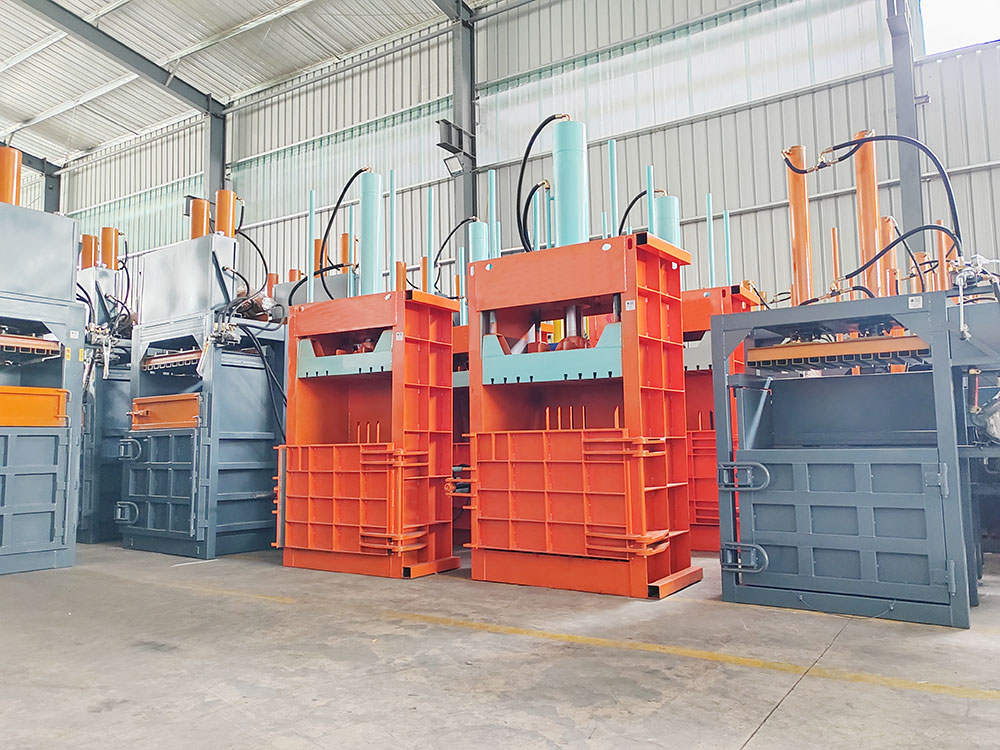
The definition sounds simple, but selecting the right baler requires more work. In my experience helping overseas buyers, the most important questions concern what enters the chamber, how much material arrives, what bale must come out, and how the facility will move it.
How Does a Vertical Baler Machine Work?
The operating cycle of a vertical baler machine looks straightforward, but each step affects productivity and bale consistency. If loading, tying, or ejection does not match the site’s workflow, even a technically suitable machine can cause delays, additional labor, or unsafe operating practices.
A vertical baler uses a hydraulic cylinder to move a platen downward inside the compression chamber.2 The platen compresses loaded material through one or more cycles. Once the target bale is formed, the operator ties it with wire, strap, or another specified material and uses the designed ejection system to remove it.
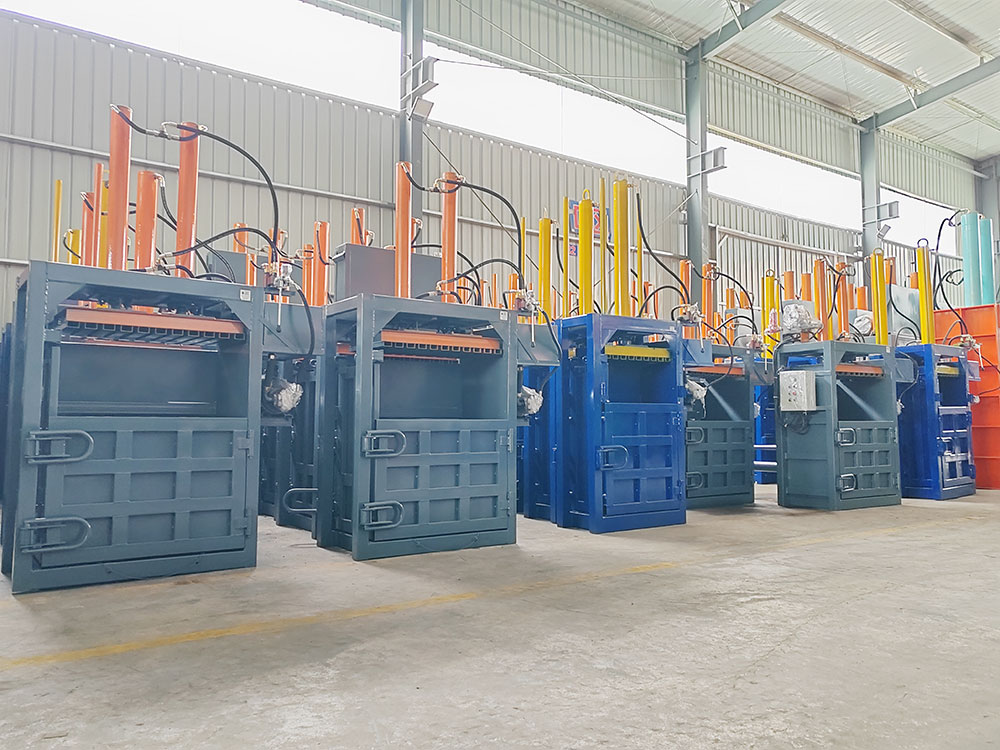
The basic operating cycle
I normally explain the workflow in six stages:
-
Load the material.
An operator places cardboard, paper, plastic film, PET bottles, textile waste, or another approved material into the feed chamber. -
Close and secure the loading door.
The machine should prevent a compression cycle from starting when the relevant door or guard is not correctly secured.3 Buyers should verify the actual interlock design at model level. -
Start the hydraulic cycle.
The hydraulic system drives the compression platen downward. The exact force, stroke, cycle time, and motor power depend on the selected model. -
Repeat loading and compression.
Low-density materials often require several loading cycles before the chamber contains enough compressed material for a complete bale.4 -
Tie the bale.
The operator feeds the specified wire or strapping through designed channels. The tying method must be compatible with the material, bale density, and downstream handling requirements. -
Eject and move the bale.
A chain, hydraulic device, or other model-specific mechanism removes the bale. A pallet truck, forklift, trolley, or another suitable method then moves it.
What happens inside the hydraulic system?
I advise buyers to look beyond the stated pressure tonnage. Compression force matters, but it works together with platen area, chamber dimensions, cylinder stroke, hydraulic pressure, cycle time, and material behavior.
For example, loose cardboard folds and compresses differently from plastic film. PET bottles can retain air and may require preparation or a model designed for that application. Textile waste may expand after pressure is released.5 Therefore, two machines with a similar nominal compression force may not produce the same bale weight from different materials.
I treat compression force as one selection input, not as a complete measure of baler performance.
Buyers should request a model-level specification sheet covering:
- Rated compression force
- Feed-opening dimensions
- Chamber dimensions
- Bale dimensions
- Typical bale-weight range by material
- Motor power and required voltage
- Hydraulic cycle time
- Machine footprint and operating height
- Door, guard, and interlock arrangement
- Bale-tying method
- Bale-ejection method
- Recommended material applications
I also recommend requesting a test with representative material when bale weight or output is commercially critical. Published values may be based on particular feed conditions, moisture levels, loading practices, and material grades. Actual performance should therefore be confirmed for the buyer’s waste stream.
What Materials Can a Vertical Baler Machine Process?
A common purchasing problem starts when buyers assume that one baler can process every recyclable material. Material density, shape, moisture, contamination, rebound, and abrasive characteristics all influence machine selection.6 A model intended for dry cardboard may not be appropriate for rigid plastics, metal, or wet industrial waste.
A vertical baler machine can process materials such as OCC cardboard, waste paper, plastic film, selected plastic containers, and textile waste when its chamber, force, tying system, and safety design suit the application. Buyers must confirm material compatibility with the manufacturer for the exact model rather than relying on a general product-category description.
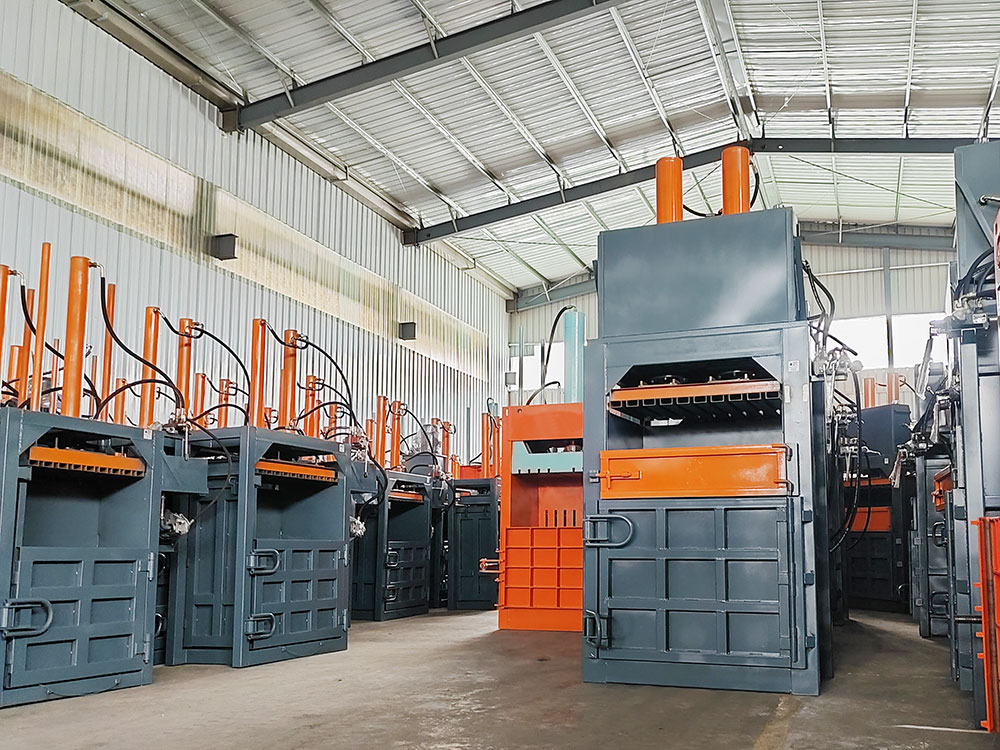
Typical material applications
The following table shows common evaluation points. It does not mean that every vertical model supports every listed material.
| Material | Why businesses bale it | Important selection questions |
|---|---|---|
| OCC and cardboard | Reduce storage volume and improve transport efficiency | Is the feed opening large enough for the box sizes? |
| Waste paper | Create manageable units for storage and recycling | What paper grade, moisture level, and daily volume are involved? |
| Plastic film | Control loose, bulky material and reduce handling problems | How much does the film rebound, and what tying method is required? |
| PET or plastic bottles | Reduce volume before transport or downstream processing | Are caps removed, are bottles perforated, and is the model approved for the material? |
| Textile waste | Form loose fabric or offcuts into transportable bales | How much does the material expand after decompression? |
| Foam or soft packaging | Reduce the space occupied by low-density waste | Can the chamber retain the material safely during loading and tying? |
| Selected light metal waste | Consolidate compatible items in specified applications | Is the machine specifically designed and rated for that metal? |
I ask buyers to describe the condition of the material, not only its name. “Plastic” can mean thin stretch film, woven bags, hollow PET bottles, rigid production offcuts, or mixed containers. These materials behave very differently under compression.
The same problem occurs with paper. Dry corrugated cardboard from a warehouse differs from damp mixed paper collected outdoors. Moisture may increase the measured bale weight without increasing the amount of useful recyclable fiber. It can also affect storage, corrosion risk, and downstream acceptance.7
Material samples improve quotation accuracy
When I prepare a selection discussion, I find the following information useful:
- Photographs and short videos of the loose material
- Typical item dimensions
- Approximate bulk density, if known
- Moisture and contamination conditions
- Daily or hourly material volume
- Current storage method
- Current transport frequency
- Downstream recycler’s bale requirements
- Whether materials will be sorted before baling
A small sample or a supervised material test can clarify questions that specifications alone cannot answer. However, I do not treat one successful test as proof of performance under every operating condition. Continuous production may involve changing material mixes, inexperienced operators, irregular loading, or different moisture levels.
I also recommend separating incompatible materials when the downstream recycler pays by grade. A dense mixed bale may save space, but it may reduce resale value or be rejected.8 The baling decision should support the complete recycling process, not only volume reduction.
Is a Vertical Baler Machine Better Than a Horizontal Baler?
Buyers sometimes assume that a horizontal baler is always the high-output choice and a vertical baler is always light-duty. That comparison is too simple. Some high-pressure, full-steel vertical models can produce substantial bales, while some facilities still need horizontal feeding and automation because of their material flow.
A vertical baler machine is usually more suitable when floor space is limited, material is loaded in batches, and manual or semi-manual operation fits the workflow. A horizontal baler may be preferable when continuous feeding, conveyor integration, automatic tying, or higher sustained throughput is required. The decision depends on the task and site.
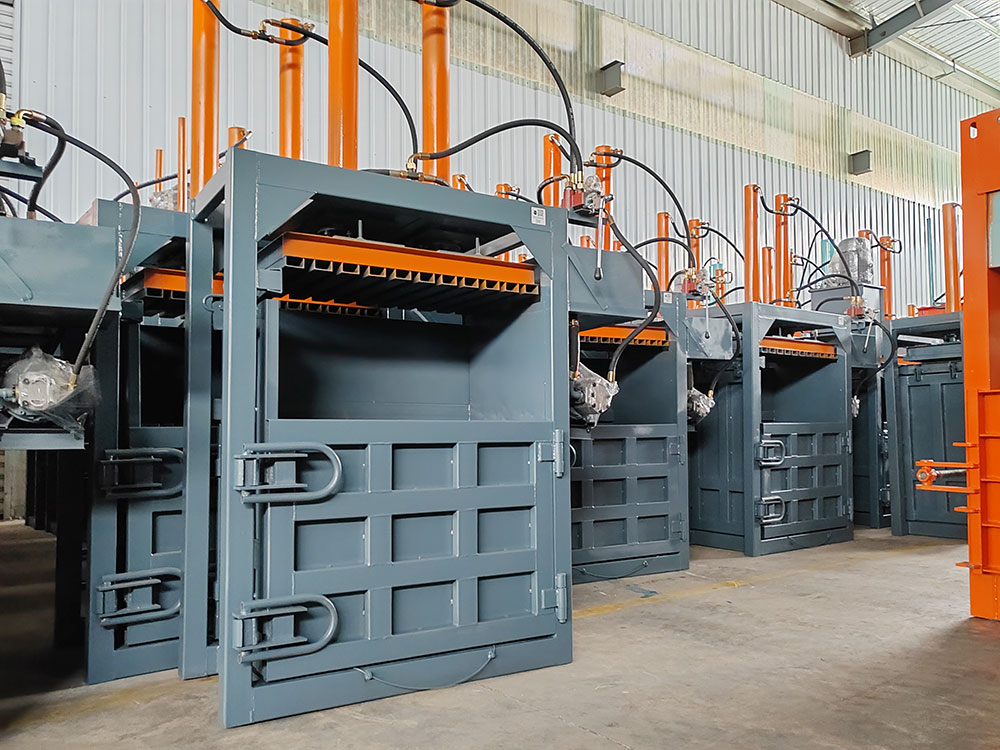
A task-and-space comparison
| Evaluation factor | Vertical baler | Horizontal baler |
|---|---|---|
| Floor-space requirement | Often smaller, but operating clearance still matters | Usually larger because of the body, feed system, and bale exit |
| Feeding method | Commonly batch-loaded from the front | Often fed from above by conveyor or loader |
| Automation | Manual and semi-automatic options are common | Semi-automatic and fully automatic systems are common |
| Labor | Often requires operator loading, tying, and bale handling | Automation can reduce manual steps, depending on configuration |
| Throughput pattern | Well suited to intermittent or batch processing | Often suited to continuous material flow |
| Bale handling | Depends on bale size and ejection system | Often designed for forklift or conveyor handling |
| Installation complexity | Can be simpler, but foundation and power still require review | May require more layout, conveyor, foundation, and integration work |
| Typical purchasing priority | Space efficiency and straightforward operation | Throughput, automation, and line integration |
I have worked with buyers who initially asked for a horizontal baler because they associated the category with better performance. In one case, a German customer had limited available floor space. A horizontal arrangement would have occupied too much of the working area and made the proposed layout unattractive.
After we clarified the customer’s material, expected output, bale requirement, and available space, the customer selected a full-steel vertical configuration. The customer later gave positive feedback about its operation. I present this as one customer-specific result. It does not prove that the same machine or configuration will suit another facility.
Vertical does not automatically mean light-duty
Vertical models vary widely. Buyers may encounter small machines for retail packaging waste as well as heavier industrial units with stronger structures, larger chambers, and higher compression forces. Therefore, I recommend comparing actual specifications instead of using category labels.
At the same time, buyers should not assume that a heavy vertical baler can replace every horizontal system. A facility processing a continuous stream from a sorting line may need:
- Conveyor feeding
- Large hopper capacity
- Automatic bale tying
- Continuous or near-continuous cycling
- Automatic bale discharge
- Integration with upstream and downstream equipment
- Central production monitoring
A vertical machine may create a bottleneck if operators cannot load material quickly enough. Conversely, an automated horizontal line may be unnecessarily expensive and space-intensive for a warehouse that generates cardboard intermittently.
I recommend mapping the material flow for at least one representative shift. Buyers can record where waste arises, how workers collect it, how often the baler will run, and where finished bales will wait. This simple exercise often reveals whether the facility needs compact batch processing or an integrated continuous system.
How Should Buyers Choose a Vertical Baler Machine?
A poorly defined inquiry often produces an inaccurate quotation. If a buyer asks only for a “30-ton baler,” a supplier still does not know the material, bale dimensions, required output, building height, power supply, or handling method. Those missing details can be more important than nominal force.
I recommend choosing a vertical baler machine by matching five inputs: material type and condition, expected hourly or daily volume, desired bale size or weight, available installation space, and the planned bale-handling method. Buyers should then verify safety features, electrical requirements, documentation, warranty terms, spare parts, and supplier support.
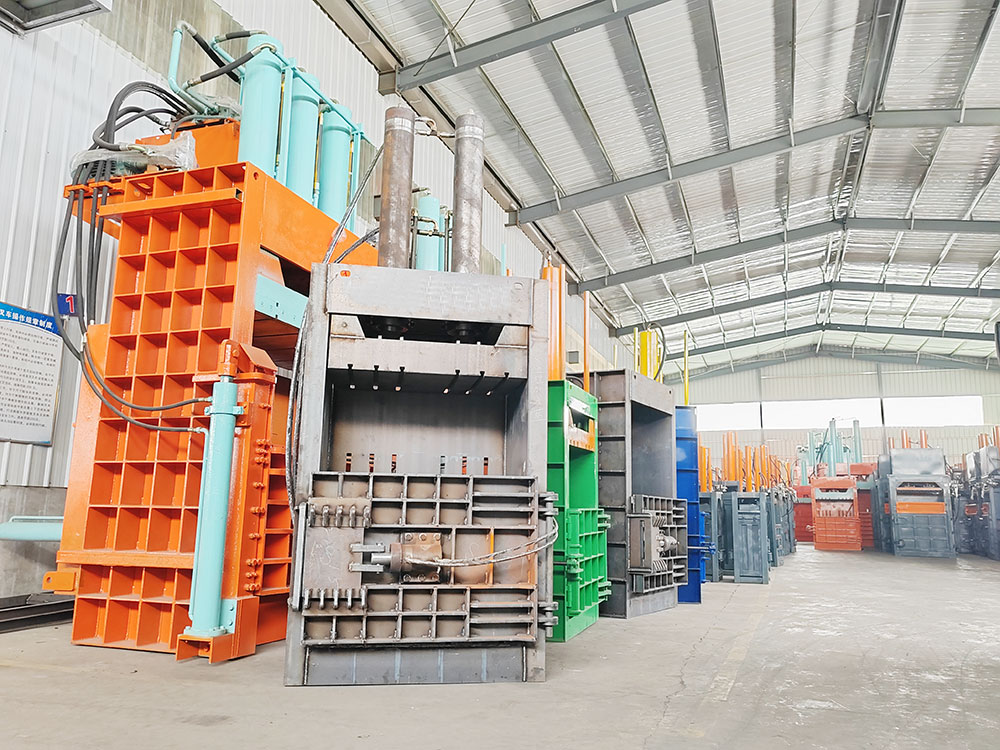
My pre-quotation checklist
I usually ask buyers to prepare the following information before requesting a firm proposal.
1. What material will enter the chamber?
The buyer should identify:
- Material name and grade
- Loose dimensions
- Whether it is dry, wet, clean, or contaminated
- Whether it is hollow, flexible, rigid, or springy
- Whether several materials will be baled separately
- Whether any material presents a fire, chemical, biological, or pressure hazard
Hazardous, pressurized, flammable, or otherwise regulated materials require specialist review. Buyers should never place unapproved materials into the baler.9
2. How much material must be processed?
I ask for both volume and time. “Ten tonnes per month” does not show whether the facility receives material steadily or in one large weekly delivery.
Useful figures include:
- Kilograms or tonnes per hour
- Tonnes per eight-hour shift
- Cubic metres generated per day
- Peak delivery volume
- Number of operating days per month
- Available operator time
A practical output calculation should include loading, repeated compression cycles, tying, ejection, and bale removal. The hydraulic cycle time alone does not represent total production time.10
3. What bale does the buyer need?
The buyer should consult the downstream recycler, transporter, or internal logistics team. I recommend confirming:
- Acceptable bale dimensions
- Preferred bale-weight range
- Required tie type and number of ties
- Forklift or pallet compatibility
- Maximum transport weight
- Stacking and storage requirements
- Any quality or material-separation rules
Bale weight varies with the material, moisture, loading consistency, and machine configuration. Suppliers should label estimated ranges clearly rather than present them as universal guarantees.
4. How much installation space is available?
Buyers should provide length, width, and clear height, not floor area alone. The layout must allow room for:
- Loading the chamber
- Opening doors fully
- Removing the finished bale
- Operating a forklift or pallet truck
- Accessing the hydraulic and electrical systems
- Performing maintenance
- Keeping emergency routes clear
I prefer a marked layout drawing with columns, walls, doors, power points, drains, and nearby machines. A few photographs or a video walkthrough can also prevent layout mistakes.
5. How will workers move the bale?
The selected bale weight must match the handling equipment. A heavier bale can improve transport efficiency, but it may create a new problem if the site lacks a suitable forklift, pallet truck, or loading dock.
How I evaluate the supplier
A sound machine selection also depends on the manufacturer’s ability to document and support the product. I advise buyers to compare suppliers using the same checklist.
| Supplier evidence | What I would verify |
|---|---|
| Technical proposal | Model, material, force, chamber, bale range, motor, voltage, and footprint |
| General arrangement drawing | Overall dimensions, door movement, service access, and bale-ejection direction |
| Material test | Test material, preparation, cycle, bale result, and limitations |
| Safety documentation | Guards, interlocks, emergency stops, warning labels, and operating procedures |
| Compliance documents | Applicable market, issuing party, standards listed, model coverage, and validity |
| Quality-control records | Inspection points, hydraulic testing, electrical checks, and pre-shipment test records |
| Spare-parts list | Critical parts, prices, lead times, and local availability |
| Warranty | Duration, covered components, exclusions, and claim procedure |
| Installation support | Foundation guidance, commissioning scope, training, and remote or on-site support |
Buyers should treat certificates and declarations as documents to verify, not as marketing logos. Requirements differ by destination market. A qualified local safety, electrical, or compliance professional should review application-specific obligations before installation and operation.
I also recommend a factory acceptance test when practical. The agreed inspection can cover dimensions, unloaded operation, safety functions, hydraulic leaks, electrical components, noise observations, cycle sequence, and a representative material trial. The buyer and supplier should define acceptance criteria before production or shipment.
Frequently Asked Questions
What is the main purpose of a vertical baler machine?
The main purpose of a vertical baler machine is to reduce the volume of compatible recyclable or waste material and form it into manageable bales. These bales can require less storage space and may be easier to handle, transport, sell, or deliver to a downstream recycling facility.
How much does a vertical baler bale weigh?
Bale weight depends on the machine chamber, compression force, material, moisture, loading technique, and number of compression cycles. Small and industrial vertical balers can produce very different results. I recommend requesting a material-specific bale-weight range and verifying it through a representative test where weight is critical.
Does a vertical baler require a forklift?
Not every model requires a forklift, but many industrial applications need mechanical handling for completed bales. The handling method depends on bale weight, ejection design, pallet use, and site layout. Buyers should select the baler and bale-handling equipment together rather than address handling after installation.
Can one vertical baler process both cardboard and plastic?
Some models can bale more than one material separately, but buyers must confirm compatibility for each material. Cardboard and plastic film have different compression and rebound characteristics. I also recommend keeping grades separate when mixing them could reduce recycling value or conflict with a downstream processor’s acceptance rules.
What safety features should buyers check?
Buyers should check door and guard interlocks, emergency stops, controlled bale ejection, warning labels, hydraulic protection, electrical protection, and safe access for maintenance.11 Exact requirements depend on the model and destination market. I recommend reviewing the risk assessment and documentation with qualified local professionals.
Conclusion
A vertical baler machine compresses approved recyclable materials into bales, but its value depends on correct selection. I recommend evaluating the material, real throughput, target bale, floor space, handling method, safety design, and supplier support instead of comparing pressure alone. Vertical models are not automatically small or low-output, yet no single configuration suits every waste stream. If you are planning a baling project, send us your material photos, volume, bale requirements, site dimensions, and power supply so our team can help you evaluate a suitable recycling solution.
"Baler", https://en.wikipedia.org/wiki/Baler. General references on baling equipment define a vertical baler as a compaction machine in which a vertically acting platen compresses materials such as paper, cardboard, plastics, or textiles into bales. Evidence role: definition; source type: encyclopedia. Supports: The basic definition of a vertical baler as equipment that compresses material into bound, manageable bales using a vertically moving platen.. Scope note: The definition establishes the equipment category but does not demonstrate that every vertical baler is compatible with every listed material. ↩
"Department Store Employee Crushed In a Baling Machine", https://stacks.cdc.gov/view/cdc/166497/cdc_166497_DS1.pdf. Technical safety descriptions of baling machinery explain that hydraulic power moves a ram or platen through the chamber, applying compressive force to the loaded material. Evidence role: mechanism; source type: government. Supports: The source should describe how hydraulic balers use a ram or cylinder-driven platen to compress material within a chamber.. Scope note: This describes the common hydraulic mechanism; individual machines may use different cylinder arrangements, controls, or platen geometries. ↩
"FY13 Fatalities and Catastrophes To Date", https://www.osha.gov/sites/default/files/fy13_federal-state_summaries.pdf. Occupational-safety guidance for balers identifies interlocked gates or doors as safeguards intended to prevent hazardous machine operation while an operator can access the compression chamber. Evidence role: expert_consensus; source type: government. Supports: Safety guidance for balers calls for guarding or interlocked access points that prevent hazardous platen movement while doors or gates are open.. Scope note: The precise interlock architecture and legal requirements depend on the machine design, jurisdiction, and applicable standard. ↩
"Corn Stover Densification Methods and their Large", https://dr.lib.iastate.edu/bitstreams/0b305dd2-c8d8-4a02-903f-58ee00fc838c/download. Research on waste compaction shows that low-bulk-density feed occupies substantial initial volume and gains density under compression, providing the physical basis for repeated loading and compaction before a chamber-sized bale is completed. Evidence role: mechanism; source type: research. Supports: Low loose bulk density means that a chamber may need to be refilled and compacted repeatedly before it contains the mass required for a finished bale.. Scope note: The number of cycles cannot be inferred from bulk density alone because it also depends on chamber size, feed preparation, material elasticity, and applied pressure. ↩
"Severe ocular trauma—The hidden danger of plastic bottles ...", https://pmc.ncbi.nlm.nih.gov/articles/PMC6011853/. Experimental literature on packaging and fibrous materials describes trapped internal air as a constraint on compressing closed containers and identifies thickness or volume recovery in textile structures after compressive loads are removed. Evidence role: mechanism; source type: paper. Supports: Hollow closed containers resist volume reduction through trapped air, and fibrous textile structures can exhibit elastic recovery after compression.. Scope note: The degree of resistance or rebound varies with bottle closure, perforation, polymer or fiber type, loading history, and restraint by bale ties. ↩
"Compaction Characteristics of Municipal Solid Waste", https://digitalcommons.calpoly.edu/cgi/viewcontent.cgi?article=1193&context=cenv_fac. Studies of solid-waste compaction report that composition, initial density, moisture content, geometry, and elastic recovery affect compressibility and the density retained after pressure is removed. Evidence role: mechanism; source type: paper. Supports: Waste-compaction behavior varies with material composition, initial density, moisture, particle or item geometry, and elastic recovery.. Scope note: Such studies establish relevant material variables but do not determine the suitability of a particular baler model without model-specific testing. ↩
"An overview of paper and paper based food packaging ... - PMC", https://pmc.ncbi.nlm.nih.gov/articles/PMC6801293/. Recovered-paper specifications commonly regulate moisture because water contributes to gross bale weight without adding recoverable fiber and may impair storage or processing quality. Evidence role: general_support; source type: institution. Supports: Recovered-paper standards and technical guidance treat excessive moisture as added non-fiber mass and as a potential quality or acceptance issue.. Scope note: Acceptance thresholds and deductions differ among paper grades, mills, contracts, and measurement methods; corrosion effects also depend on equipment materials and exposure duration. ↩
"6 ❖ - recycling", https://archive.epa.gov/epawaste/nonhaz/municipal/web/pdf/chapter6.pdf. Government recycling guidance notes that contamination and the mixing of incompatible material grades can reduce the quality and marketability of recovered materials and may result in rejection by processing facilities. Evidence role: general_support; source type: government. Supports: Recycling guidance identifies contamination and improper mixing as causes of reduced material quality, lower value, or rejection.. Scope note: Whether a particular mixed bale is discounted or rejected depends on the receiving facility’s specifications and the governing sales contract. ↩
"OSHA 3348 METAL SCRAP RECYCLING", https://www.osha.gov/sites/default/files/publications/OSHA3348-METAL-SCRAP-RECYCLING.pdf. Occupational-safety guidance treats pressurized containers, flammable substances, and other hazardous wastes as requiring specific controls because compaction can rupture containers, release dangerous contents, or create fire and explosion hazards. Evidence role: expert_consensus; source type: government. Supports: Occupational-safety authorities warn that compacting pressurized, flammable, reactive, or otherwise hazardous waste can cause fire, explosion, release, or exposure hazards.. Scope note: The applicable controls and prohibited materials depend on the waste classification, equipment instructions, and local environmental and occupational-safety rules. ↩
"reduction of operator's loading and unloading time using ...", https://www.academia.edu/35329670/REDUCTION_OF_OPERATORS_LOADING_AND_UNLOADING_TIME_USING_LEAN_SYSTEMS_FOR_PRODUCTIVITY_IMPROVEMENT. Industrial-engineering time-study methods define total cycle time as the complete sequence of machine and operator activities, so powered compression time alone does not measure the elapsed time required to produce and remove a bale. Evidence role: mechanism; source type: education. Supports: Industrial time-study methods distinguish automatic machine time from the full work cycle, which includes manual loading, unloading, handling, and delays.. Scope note: General time-study principles support the distinction, but actual baler output requires observation of the specific workflow, staffing, and material. ↩
"Department Store Employee Crushed In a Baling Machine", https://stacks.cdc.gov/view/cdc/166497/cdc_166497_DS1.pdf. Government baler-safety guidance identifies effective guarding and interlocks, emergency controls, hazardous-energy isolation, safe bale ejection, warning information, and protected maintenance access as important elements of injury prevention. Evidence role: expert_consensus; source type: government. Supports: Baler safety guidance emphasizes guarding and interlocks, emergency controls, control of hazardous energy during maintenance, safe ejection procedures, and hazard warnings.. Scope note: This is a general safety framework, not a complete conformity assessment; mandatory features and validation procedures vary by machine and jurisdiction. ↩