Skip to content

An auto tie baler can remove a repetitive bottleneck from high-volume recycling operations. However, buyers often mistake automatic tying for completely unattended baling. That misunderstanding can lead to an unsuitable purchase. I recommend evaluating the actual tying cycle, material behavior, throughput, staffing, and supplier support before selecting this equipment.
An auto tie baler is a baling machine that automatically secures each completed bale after the tying system has been initially threaded and set up.1 It reduces the need for workers to tie every bale manually, which can support continuous processing. However, operators must still monitor the machine, replenish tying material, clear faults, and perform maintenance.
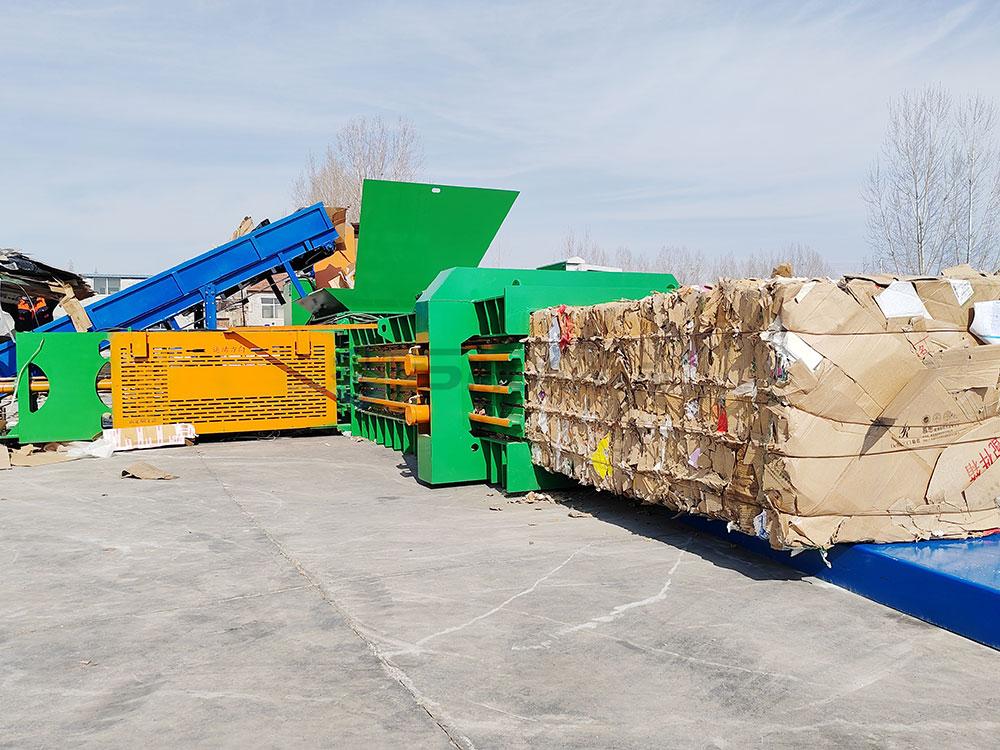
I have found that the word “automatic” creates most of the confusion. The important question is not whether a brochure describes the baler as automatic. The important question is whether the machine can reliably compress and secure your actual material at your required processing volume.
How Does an Auto Tie Baler Work?
An auto tie baler follows a repeated compression and tying cycle. The process may look simple from outside the machine, but poor setup, unsuitable material, or incorrect tying consumables can interrupt production. I therefore explain the full operating sequence before discussing capacity or potential labor savings.
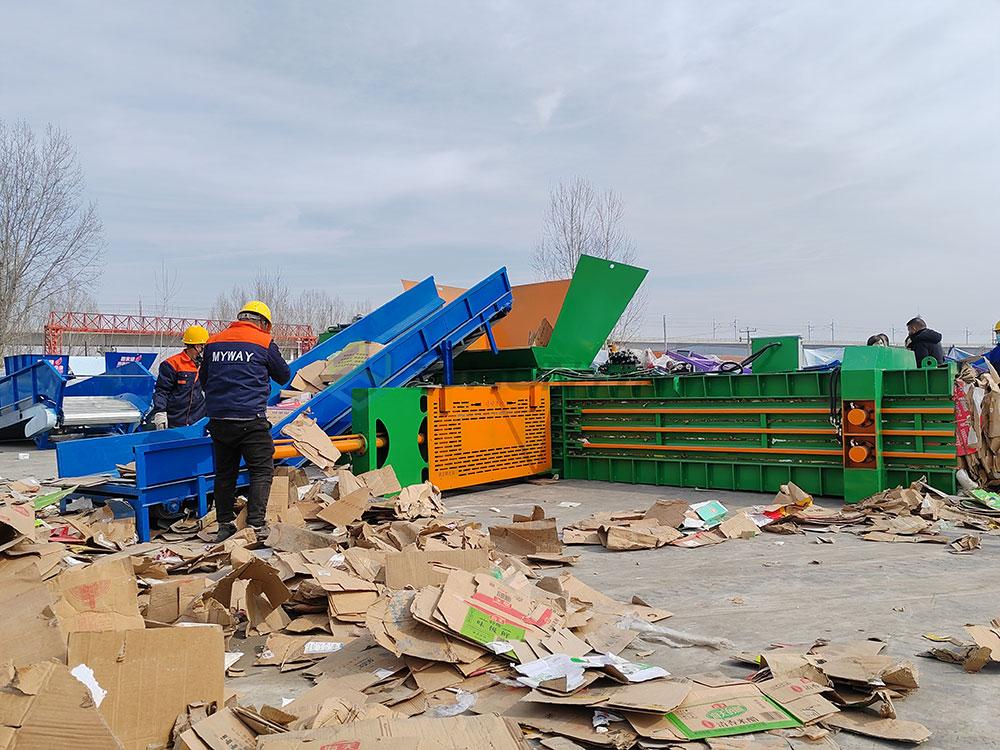
An operator initially loads or threads the specified tying material into the system. The baler then receives material, compresses it in the chamber, and forms a bale. When the required bale length or operating condition is reached, the tying mechanism automatically places and secures the ties before the finished bale exits.2
The initial threading step still matters
An auto tie system does not create ties without preparation. An operator must first install the correct wire, twine, or other approved tying material according to the machine design. The operator may need to route that material through guides, tensioning points, and the tying mechanism.
The exact procedure varies between baler models. Some systems use steel wire, while other systems may use plastic strapping or another tying medium. Buyers should confirm the approved consumable rather than assume that different tying materials are interchangeable.
I once discussed an automatic baler with a German buyer who initially expected an employee to tie every finished bale by hand. I explained that the operator performs the initial setup and threading, but the machine then ties subsequent bales automatically during normal production. That clarification changed the discussion from “Who ties each bale?” to “Who monitors the line and replenishes the wire?”
That example reflects one inquiry, not every buyer’s understanding. However, it shows why suppliers should explain the operating cycle in practical terms.
A typical baling and tying cycle
The sequence usually follows these broad stages:
- Material enters the feed system. A conveyor, loader, or operator supplies cardboard, paper, plastic film, PET bottles, textiles, or another approved recyclable material.
- The hydraulic system compresses the material. The main ram pushes the feedstock into the compression chamber.
- The bale develops inside the chamber. The machine repeats feeding and compression until it reaches the relevant bale-length or pressure condition.
- The automatic tying system activates. The system positions and secures the specified number of ties around the bale.
- The finished bale moves out. The next material charge helps push the completed bale through the discharge section on many continuous horizontal designs.
- The cycle repeats. The machine continues processing while operators supervise conditions and maintain an adequate supply of tying material.
The controls, sensors, bale-length settings, and tying sequence can vary substantially. Buyers should ask the manufacturer for a video of the proposed model processing a comparable material. A general promotional video may not prove that the configuration can manage the buyer’s feedstock.
Automatic tying is not unattended operation
I never recommend describing an auto tie baler as unmanned unless the complete line has been engineered and validated for a specific application. Even a highly automated system requires human oversight.
Operators may remain responsible for:
- Monitoring the feed rate and material distribution
- Removing unsuitable or hazardous items
- Replenishing wire, twine, or strapping
- Checking tie quality and bale stability
- Responding to alarms or material jams
- Cleaning sensors and surrounding work areas
- Performing routine lubrication and inspections
- Following lockout/tagout procedures before intervention3
The auto-tie function eliminates manual tying for each normal bale. It does not eliminate every operating, safety, or maintenance task.4
What Materials Can an Auto Tie Baler Process?
Material compatibility can determine whether an auto tie baler performs reliably. A configuration that works well with dry OCC may behave differently with springy plastic film, rigid containers, or mixed industrial waste. I ask buyers for material details before I discuss a machine model or tying arrangement.
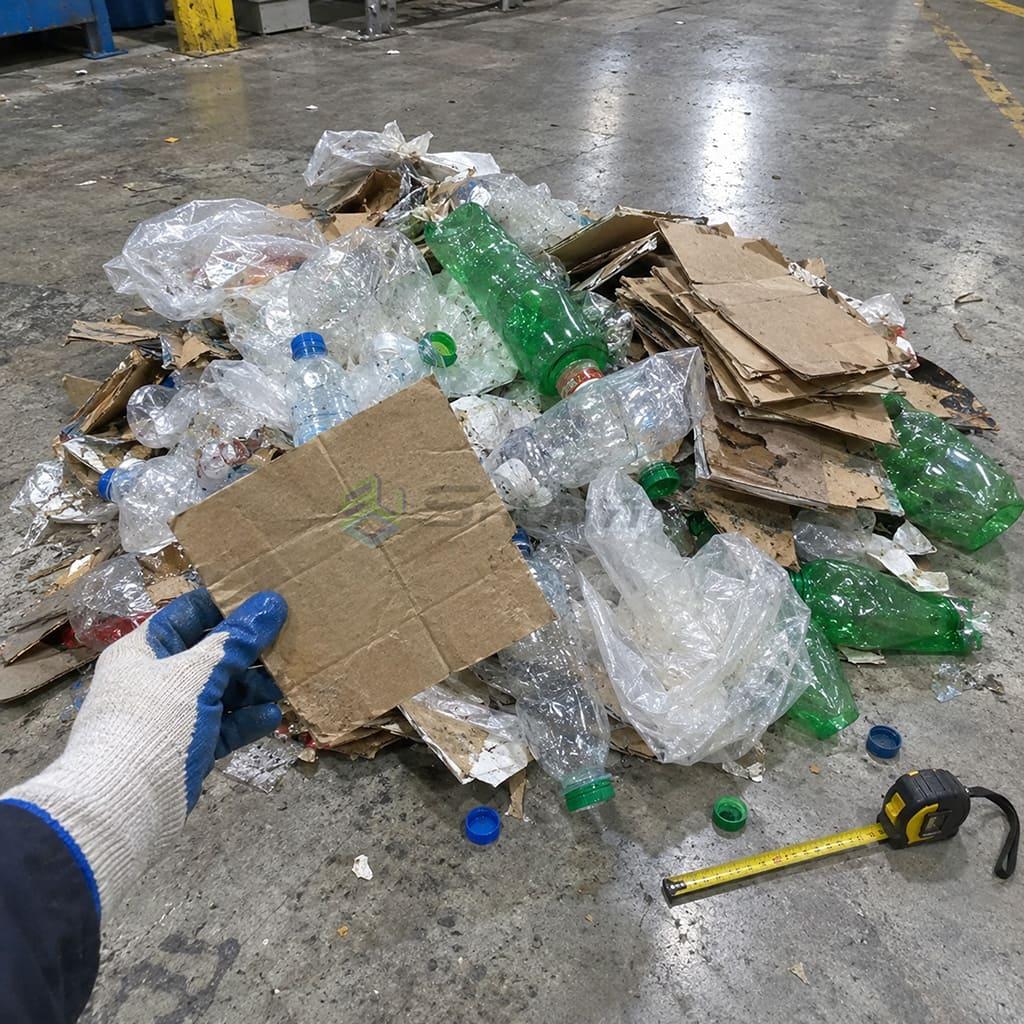
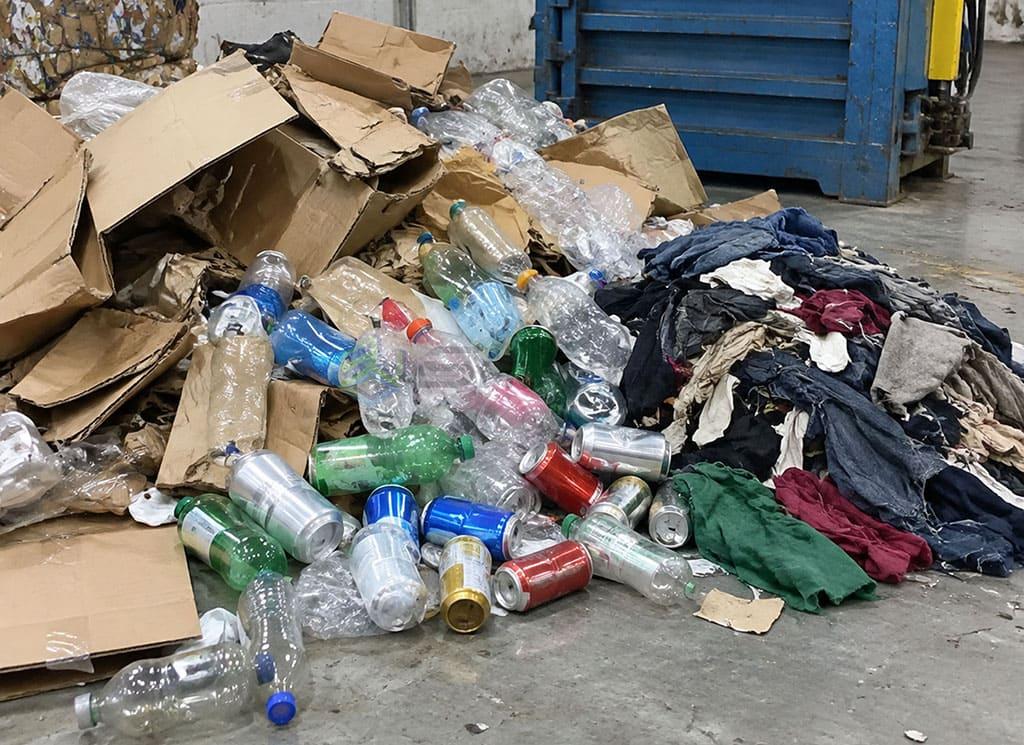
An auto tie baler can process materials such as cardboard, waste paper, PET bottles, selected plastics, plastic film, and textile waste when its feed opening, compression force, chamber, controls, and tying system suit the application.5 Buyers should test or document the actual material because bulk density, rebound, moisture, and contamination affect bale formation.6
Why material behavior changes the result
Two recycling facilities may both describe their feedstock as “plastic,” but their applications may require different baler configurations. One facility may process loose PET bottles. Another may process soft packaging film. These materials do not enter the chamber, compress, or rebound in the same way.7
I normally ask buyers to provide:
- Clear photographs and videos of the loose material
- Material names and approximate composition
- Typical piece dimensions
- Approximate loose bulk density, if available
- Moisture and contamination conditions
- Current daily or hourly volume
- Existing feeding method
- Desired bale dimensions and bale weight
- Downstream buyer or transporter requirements
These details help a manufacturer assess whether the feed opening, compression chamber, ram force, and tie pattern are appropriate.
Common material considerations
| Material | Main evaluation points | Questions I recommend asking |
|---|---|---|
| OCC and cardboard | Sheet size, moisture, coatings, contamination | Can large sheets bridge in the hopper? |
| Waste paper | Grade mix, loose density, dust, moisture | What bale density does the downstream mill accept? |
| PET bottles | Caps, trapped air, bottle size, rebound | Does the material require perforation or pre-processing? |
| Plastic film | Spring-back, wrapping, low bulk density | Can the feed and tying arrangement control expansion? |
| Textile waste | Fiber length, entanglement, product consistency | Has the proposed model processed similar textiles? |
| Mixed recyclables | Variable composition, contaminants, bale stability | Should the material be sorted before baling? |
The table provides screening questions rather than guaranteed design rules. Application-specific engineering remains necessary.
Bale weight alone can be misleading
Buyers often request a fixed bale weight. However, bale weight depends on more than compression force. It can also depend on material composition, moisture, chamber dimensions, bale length, feeding consistency, and operating settings.8
A supplier may provide a bale-weight range based on a particular material under defined conditions. I recommend asking what test material produced that range. A claimed 500-kilogram bale of one paper grade does not prove that the machine will produce the same weight from plastic film or mixed packaging waste.
Buyers should also evaluate tie integrity, not only density. A dense bale still requires a suitable number of correctly tensioned ties. Springy materials can place significant stress on the tying medium after the bale leaves the compression chamber.9
I suggest requesting one or more of the following before purchase:
- A factory trial with the buyer’s own material
- A video test using representative feedstock
- References for comparable applications
- Written assumptions behind capacity and bale-weight claims
- Confirmation of the required wire or strapping specification
These checks reduce the risk of selecting equipment from catalog numbers alone.
When Is an Auto Tie Baler Worth Buying?
An auto tie baler usually costs more and involves greater system complexity than a manually tied machine. The extra automation can be valuable, but it should solve a measurable operating problem. I focus on throughput, repetitive labor, material flow, and downstream requirements rather than treating automatic tying as an upgrade for every facility.
An auto tie baler is worth considering when frequent bale production makes manual tying a recurring bottleneck. It can support steadier processing and reduce repetitive per-bale work. However, the business case depends on material compatibility, operating hours, labor availability, consumable costs, maintenance capability, and the value of increased production continuity.
Throughput should drive the decision
Processing volume is one of the clearest starting points. A warehouse producing a few cardboard bales each week may not gain enough value from automatic tying to justify the added cost and maintenance. A recycling facility producing bales throughout multiple shifts may reach a different conclusion.
I ask buyers to calculate their volume with real operational data:
- Tonnes processed per day or shift
- Peak and average hourly feed rate
- Number of bales produced per shift
- Time currently spent tying each bale
- Number of workers involved in baling
- Planned operating hours per year
- Expected growth in recyclable material
- Frequency of upstream and downstream interruptions
These figures provide a better basis for comparison than a general statement such as “We need a high-capacity baler.”
Manual tie and auto tie comparison
| Evaluation factor | Manual-tie baler | Auto tie baler |
|---|---|---|
| Per-bale tying | An operator usually ties each bale | The machine ties normal bales after setup |
| Initial purchase cost | Usually lower | Usually higher |
| Tying-system complexity | Lower | Higher |
| Labor pattern | More direct bale-handling work | More monitoring and consumable management |
| Production flow | Tying may interrupt the cycle | Tying can support a more continuous process |
| Maintenance needs | Generally simpler | Additional tying components require inspection |
| Best fit | Lower or intermittent volume | Frequent or continuous bale production |
| Operator requirement | Required | Still required |
The comparison does not establish a universal break-even point. Local wages, electricity prices, maintenance costs, shift patterns, financing, and material value can change the result.
Labor savings require careful calculation
I avoid promising a fixed labor reduction because facilities organize work differently. One operator may already manage several tasks. Another facility may assign workers specifically to bale tying and handling. Automatic tying changes the work pattern, but it does not automatically remove a full-time position.10
A useful evaluation compares:
Current annual tying labor and interruption costs against the added ownership cost of auto-tie equipment.
The ownership calculation should include:11
- Purchase-price difference
- Financing or capital cost
- Tying consumables
- Electricity consumption
- Preventive maintenance
- Spare and wear parts
- Technician availability
- Training
- Expected downtime
- Equipment life and residual value
I recommend asking a qualified financial or operations professional to build the return-on-investment model with site-specific figures. A supplier can provide equipment data, but the buyer should validate the operating assumptions.
How Should Buyers Evaluate an Auto Tie Baler Supplier?
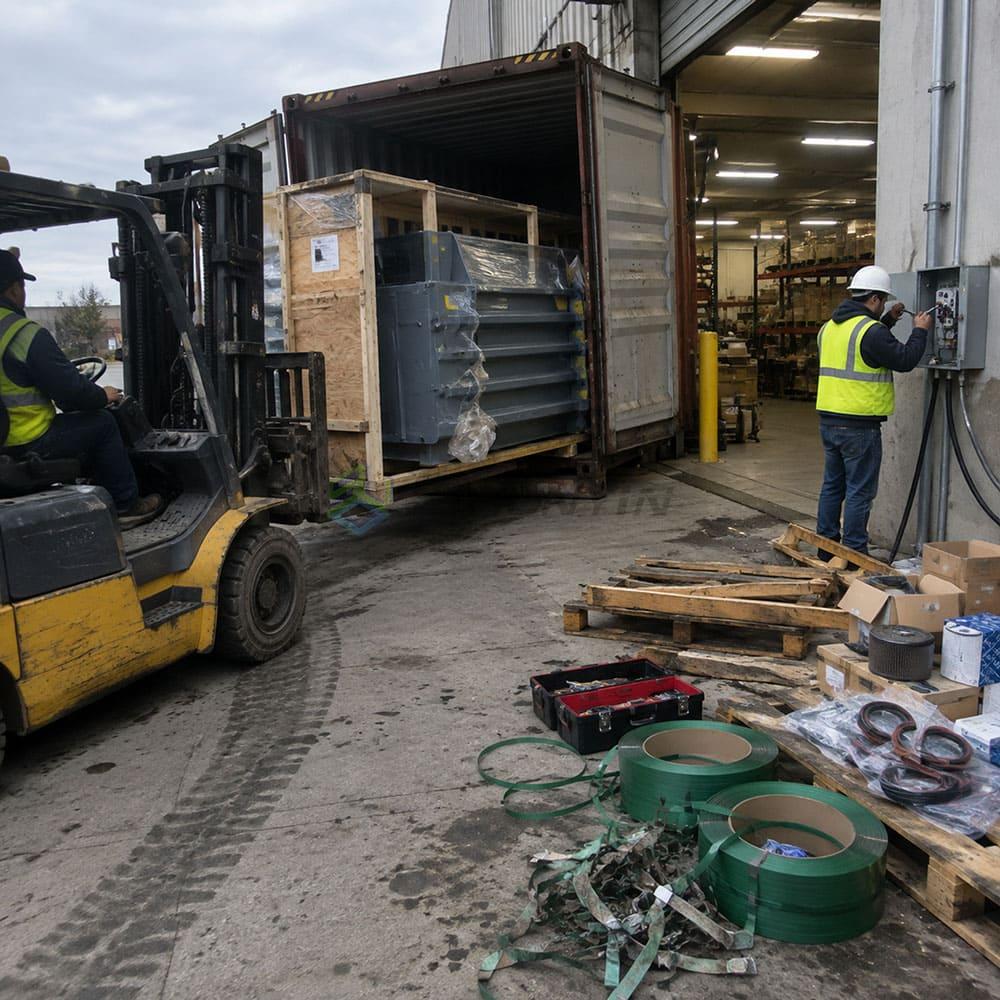
A suitable machine can still become a poor investment when the supplier cannot document performance, support commissioning, or provide critical parts. Overseas buyers face added risks involving voltage, shipping, installation, language, and service response. I recommend evaluating the machine and the manufacturer as one complete procurement decision.
Buyers should evaluate an auto tie baler supplier through material trials, technical documentation, reference applications, quality-control records, safety documents, warranty terms, spare-parts plans, and after-sales capability. They should also verify capacity assumptions, approved consumables, electrical specifications, installation responsibilities, and any certification claims before placing an order.
Ask for evidence tied to the proposed model
A supplier may manufacture several baler types. General factory experience does not prove that every model suits every feedstock. I recommend requesting documents and evidence for the exact machine configuration in the quotation.
A practical procurement file can include:
- Technical specification sheet
- General arrangement drawing
- Feed-opening and chamber dimensions
- Motor power and site electrical requirements
- Hydraulic system information
- Proposed bale-size and weight ranges
- Estimated throughput and stated test conditions
- Tying material specification
- Recommended spare-parts list
- Maintenance schedule
- Foundation or floor-loading requirements
- Installation and commissioning plan
- Operator training scope
- Warranty terms and exclusions
Buyers should identify whether quoted capacity refers to theoretical, maximum, or typical operating performance. They should also ask which material, moisture condition, and feeding method supported the figure.
Review manufacturing quality controls
I encourage buyers to inspect how a supplier controls fabrication and assembly. A factory visit can help, but remote buyers can also request dated production records, inspection photographs, and live video calls.
Relevant checks may cover:
- Incoming materials: The supplier should identify how it verifies specified steel, hydraulic, electrical, and tying components.
- Welding and fabrication: The buyer should ask about welding procedures, inspection methods, and dimensional control.
- Hydraulic assembly: The supplier should explain cleanliness controls, pressure testing, and leak checks.
- Electrical assembly: The buyer should review component brands, cabinet layout, labeling, and applicable protection measures.
- Functional testing: The supplier should demonstrate feeding, compression, emergency stops, sensors, controls, and the tying cycle.
- Pre-shipment inspection: Both parties should agree on acceptance criteria before dispatch.
A third-party inspector or qualified engineer can review the machine when the buyer lacks in-house technical expertise.
Verify safety and certification claims
Suppliers may refer to CE marking, ISO systems, or other certifications. Buyers should treat these claims as documents to verify, not as substitutes for technical due diligence.12
I recommend checking:
- Whether a certificate applies to the manufacturer, product, or management system
- Whether the issuing body and certificate number can be verified
- Whether the machine configuration matches the supporting documentation
- Whether guards, interlocks, emergency stops, and warning labels suit the destination market
- Whether the electrical system complies with local requirements
- Whether the buyer must complete a local risk assessment
Regulations vary by country and installation. A qualified local safety professional should evaluate application-specific compliance before commissioning.
Confirm after-sales support in writing
An auto-tie mechanism adds components that operators and maintenance personnel must understand. Buyers should know what happens when a sensor, cutter, twisting mechanism, guide, or control component requires adjustment or replacement.
I advise buyers to clarify:
- Remote response hours
- Available service languages
- Technician travel arrangements
- Spare-parts lead times
- Parts stocked by the supplier
- Recommended on-site spare parts
- Training materials and manuals
- Software or controller backup availability
- Warranty claim procedures
Clear support terms can be more valuable than an attractive quotation with vague service promises.
Frequently Asked Questions
Does an auto tie baler run without an operator?
No. An auto tie baler automates the tying of each normal bale after initial setup, but operators still monitor feeding, alarms, bale quality, and consumable levels. Staff must also perform cleaning and maintenance. The degree of operator involvement depends on the complete line design and the material being processed.
Does the operator need to thread every bale manually?
No. The operator normally threads or installs the tying material during initial setup or replenishment. The automatic tying system then secures subsequent bales during production. The precise threading process depends on whether the machine uses wire, twine, strapping, or another approved tying material.
Can one auto tie baler process cardboard and plastic?
Some machines can process more than one material, but suitability is not automatic. Cardboard, PET bottles, and plastic film have different feeding, compression, rebound, and tying characteristics. Buyers should ask the supplier to assess each material and, where possible, conduct trials with representative samples.
What information should I send to a baler manufacturer?
I recommend sending material photos and videos, composition, loose density, moisture condition, hourly or daily volume, feeding method, operating hours, desired bale dimensions, target bale weight, power supply, and site limitations. This information helps the manufacturer propose a more defensible configuration.
Is an automatic tying system always more economical?
No. The system may reduce repetitive tying work and support continuous processing, but it also increases purchase cost and maintenance complexity. Buyers should compare annual bale volume, current labor, production interruptions, consumables, maintenance, energy, and expected equipment life before deciding.
Conclusion
An auto tie baler automatically secures finished bales after the operator completes the initial threading and setup. Its main value comes from eliminating manual tying for each bale, not from removing every operator task. I recommend choosing one only after verifying material compatibility, realistic throughput, tie quality, safety documentation, maintenance support, and total ownership cost. If you are evaluating a baler for cardboard, paper, plastics, textiles, or another recyclable material, contact our team with your material details and required capacity for a case-specific equipment assessment.
"Baler", https://en.wikipedia.org/wiki/Baler. Technical descriptions of baling equipment distinguish automatic tying systems by their ability to place and secure ties around compressed bales after the tying material has been installed. Evidence role: definition; source type: encyclopedia. Supports: Automatic balers use a mechanical tying system to secure compressed bales, with tying material installed or supplied before automatic operation.. Scope note: General descriptions establish the operating principle but may not reflect the threading sequence or tie mechanism of every model. ↩
"The Field Baler: Operation and Costs - Open PRAIRIE", https://openprairie.sdstate.edu/cgi/viewcontent.cgi?article=1083&context=agexperimentsta_circ. Engineering descriptions of automatic balers document control sequences in which a preset bale dimension, pressure, or related sensor condition initiates tying before the bale is discharged. Evidence role: mechanism; source type: paper. Supports: Automatic baling systems use sensed or configured operating conditions to initiate tying before bale discharge.. Scope note: The specific trigger and sequence depend on the baler design and control system. ↩
"eTool : Lockout-Tagout - Hot Topics", http://www.osha.gov/etools/lockout-tagout/hot-topics/relationship-subpart-o/minor-servicing-exception. OSHA's control-of-hazardous-energy requirements call for energy isolation and lockout/tagout during servicing or maintenance when unexpected energization, startup, or release of stored energy could cause injury. Evidence role: expert_consensus; source type: government. Supports: Hazardous energy must be isolated and controlled before servicing, clearing jams, or other interventions where unexpected machine movement could injure workers.. ↩
"Operating Hazards of Baler Discharge-Door Locks", http://www.osha.gov/publications/shib081313. Occupational-safety guidance for baling and compacting equipment continues to assign operators and maintenance personnel responsibilities for inspection, monitoring, servicing, and safe fault clearance despite automated machine functions. Evidence role: expert_consensus; source type: government. Supports: Occupational-safety guidance treats balers as machinery requiring trained operation, inspection, maintenance, and controlled intervention even when parts of the cycle are automated.. Scope note: Such guidance addresses balers broadly and does not quantify the staffing required for a particular auto-tie installation. ↩
"Recycling of Plastics in the United States - PMC - NIH", https://pmc.ncbi.nlm.nih.gov/articles/PMC9004285/. Research on recovered-material handling describes baling or compaction of paper, plastic containers, films, and textiles to increase handling density, while recognizing that machine configuration must be matched to the waste stream. Evidence role: general_support; source type: research. Supports: Recovered paper, plastics, containers, film, and textiles are commonly densified or baled for handling and transport, with equipment suitability depending on material and machine characteristics.. Scope note: Evidence that a material category is commonly baled does not establish that any specific auto-tie model can process it. ↩
"Moisture Measurement in Paper and Cardboard Packaging ...", https://www.academia.edu/94464212/Moisture_Measurement_in_Paper_and_Cardboard_Packaging_Waste_Bales_for_Recycling. Compaction studies identify initial bulk density, moisture content, material composition, contamination, and post-compression elastic recovery as variables affecting densification and the stability of compressed material. Evidence role: mechanism; source type: paper. Supports: Feedstock density, moisture, contamination, and elastic recovery affect compaction behavior, achieved density, and bale stability.. Scope note: The relative importance of each variable differs among paper, rigid plastics, films, textiles, and mixed waste. ↩
"Polyethylene Terephthalate (PET) Bottle-to-Bottle Recycling ...", https://pmc.ncbi.nlm.nih.gov/articles/PMC9231234/. Studies of plastic-waste densification show that rigid hollow containers and flexible films exhibit different feeding and compression behavior because their geometry, stiffness, air retention, and elastic recovery differ. Evidence role: mechanism; source type: paper. Supports: Rigid hollow PET containers and flexible films respond differently to loading because of differences in geometry, stiffness, trapped air, entanglement, and elastic recovery.. Scope note: Published tests may use laboratory compactors or specific polymer grades rather than commercial auto-tie balers. ↩
"High-pressure Compaction & Bailing Of Solid Waste", https://nepis.epa.gov/Exe/ZyPURL.cgi?Dockey=2000PVVW.TXT. Experimental work on material compaction indicates that final bale mass and density are functions of feedstock composition and moisture, package dimensions, applied pressure, loading consistency, and operating parameters rather than force alone. Evidence role: mechanism; source type: paper. Supports: Final bale mass and density vary with material properties, moisture, bale dimensions, compression parameters, and feed uniformity.. Scope note: Quantitative relationships derived for agricultural biomass or a single recovered material may not transfer directly to all recycling feedstocks. ↩
"Tensile elastic recovery of elastomeric impression materials", https://pubmed.ncbi.nlm.nih.gov/18589071/. Research on compressed bales describes post-release elastic recovery or springback as a source of outward force that must be resisted by the bale's wire, twine, or strapping. Evidence role: mechanism; source type: paper. Supports: A compressed material's elastic recovery is restrained by its ties, thereby producing tension in the binding material after pressure is released.. Scope note: Tie loads depend on the material, bale geometry, compression history, number of ties, and binding properties, so the source may support the mechanism without establishing a universal stress value. ↩
"The Risk of Automation for Jobs in OECD Countries", https://www.oecd.org/en/publications/the-risk-of-automation-for-jobs-in-oecd-countries_5jlz9h56dvq7-en.html. Task-based labor research finds that technologies commonly automate selected activities rather than complete occupations, so the employment effect depends on the share of tasks automated and on workplace reorganization. Evidence role: expert_consensus; source type: institution. Supports: Automation typically affects particular tasks within jobs, and whether employment is reduced depends on how the remaining tasks and production process are reorganized.. Scope note: Economy-wide labor research does not directly measure staffing outcomes at auto-tie baler installations. ↩
"Life Cycle Costing Manual for the Federal Energy ...", https://nvlpubs.nist.gov/nistpubs/hb/2025/NIST.HB.135e2025.pdf. Government life-cycle cost guidance evaluates equipment alternatives using acquisition costs together with energy, operation, maintenance, replacement, financing or discounting, and residual value over a defined study period. Evidence role: general_support; source type: government. Supports: Life-cycle cost analysis evaluates acquisition together with recurring energy, maintenance, replacement, financing, and residual-value effects over the analysis period.. Scope note: General life-cycle costing frameworks do not specify which cost categories will be material for a particular baler installation. ↩
"Risk Assessment Section 17.10 The EU Machinery Directive", https://www.ntnu.edu/documents/624876/1277591044/machinery.pdf/6da803dd-1689-422d-b281-4b88fadd6512. European Commission guidance describes CE marking as the manufacturer's declaration that a product meets applicable EU requirements, while ISO guidance distinguishes management-system certification from product certification; neither removes the need to verify scope, documentation, configuration, and installation-specific risks. Evidence role: definition; source type: government. Supports: CE marking represents a manufacturer's declaration of conformity under applicable EU rules, while management-system certification has a different scope and does not replace machine-specific risk assessment or verification.. Scope note: The applicable legal duties and conformity-assessment procedures depend on the destination jurisdiction, machine category, and date of placement on the market. ↩