

A scrap baler is a hydraulic machine that compresses scrap materials into compact bales or blocks for easier handling, storage, and transport.1 But asking simply "What is a scrap baler?" isn’t enough. To select the right equipment, buyers must understand how material type, bale specifications, and downstream requirements factor into machine choice.
A scrap baler works by loading loose materials into a chamber where a hydraulic system compresses them into dense, manageable bales or blocks. Different balers are designed for specific materials—including paper, cardboard, plastic, and metal—with variations in bale size, density, tying, and discharge methods, all tailored to application needs.2
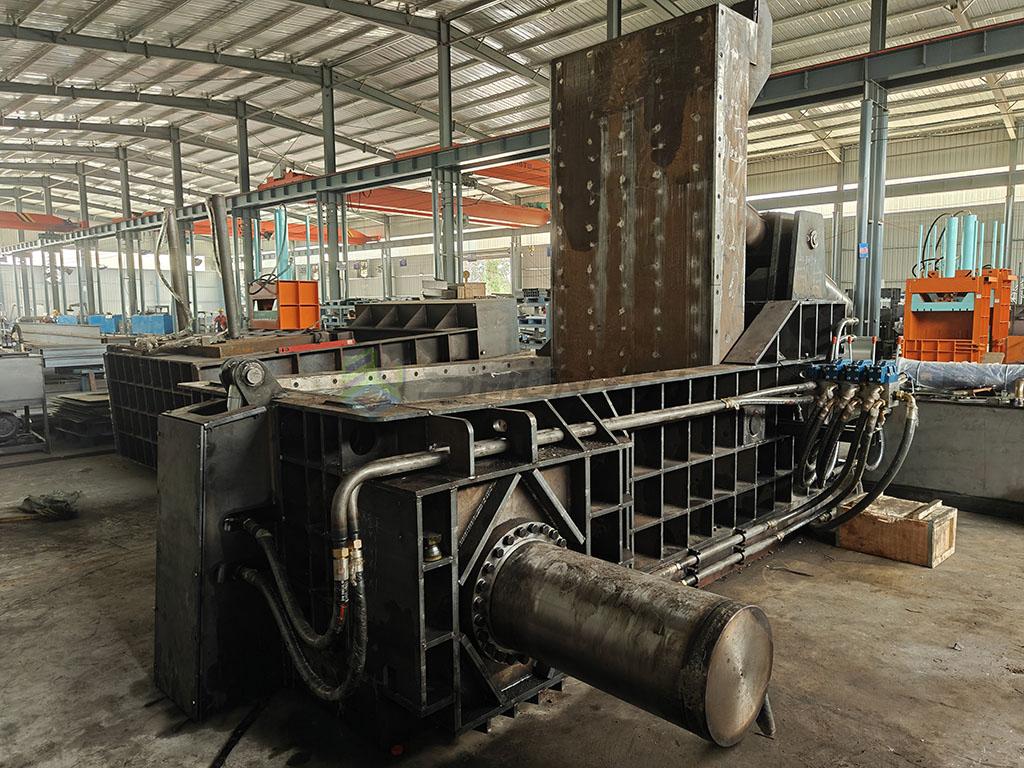
Choosing the correct baler depends on more than broad machine categories. Material-specific considerations such as input condition, desired density, and handling requirements often make the decision more nuanced.
How does a scrap baler work?
Scrap balers operate using hydraulic systems to compress loose, bulky materials into dense, uniform forms.
In a typical scrap baler, loose materials are fed into a compression chamber. Hydraulic rams apply immense force to reduce the volume3, discharging the compact bale at the end. Depending on the machine type, bale tying, stacking, or automatic discharge completes the process, ensuring the bales are ready for handling or transport.
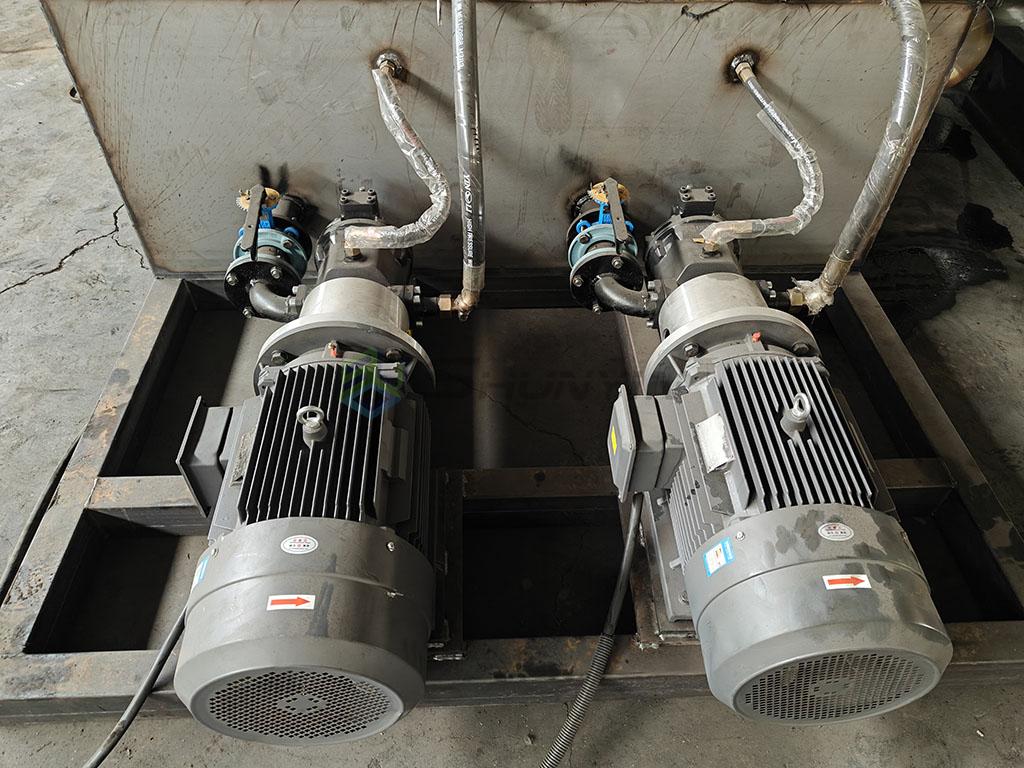
The working principle of scrap balers in detail:
- Material loading: Loose scrap such as cardboard, plastic, or metal is placed into the hopper or chamber manually or via conveyors.
- Hydraulic compression: Powerful hydraulic rams apply pressure to compress the material into a denser form.
- Bale discharge: Compressed bales or blocks are discharged manually, semi-automatically, or automatically, depending on machine design.
Balers vary significantly in design, offering customizations in chamber size, pressure force, and discharge mechanisms to meet diverse requirements.
Are all scrap balers suitable for metal processing?
No—scrap balers are not universally suitable for all materials, and many baler types are inappropriate for processing heavy metal scrap.
Metal processing often requires a specialized metal baler or even a briquetting press, as conventional hydraulic balers designed for paper or plastic may fail to deliver the necessary bale density, weight, or dimensions.4
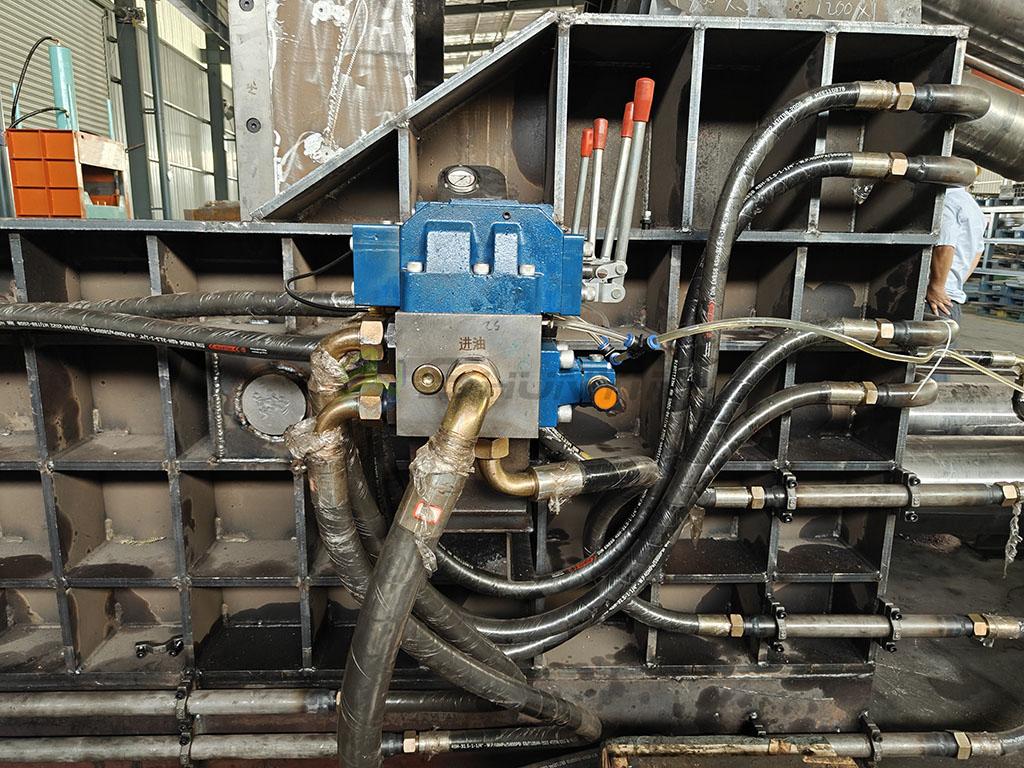
Key differences in metal scrap processing:
- Material hardness and density: Metals such as aluminum or steel require higher compression force and specialized equipment.5
- Target output: Metal bales or blocks often need specific dimensions and densities for resale or smelting.
- Processing method: Metal balers or briquetting presses often use a combination of shear force and compression.6
For example, a Thai customer once approached us for advice, mistakenly assuming a vertical baler could handle their aluminum scrap. After clarifying their requirements—dense, heavy briquettes for smelting—we recommended a metal briquetting press. This saved the customer from purchasing an unsuitable baler that wouldn't meet their objectives.
What factors should guide equipment selection?
Balers must be chosen based on the buyer’s desired output and operational specifics—not a simple category or price comparison.
Material type, throughput requirements, bale density, downstream processes, storage needs, and transportation options should determine which scrap compaction system fits.7 Buyers should focus on the results they need. Pressure ratings and costs are secondary.
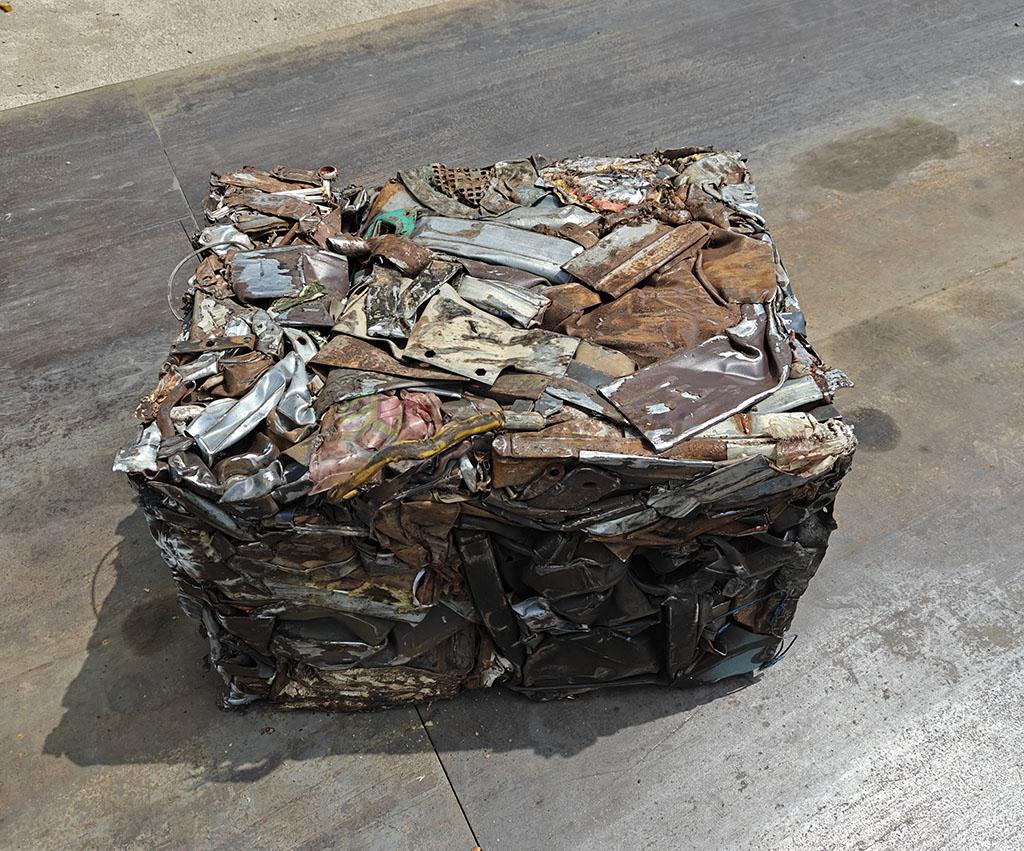
Critical considerations when selecting a scrap baler:
- Material specifics: Understand whether the material is rigid (e.g., metals), flexible (e.g., plastic film), or brittle (e.g., paper fibers).
- Throughput capacity: Estimate daily processing needs to avoid under- or over-specifying the machine’s capacity.8
- Output density and weight: Seek specific compression pressure ranges required to meet bale weight and density targets.
- Discharge and handling requirements: Check whether manual removal, conveyor feeds, or automatic discharge fits your manpower and workflow.
- Downstream specifications: Match bale dimensions, stacking ability, or density requirements to resale or transport needs.
- Space and power constraints: Evaluate facility space, electrical systems, and operator training to ensure smooth integration.
Selecting a machine based on poorly defined criteria—like price alone—often leads to operational inefficiencies or the inability to meet recycling goals.
Frequently Asked Questions
Can one scrap baler process all types of scrap?
No, scrap balers are typically designed for specific materials. Metal scrap, for instance, requires higher compression forces and may demand entirely different configurations compared to paper or plastic balers.
Are metal balers the same as metal briquetting machines?
No, metal balers compact lighter scrap into manageable bales for transport or resale, while briquetting machines produce dense blocks from fine materials such as shavings or chips.9 Each serves distinct industrial needs.
What is bale density, and why does it matter?
Bale density refers to how tightly a baler compresses materials, directly affecting transportation costs, storage space, and downstream usability. Higher density improves material handling and reduces freight expenses.10
How do I verify a scrap baler’s performance before purchasing?
Always consult with the manufacturer, clarify your material and output specifications, and request performance references or documentation. On-site testing of your material—or proof of similar applications—is ideal.
What certifications should I check before buying a scrap baler?
Industry certifications, such as CE for safety compliance or ISO for quality assurance, are a good starting point.11 Always ensure the machine meets local safety and operational standards.
Conclusion
Scrap balers are hydraulic machines designed to compress recyclable materials into compact forms for efficient handling, storage, and transport. However, selecting the right machine depends on material type, throughput, density, and downstream requirements—not broad categories or price alone. For buyers, focusing on the desired output helps avoid purchasing equipment unsuitable for their operations.
If you’re unsure which scrap baler suits your needs, reach out to us for expert guidance. From cardboard to scrap metal, we’ll help identify the best solution for your business. Let’s set up a consultation!
"Analysis of Source Separate Collection of Recyclable Solid ...", https://nepis.epa.gov/Exe/ZyPURL.cgi?Dockey=9101M9MO.TXT. Government waste-management guidance describes balers as equipment that compacts loose recyclable material into bales, reducing its volume and facilitating handling, storage, and transportation. Evidence role: definition; source type: government. Supports: An authoritative waste-management source should define baling as the compression of loose material into compact units for handling, storage, or transportation.. ↩
"Advisory Committee on Packaging Task Force 2 – PRN ...", https://npwd.environment-agency.gov.uk/FileDownload.ashx?FileId=946cab53-a22d-4326-91e0-ccba9dcda275. Recycling guidance distinguishes baling systems by feed material, bale dimensions and density, binding method, and material-handling arrangement, indicating that configuration is application-dependent. Evidence role: general_support; source type: institution. Supports: Institutional recycling guidance should document that baler type and output specifications depend on the material stream and handling system.. Scope note: Published guidance may cover common recyclable streams without cataloguing every available baler configuration. ↩
"Demonstration of Pascal's law by using Hydraulic Jack (PDF)", https://www.academia.edu/103469389/Demonstration_of_Pascals_law_by_using_Hydraulic_Jack. Engineering treatments of hydraulic presses explain that fluid pressure applied over a piston area generates linear ram force, which can be used to compress material and reduce its occupied volume. Evidence role: mechanism; source type: education. Supports: An engineering source should explain that hydraulic pressure acting on a piston produces the ram force used for compression.. Scope note: This establishes the hydraulic mechanism generally rather than measuring the performance of any particular scrap baler. ↩
"Operating Hazards of Baler Discharge-Door Locks", http://www.osha.gov/publications/shib081313. Official machinery guidance emphasizes that baling equipment must be operated within its specified material and capacity limits, supporting the distinction between machines intended for packaging recyclables and those engineered for metal scrap. Evidence role: general_support; source type: government. Supports: Safety or equipment guidance should establish that balers must be used within their intended material, capacity, and output specifications.. Scope note: Such guidance supports the need to match equipment to its rated application but does not demonstrate failure by every paper or plastic baler used with metal. ↩
"A review on solid-state recycling of aluminum machining chips ...", https://pmc.ncbi.nlm.nih.gov/articles/PMC11325671/. Studies of metal-scrap compaction report that densification depends on applied pressure, alloy properties, particle or piece geometry, and target density, necessitating machinery designed for metallic feedstocks. Evidence role: mechanism; source type: paper. Supports: Research on scrap compaction should show that metallic feedstocks require equipment and pressures suited to plastic deformation and the desired compact density.. Scope note: The evidence does not support a single universal force threshold or prove that every metal requires more force than every nonmetal. ↩
"Metal Recycling Industry Project", https://www.health.ny.gov/environmental/workplace/metal_recycling/metal_recycling_report.htm. Technical descriptions of shear-balers identify sequential compression and shearing operations used to consolidate oversized metal scrap and cut it into manageable charges. Evidence role: mechanism; source type: research. Supports: A technical source should document combined shear-and-compression processing in relevant classes of metal-scrap equipment.. Scope note: This mechanism applies specifically to shear-balers and should not be generalized to all balers or all briquetting presses. ↩
"Source Separation Collection and Processing Equipment", https://nepis.epa.gov/Exe/ZyPURL.cgi?Dockey=9100MOID.TXT. Materials-recovery guidance treats feedstock characteristics, processing rate, bale specifications, available storage, transport arrangements, and end-market requirements as interdependent criteria in baler selection. Evidence role: expert_consensus; source type: institution. Supports: Institutional design guidance should identify feed characteristics, required capacity, product specifications, logistics, and downstream acceptance criteria as equipment-selection factors.. Scope note: The relative importance of each criterion varies by facility, material stream, and local market. ↩
"Material Recovery Facilities for Municipal Solid Waste", https://nepis.epa.gov/Exe/ZyPURL.cgi?Dockey=30004DDZ.TXT. Facility-design literature recommends sizing processing equipment against expected and peak material flows because insufficient capacity can create bottlenecks, while excessive capacity can leave equipment underutilized. Evidence role: general_support; source type: education. Supports: Facility-design literature should support matching rated processing capacity to expected material flow and peak demand.. Scope note: This is a general capacity-planning principle and does not provide a scrap-baler-specific sizing formula. ↩
"and Harald Pechtel, Neuss (Germany)", https://webapp1.dlib.indiana.edu/virtual_disk_library/index.cgi/5628977/FID979/OG/html/1298-2/us06941860-20050913.html. Metal-recycling studies describe briquetting as the high-pressure consolidation of loose machining chips, turnings, or swarf into dense, regularly shaped compacts for handling or remelting. Evidence role: definition; source type: paper. Supports: A manufacturing or recycling study should characterize briquetting as high-pressure compaction of loose metal chips, turnings, or swarf into dense units.. Scope note: Briquetting can also be applied to other particulate materials, so fine metal scrap is a common application rather than an exclusive definition. ↩
"(PDF) Engineering Factors for Biomass Baler Design", https://www.academia.edu/86128492/Engineering_Factors_for_Biomass_Baler_Design. Transportation studies show that compaction can reduce shipment frequency and unit freight cost by increasing the mass loaded within a fixed cargo volume when the shipment would otherwise be volume-limited. Evidence role: mechanism; source type: paper. Supports: A logistics study should show that denser loads can increase the mass carried per unit of cargo volume and reduce trips when vehicles are volume-constrained.. Scope note: Higher density does not necessarily reduce cost once legal vehicle-weight limits are reached, and very dense bales may require different handling equipment. ↩
"Directive 2006/42/EC - machinery directive", https://osha.europa.eu/en/legislation/directives/directive-2006-42-ec-of-the-european-parliament-and-of-the-council. European Commission guidance defines CE marking as the manufacturer's declaration that a product conforms to applicable EU requirements, while ISO describes ISO 9001 certification as assessment of an organization's quality-management system rather than certification of an individual machine's safety or performance. Evidence role: definition; source type: government. Supports: Official EU and ISO materials should clarify the meanings and limits of CE marking and certification to a quality-management standard such as ISO 9001.. Scope note: Neither CE marking nor ISO 9001 certification alone demonstrates that a particular baler is suitable for the buyer's material, throughput, or local legal requirements. ↩