

A baling machine is often misunderstood as a tool exclusively for crushing waste. However, its primary purpose is far broader: it compresses various materials into stable and manageable bales, allowing businesses to reduce waste volume, streamline handling, and save costs on storage and transportation1. Let’s explore the full scope of what a baling machine can achieve.
A baling machine is used to compress recyclable or waste materials—such as cardboard, plastics, scrap metal, textile waste, and more—into compact bales that are easier to store, handle, ship, or process downstream. These machines help businesses optimize material management, improve efficiency, and reduce logistics costs.
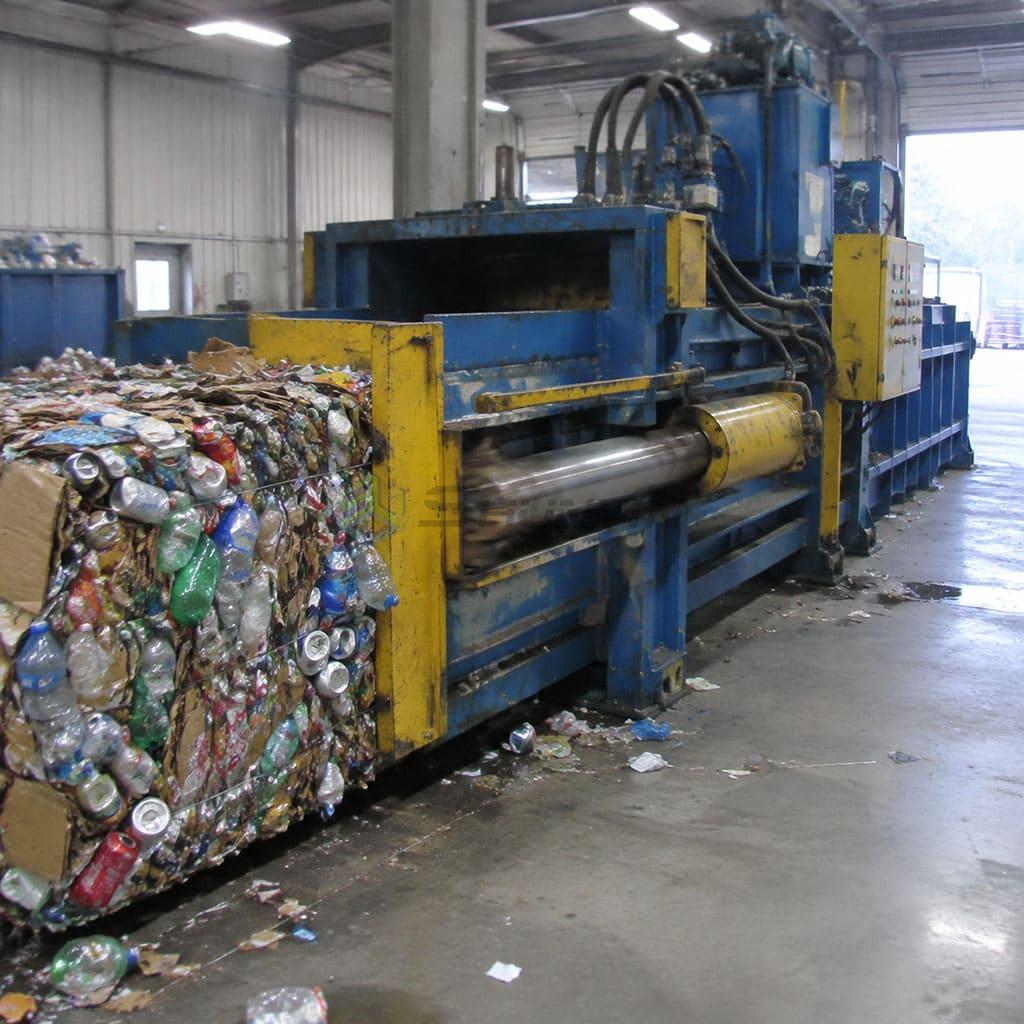
From cardboard packaging to scrap metal recycling, baling machines serve varied industries by enabling efficient and cost-effective material consolidation. Let’s dive deeper into these applications.
How does a baling machine work?
A baling machine’s value lies in its simplicity of function. It addresses a critical problem: bulky recyclable materials occupying excessive space, increasing handling complexity, and driving up costs.
At its core, a baling machine compresses loose materials, forms them into bale shapes, and secures them for easier handling, storage, and transport.2
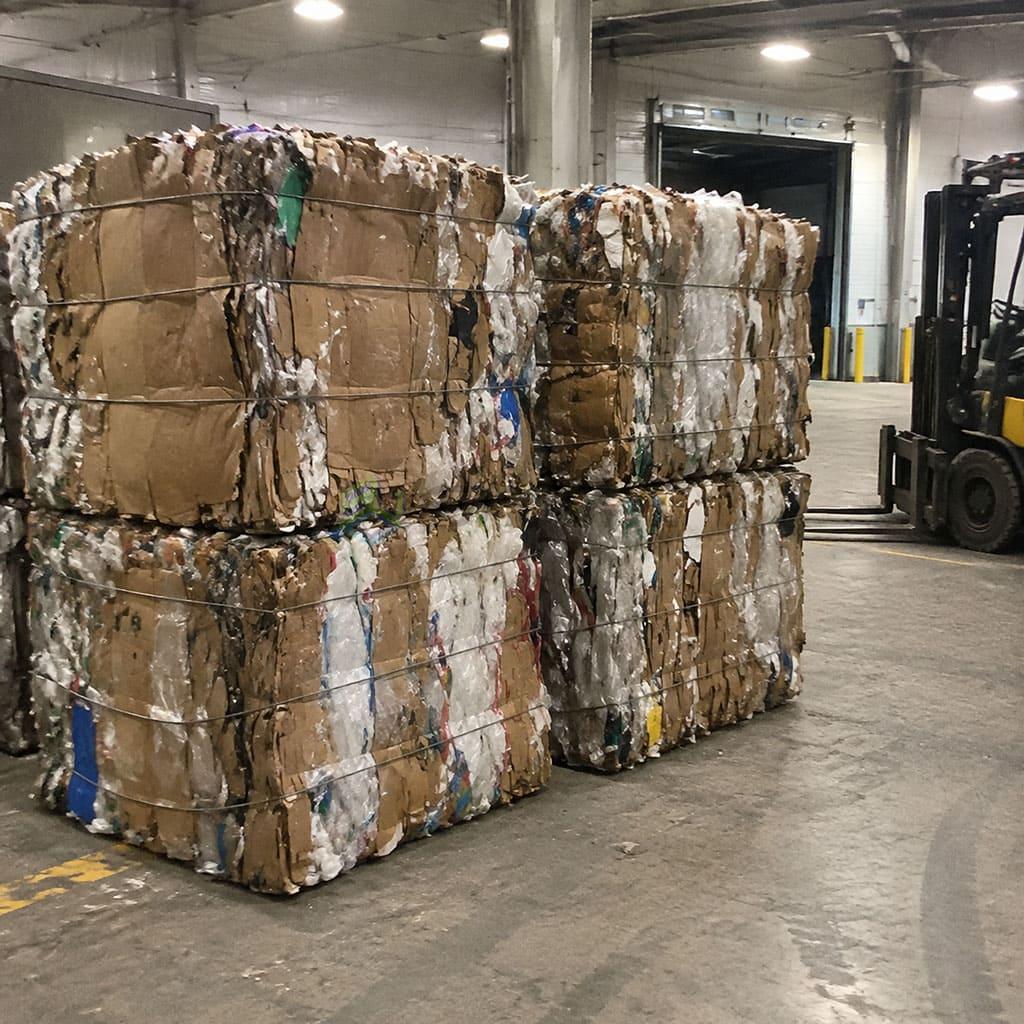
The Three-Step Process
- Compression: The machine applies force to reduce the material's volume significantly.
- Baling: It forms compact, stackable bales. Depending on the machine type, bales may be tied off using wires or straps for stability.3
- Efficiency: Ready bales are simpler to move, store, load, and transport, minimizing labor, space, and logistical waste.
In our customer discussions, we emphasize that each machine’s usability depends on factors such as material type, daily processing capacity, desired bale density, feeding methods, and labor requirements. A machine optimized for cardboard packaging, for instance, would be inappropriate for compressing scrap metals.4
What types of materials can be baled?
When people hear “baling machine,” they mostly think of cardboard or industrial waste. But baling applications extend far beyond conventional recyclables.
Common materials baled include cardboard, plastics, textile waste, PET bottles, metal scraps, and even clothing in certain industries.5
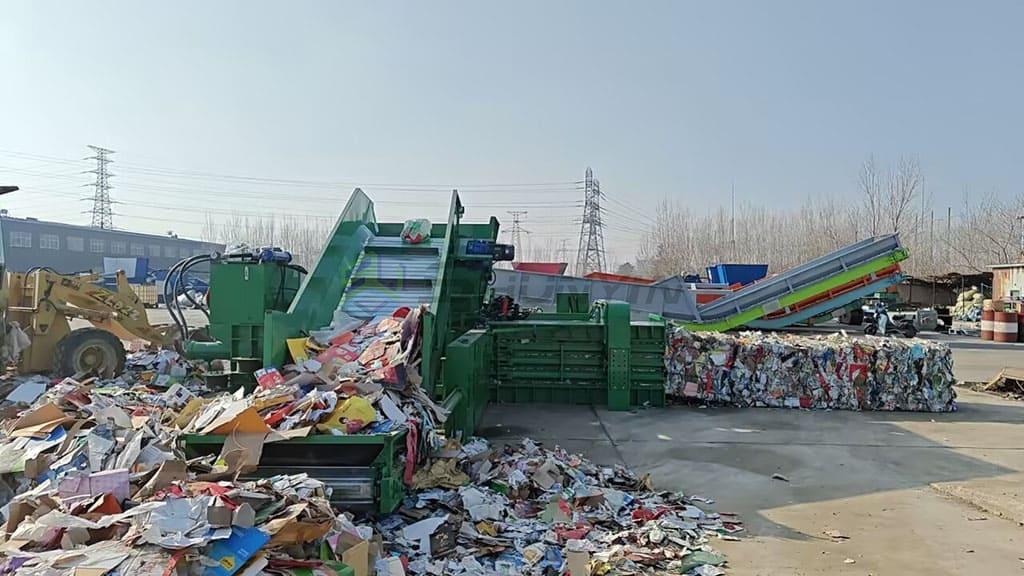
Case Study: A Saudi Customer’s Changed Perspective
One customer from Saudi Arabia initially queried us about waste management balers. Their recycling efforts focused on packaging materials but did not extend to other materials. After discussing applications, they realized baling machines could compress old clothing for resale in the textile recycling market. This opened new possibilities within their operations.
A key takeaway? These machines are versatile, but their usability rests on identifying the right match between the machine’s features and the material’s properties. Not every use case is suitable—whether a baling machine is viable depends on assessing material type, volume, bale density, and space requirements.
How do businesses choose the right baling machine for their needs?
Selecting a baling machine is not as simple as choosing the cheapest option or looking only at specifications like compression force. Correct selection ensures safe operation and optimal output.
Businesses typically assess machine features based on material type, processing capacity, desired bale characteristics, feeding methods, space, and transportation requirements.6
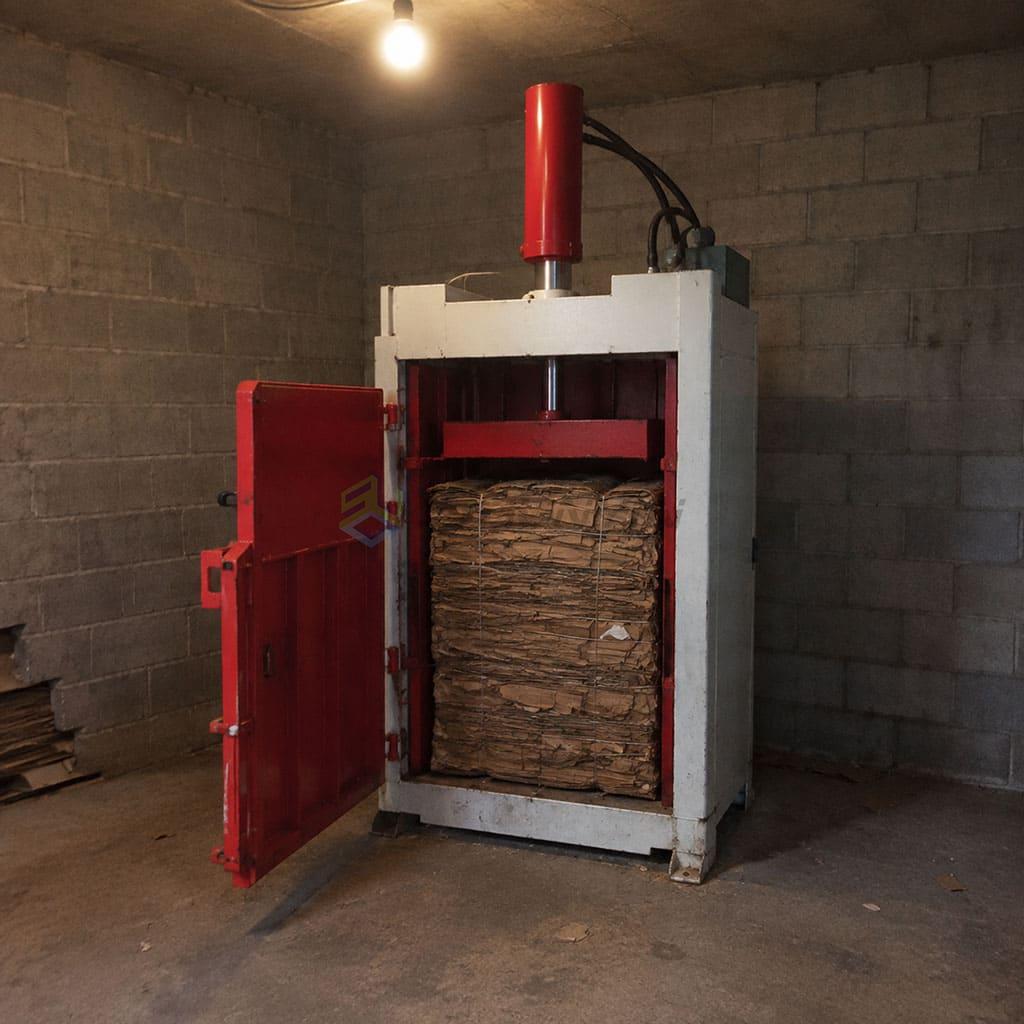
Factors for Baling Machine Selection
- Material Type and Properties: Different balers are designed for specific types of materials, such as cardboard, plastic film, or scrap metal.
- Daily Processing Capacity: Match machine throughput to current and future handling requirements.
- Bale Density and Size: Higher-density bales can save storage and transport costs—but may require additional equipment for handling.7
- Feeding Method: Some applications require manual feeding; others benefit from automatic conveyors for higher efficiency.
- Labor & Automation Needs: Factor in labor requirements based on automation levels.
- Space Constraints: Vertical balers work well in tighter spaces, whereas horizontal balers suit higher capacities.8
- Transportation Logistics: Dense bales reduce freight costs and handling complexity.
Understanding how the machine aligns with your material handling and industrial needs is the foundation of making the right choice. Beyond these aspects, buyers also value reliability, warranty, spare parts availability, and after-sales support.
Are baling machines cost-effective?
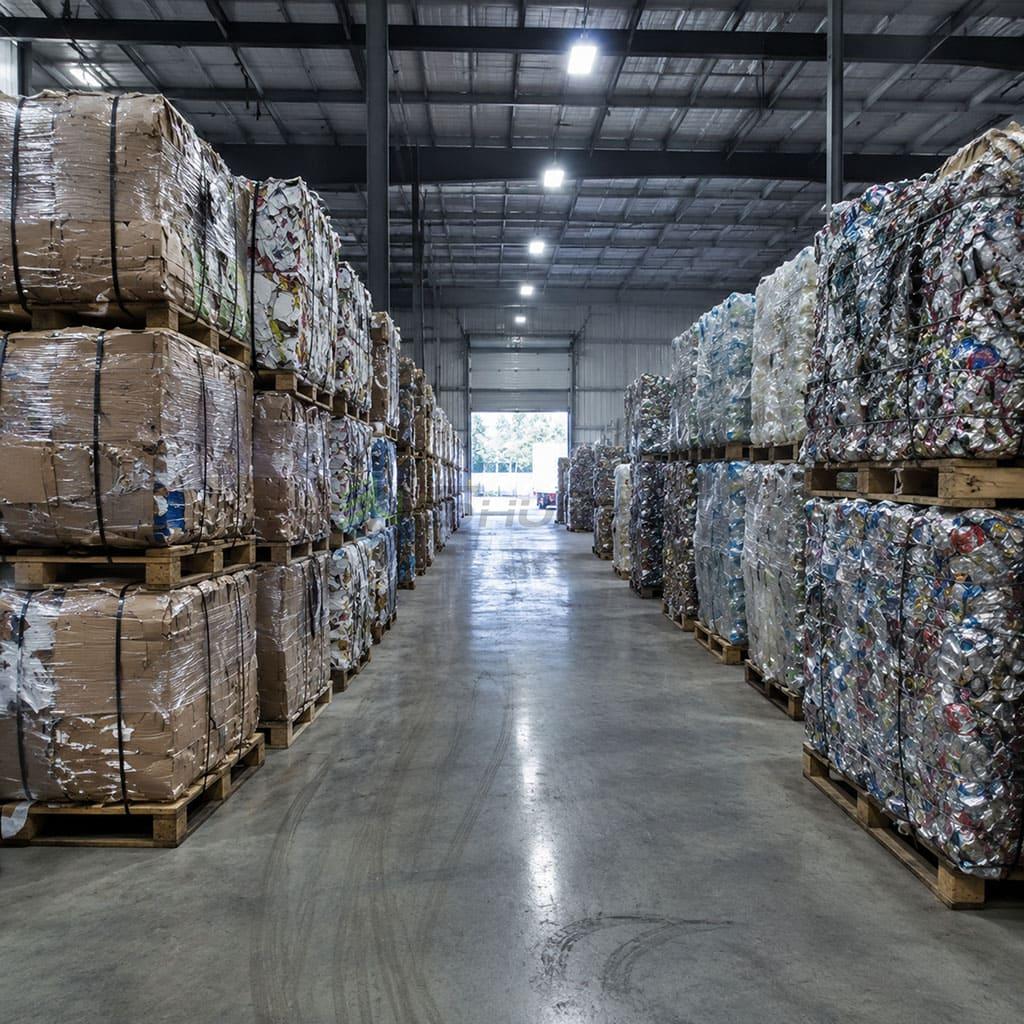
One of the biggest concerns for buyers is whether the purchase will result in measurable savings. While exact cost savings depend on application-specific factors, baling machines aim to deliver benefits in three key areas: space utilization, logistics optimization, and labor efficiency.
Baling machines reduce overall material handling costs by minimizing waste volume, ensuring denser storage, and lowering transportation fees.9
Typical Benefits of Baling
- Space Savings: Compressed materials reduce storage requirements by up to 80%.10
- Transport Optimization: Denser bales maximize truck payloads, driving down freight costs per ton.
- Labor Reduction: Automated feeding and ejection systems lower manual intervention, cutting labor time.
- Streamlined Processes: Uniform bale shapes simplify downstream handling and processing.
However, it’s worth assessing ROI based on your specific operational setup. Businesses processing high volumes of recyclable materials or bulky goods typically benefit most from baling solutions.
Frequently Asked Questions
What is the difference between vertical and horizontal balers?
Vertical balers process lower volumes in smaller spaces, with manual feeding and bale tying. Horizontal balers, by contrast, suit larger volumes, offer automatic feeding, and produce higher-density bales efficiently.
Can all recycling materials be baled?
No. Each material requires a baling machine designed for its composition and compatibility. For instance, scrap metals demand heavy-duty balers, while clothing and plastics need gentler compression settings.
Are baling machines safe to operate?
Yes, when used as intended. Most machines include safety features like emergency stops, automatic hoppers, and interlocking doors. Proper operator training is essential for safe use.11
Is a baling machine suitable for small businesses?
That depends. Smaller vertical balers are practical for businesses handling modest amounts of cardboard or paper. Larger-scale machines may be less cost-effective unless high volumes are processed.
Do baling machines require maintenance?
Yes. Routine maintenance—such as checking hydraulic systems, clearing feed areas, and replacing worn belts—ensures longevity and reliable operation.12 Spare parts availability and service support are key factors to consider before purchasing.
Conclusion
A baling machine compresses recyclable and waste materials into dense bales for easier handling, storage, and transportation. From cardboard and plastics to textiles and metal scraps, balers serve diverse industries by minimizing waste volume, labor, and logistics costs.
Choosing the right baling machine involves assessing material type, capacity needs, space constraints, and operational efficiencies. Businesses of all sizes, from packaging companies to recycling facilities, find value in baling—when applied thoughtfully.
Ready to explore how our balers can solve your waste or material-handling challenges? Contact us today to discuss customized solutions for your business.
"Compendium of Materials on Municipal Solid Waste", https://nepis.epa.gov/Exe/ZyPURL.cgi?Dockey=9101D4XI.TXT. Government waste-management guidance describes baling as a means of consolidating loose recyclable materials to reduce storage volume and facilitate handling and transportation. Evidence role: general_support; source type: government. Supports: Government waste-management guidance should confirm that baling consolidates loose recyclables, reduces occupied volume, and facilitates storage and transportation.. Scope note: The magnitude of any cost saving depends on material properties, bale density, transport arrangements, and facility operating costs. ↩
"Operating Hazards of Baler Discharge-Door Locks", http://www.osha.gov/publications/shib081313. Reference works define a baler as a machine that compresses loose material into compact, shaped units that may be bound for handling, storage, or transport. Evidence role: definition; source type: encyclopedia. Supports: A reference source should define a baler as machinery that compresses and binds material into bales.. ↩
"Accident Report Detail | Occupational Safety and Health ...", https://www.osha.gov/ords/imis/accidentsearch.accident_detail?id=110891.015. Occupational and technical guidance describes wire or strapping as a common means of retaining compressed material in a stable bale after the compression cycle. Evidence role: mechanism; source type: government. Supports: Technical or occupational-safety guidance should describe wire or strap tying as a method for retaining compressed material in bale form.. Scope note: Binding systems differ by baler design and material, and some machines use other retention or wrapping methods. ↩
"OSHA 3348 METAL SCRAP RECYCLING", https://www.osha.gov/sites/default/files/publications/OSHA3348-METAL-SCRAP-RECYCLING.pdf. Engineering studies of material compaction indicate that machine force, chamber construction, and wear resistance must be matched to the mechanical properties of the feedstock, making equipment intended for cardboard unsuitable for many scrap-metal applications. Evidence role: mechanism; source type: paper. Supports: Engineering literature should show that scrap-metal compaction imposes different force and structural requirements from baling cardboard or other packaging materials.. Scope note: Suitability ultimately depends on the rated capabilities of the particular machine rather than on the material label alone. ↩
"Recycled Household Textiles and Clothing", https://extension.okstate.edu/fact-sheets/print-publications/t/recycled-household-textiles-and-clothing-t-4318.pdf. Institutional recycling guidance documents the use of bales for consolidating several recovered-material streams, including paper and cardboard, plastics, textiles, and metals. Evidence role: general_support; source type: institution. Supports: Institutional recycling documentation should identify paper, plastics, textiles, and metals as materials commonly consolidated into bales.. Scope note: This establishes common applications, not the compatibility of every material with every baler. ↩
"Management Tips for Round Bale Hay Harvesting, Moving ...", https://pubs.ext.vt.edu/442/442-454/442-454.html. Engineering guidance treats feedstock characteristics, required throughput, bale dimensions and density, feeding configuration, available floor space, and downstream transport as interdependent criteria in baler selection. Evidence role: expert_consensus; source type: education. Supports: Educational or engineering guidance should identify feedstock, throughput, bale requirements, feeding configuration, site constraints, and downstream logistics as baler-selection factors.. Scope note: These criteria provide a general framework and do not replace a site-specific engineering and safety assessment. ↩
"1 Case 303. 53-year-old forklift driver died when her Toyota ...", https://oem.msu.edu/images/MIFACE_Constr_Div/Case303.pdf. Research on bulk-material logistics shows that densification can increase the mass carried per unit of storage or vehicle volume, while the resulting bale weight may necessitate forklifts or other mechanical handling systems. Evidence role: mechanism; source type: research. Supports: Research should connect higher bulk density with improved use of storage and vehicle capacity while recognizing the equipment required to move heavy bales safely.. Scope note: Cost savings occur only when payload, axle-weight, warehouse, and handling constraints do not offset the benefit of greater density. ↩
"On-farm evaluation and demonstration of different types ...", https://www.academia.edu/12315700/On_farm_evaluation_and_demonstration_of_different_types_of_hay_press. Technical guidance generally characterizes vertical balers as compact, intermittently loaded machines and horizontal balers as systems more readily integrated with conveyors for higher-throughput processing. Evidence role: general_support; source type: education. Supports: A neutral technical source should explain the typical differences in footprint, loading arrangement, automation, and throughput between vertical and horizontal balers.. Scope note: Actual footprint and capacity overlap across models, so orientation alone does not determine performance. ↩
"Environmental performance review and cost analysis of MSW...", https://www.academia.edu/31927836/Environmental_performance_review_and_cost_analysis_of_MSW_landfilling_by_baling_wrapping_technology_versus_conventional_system. Economic analyses of recyclable-material logistics indicate that baling can lower storage and transport costs by increasing bulk density and reducing the number of handling or collection movements required. Evidence role: general_support; source type: paper. Supports: An economic or logistics study should show how densification may reduce handling frequency, storage demand, or transport cost per unit of recovered material.. Scope note: Net savings are not universal because equipment purchase, energy, maintenance, labor, and financing costs must also be included. ↩
"Management Tips for Round Bale Hay Harvesting, Moving ...", https://pubs.ext.vt.edu/442/442-454/442-454.html. Reported volume reductions from baling can approach 80% in particular material and equipment configurations when compressed volume is compared with the volume of loose feedstock. Evidence role: statistic; source type: research. Supports: Empirical testing or a documented institutional study should report volume reduction from baling, including the material, initial condition, machine, and measurement method.. Scope note: The percentage is not a universal performance level; it varies with material composition, initial bulk density, moisture, applied pressure, and bale rebound. ↩
"1910.147 - The control of hazardous energy (lockout/tagout).", http://www.osha.gov/laws-regs/regulations/standardnumber/1910/1910.147. Occupational-safety authorities identify crushing and entanglement hazards around balers and emphasize guarding, interlocked access points, emergency controls, lockout procedures, and operator training as core risk controls. Evidence role: expert_consensus; source type: government. Supports: Occupational-safety guidance should document baler hazards, required or recommended guarding and interlocks, emergency controls, and worker training.. Scope note: The presence and regulatory status of specific safeguards vary by machine design, jurisdiction, and date of manufacture; an automatic hopper is not itself a universal safety feature. ↩
"1910.147 - The control of hazardous energy (lockout/tagout).", http://www.osha.gov/laws-regs/regulations/standardnumber/1910/1910.147. Machinery-maintenance guidance supports periodic inspection of hydraulic systems and wear components and requires feed-area obstructions to be cleared under appropriate isolation or lockout procedures, practices that reduce breakdown and injury risks. Evidence role: mechanism; source type: government. Supports: Maintenance and safety guidance should support periodic inspection of hydraulic systems and wear components and safe clearing of feed-area obstructions.. Scope note: Preventive maintenance can improve reliability but cannot ensure a particular service life, and the required schedule is model-specific. ↩