

Finding the right vertical baler for your business hinges on understanding machine sizes and their implications for installation, operation, and material handling. The term "typical sizes" often leads to confusion due to differing definitions. Let's explore how to effectively evaluate vertical baler dimensions to match your needs.
The typical sizes of vertical balers depend on several parameters, including machine dimensions, operating clearance, feed chamber size, and bale dimensions. While small balers are under 5 feet tall, medium balers reach 6–8 feet, and large ones can exceed 10 feet. Buyers must verify their specific requirements and constraints for material and space compatibility.

Understanding size classes is just the starting point. You must align your equipment selection with spatial limitations, material volume, bale compatibility, and downstream processes. Follow along as I clarify common size ranges and considerations for different baler setups.
What parameters define the size of a vertical baler?
Choosing a baler by size requires clarity on which measurements matter.
The size of a vertical baler refers to four distinct parameters: machine dimensions, operating clearance, chamber dimensions, and bale dimensions. Each has unique implications for space planning, feed efficiency, and downstream compatibility.
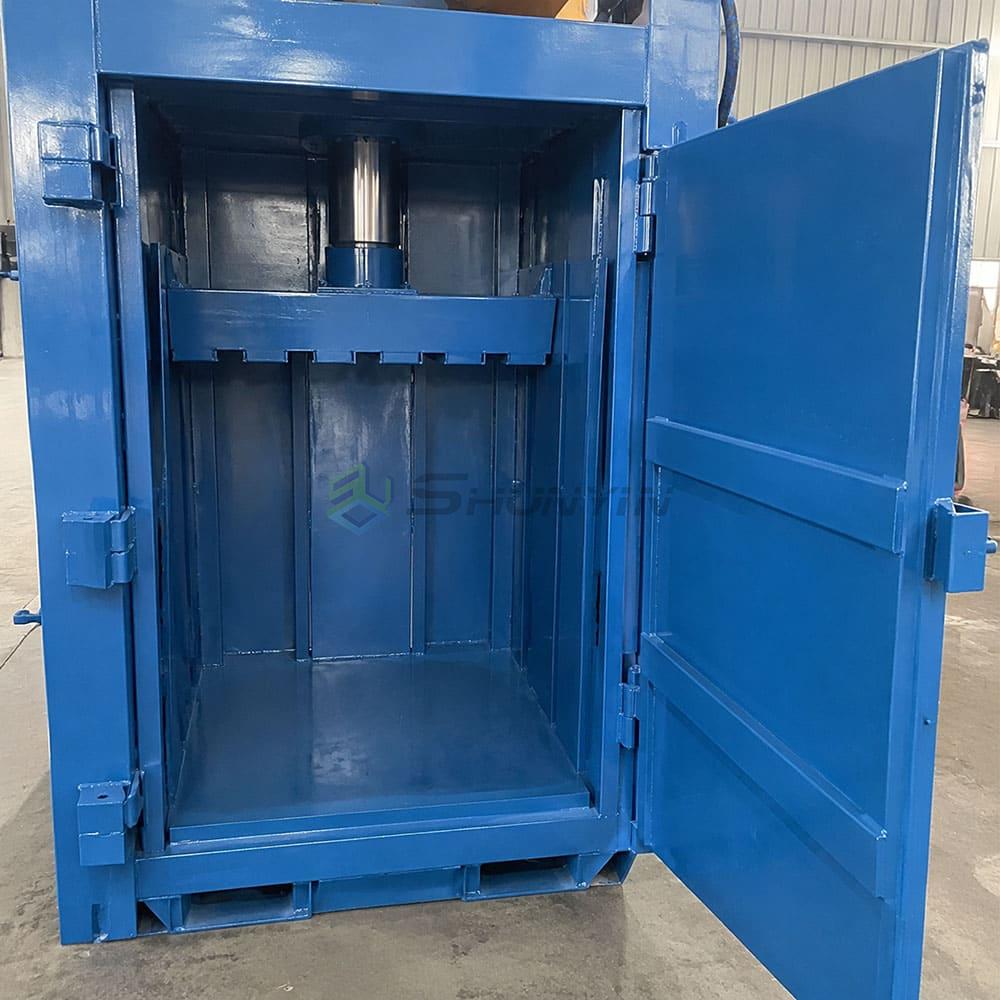
Breaking down the four critical dimensions:
-
Machine dimensions:
These include the height, width, and depth of the baler itself. Smaller machines (under 5 feet tall) are suited for compact spaces, while larger models (8–10+ feet tall) serve high-volume applications.- Example: A small-format baler may fit a tight warehouse space, whereas large machines need expansive ceiling height clearance.
-
Operating clearance:
Beyond machine size, balers require space for feeding material, operating the hydraulic system, maintenance access, and safety zones. For example, a 6-foot baler may need 2 additional feet of clearance for door and ram movements. -
Feed-opening or chamber dimensions:
The chamber dimensions determine the size and type of material you can load. Typical chamber sizes range from 20–40 inches wide, with height varying by machine. Larger feed chambers handle bulkier or irregularly shaped waste. -
Bale dimensions:
Finished bale size is crucial for transportation, storage, and downstream processing. Ranges may include 24"x24"x36" for smaller models or larger pallets up to 48"x48"x60". Buyers must validate bale compatibility with their handling equipment.
What are the small, medium, and large size ranges for vertical balers?
The market classifies vertical balers broadly by small, medium, and large sizes.
Small balers are typically below 5–6 feet tall and produce compact bales of up to 60 lbs. Medium balers range from 6–8 feet, creating 300–500 lb bales. Large balers exceed 10 feet tall, handling high-volume materials with bale weights of over 1000 lbs.
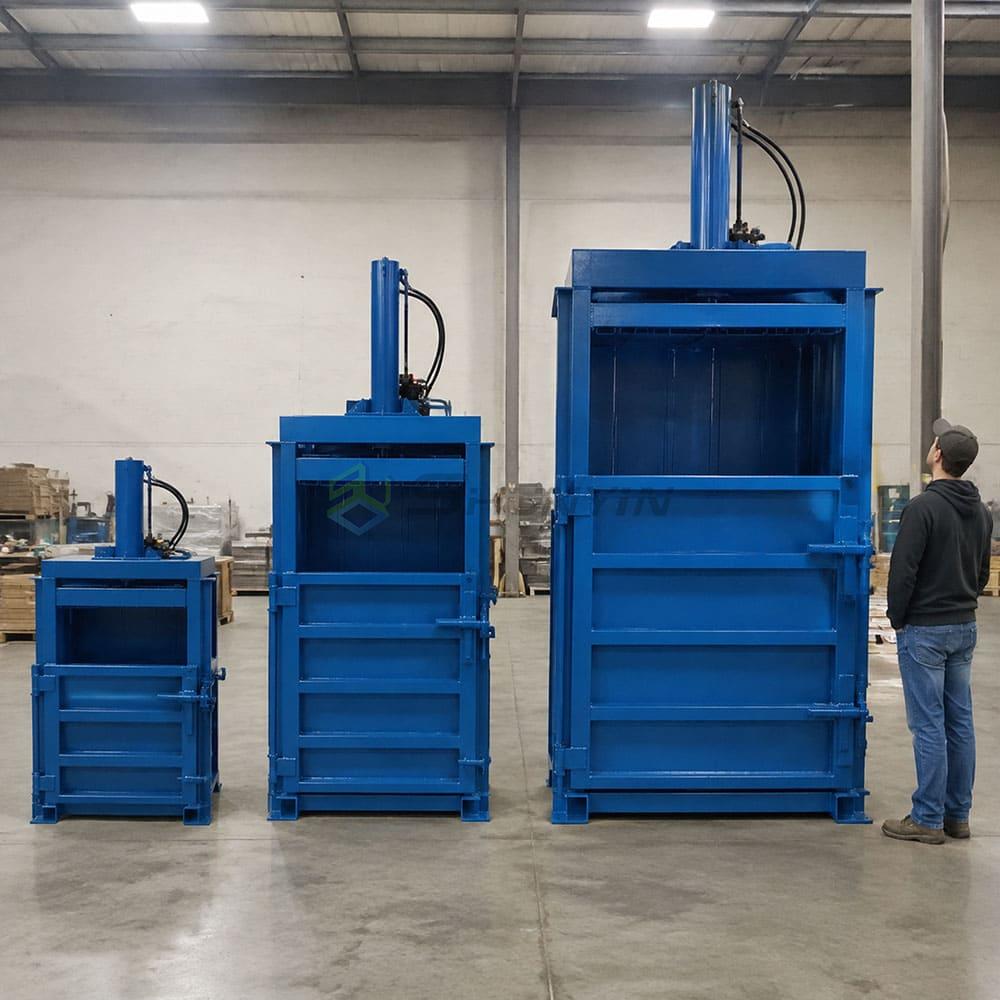
Practical examples of baler size ranges:
-
Small balers:
Ideal for retail stores and small warehouses, these machines operate in areas with limited height and width. Typical bale dimensions here are around 24"x24"x36".- For tight spaces like stockrooms or narrow loading docks.
-
Medium balers:
Designed for packaging plants or mid-size recycling sites, these can accommodate higher waste volumes. Feed openings range from 30–40 inches wide.- Target applications may include cardboard or textile recycling.
-
Large balers:
These machines suit industrial-scale operations with heavy materials like scrap metal or large cardboard sheets. Their chamber and door systems often incorporate reinforced hydraulics.- Often prioritized for export-grade bale uniformity requirements.
Note: While these ranges offer an initial framework, always verify specific manufacturer specifications and clearances for accuracy before decisions.
Why is bale size alone insufficient for machine selection?
Many buyers prioritize bale dimensions, but this leads to incomplete evaluations.
Bale size is just one factor in baler selection. Buyers must also confirm compatibility with handling equipment, pallet configurations, storage constraints, and downstream processing requirements for recyclers.
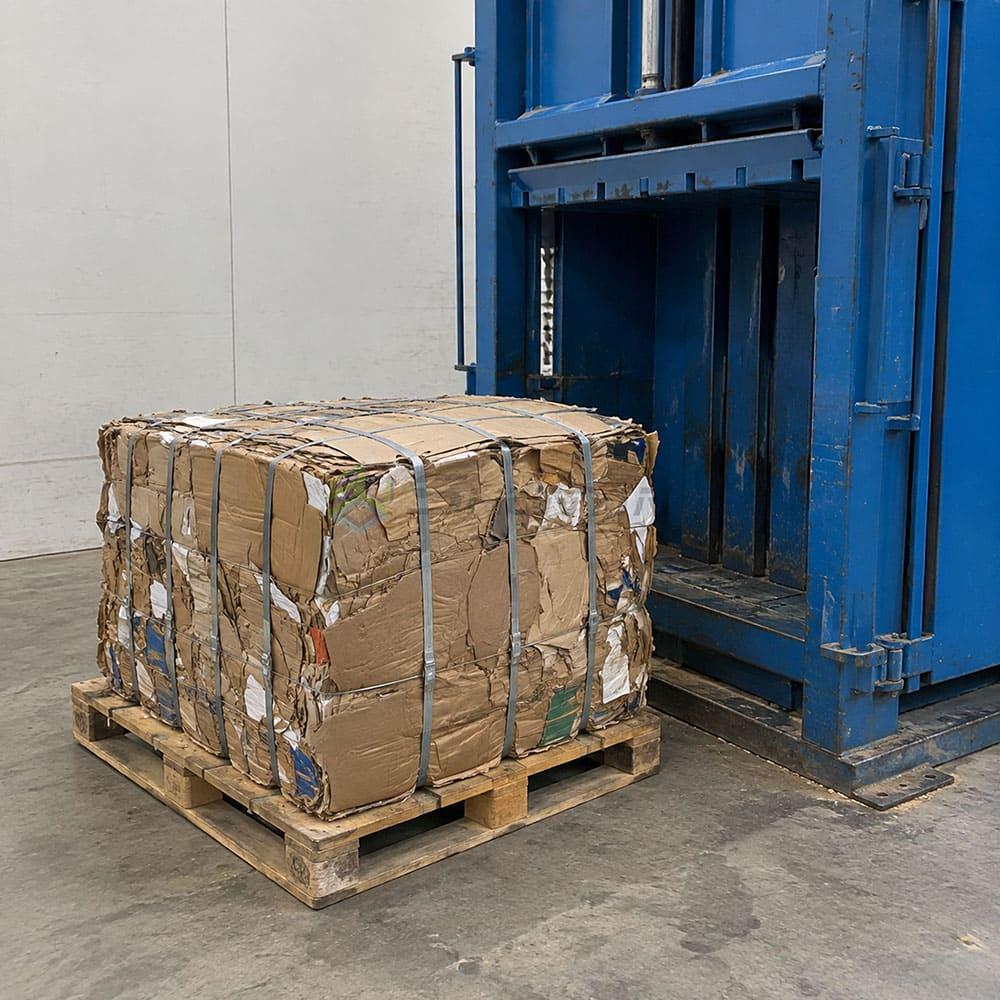
Key considerations beyond bale size:
- Storage layouts: Is the bale size compatible with rack systems or warehouse stacking?
- Loading and unloading: Can forklifts and trucks easily handle larger, denser bales?
- Recycler requirements: Many processors have specific bale dimension or density standards.
- Transportation costs: Excessively dense or lightweight bales may increase shipping costs.
Keep in mind that bale weight, density, and uniformity also affect handling practices. For instance, lighter bales may require strapping that adds to labor intensity, while heavy bales increase equipment wear over time.
How do space constraints affect vertical baler selection?
Your available floor area and operating height are pivotal in machine installation.
Buyers need to validate floor space, ceiling height, operating clearances, and material flow before selecting a baler. Small machines suit compact facilities, while large units require warehouse-scale dimensions.
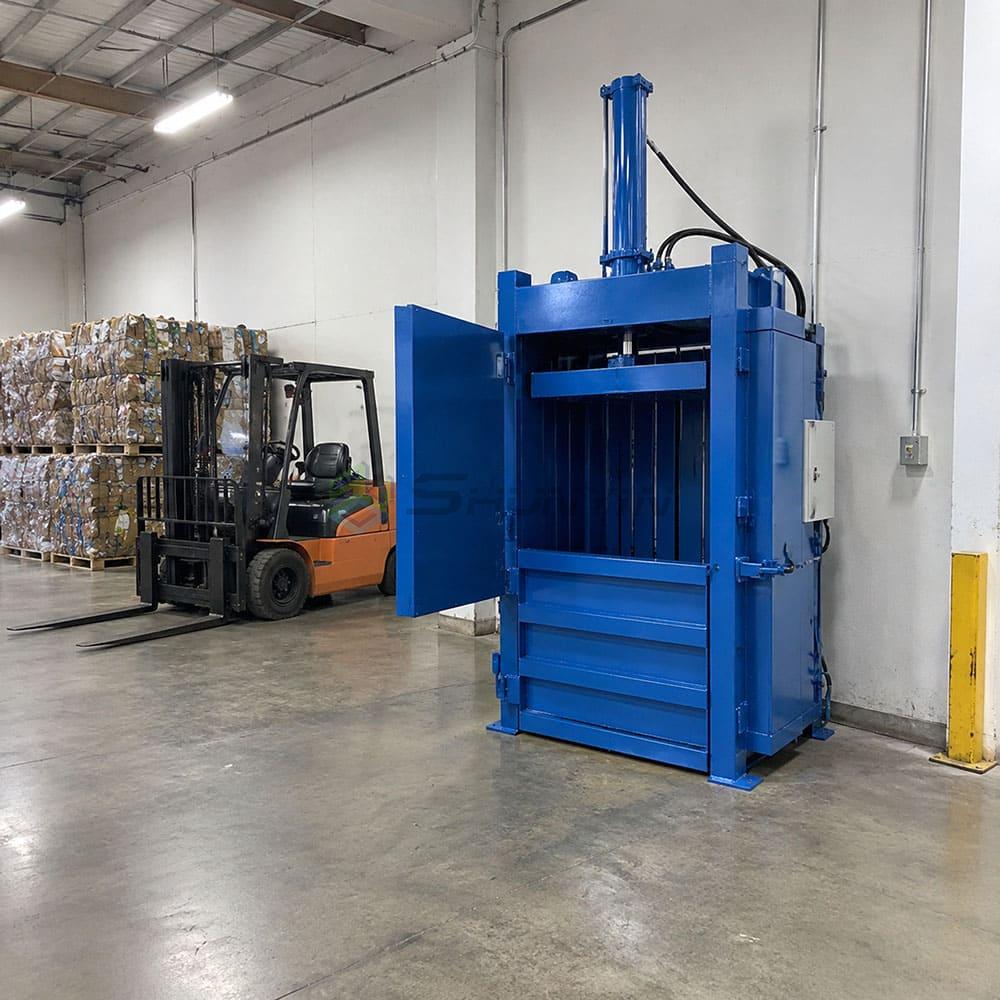
Installation requirements checklist:
- Floor space: Ensure adequate room for material staging and machine maintenance.
- Ceiling height: Large balers often require overhead clearance for door ranges and ram extensions.
- Feed zones: Account for workflows like forklifts or manual operators loading waste.
- Proximity to utilities: Position near electrical wiring or hydraulic systems for smooth operation.
- Safety clearance: Allow space for employee visibility and avoidance of moving parts.
If unsure, request precise machine floor plans or diagrams before committing. Prospective suppliers can often offer installation layout assistance.
Frequently Asked Questions
What space is required for a vertical baler installation?
Clearances vary by machine, but all installations need space for loading waste, operating the baler safely, and maintaining the hydraulics. Small machines may require as little as 3'x5', while larger models could need 8'x10' or more. Always verify machine dimensions and safety guidelines.
Can one machine handle multiple materials?
Yes, many vertical balers handle diverse waste types like cardboard, plastics, textiles, and scrap metal. However, material volume and consistency may necessitate adjustable chamber sizes or reinforced components.
What data should I provide to select the right baler?
Buyers should input their waste volume, desired bale dimensions, available floor/ceiling height, downstream handling constraints, and material composition to ensure the most accurate recommendations.
Is bale weight standardized across machines?
No, bale weights vary by machine design, compression force, and material type. Smaller machines produce lighter bales of 50–100 lbs, whereas industrial balers achieve weights exceeding 1000 lbs for denser products like metal.
Are vertical balers portable?
Most vertical balers are semi-stationary equipment due to their weight and hydraulic needs. Some smaller models can be moved within facilities using forklifts.
Conclusion
Vertical baler sizes range widely across small, medium, and large categories, but factors like machine dimensions, chamber size, operating clearance, and bale dimensions define their usability. Buyers must ensure compatibility with space, material volume, and handling equipment. Providing accurate specifications upfront helps streamline supplier recommendations. Reach out to discuss your particular requirements today and find the perfect fit for your recycling operations!