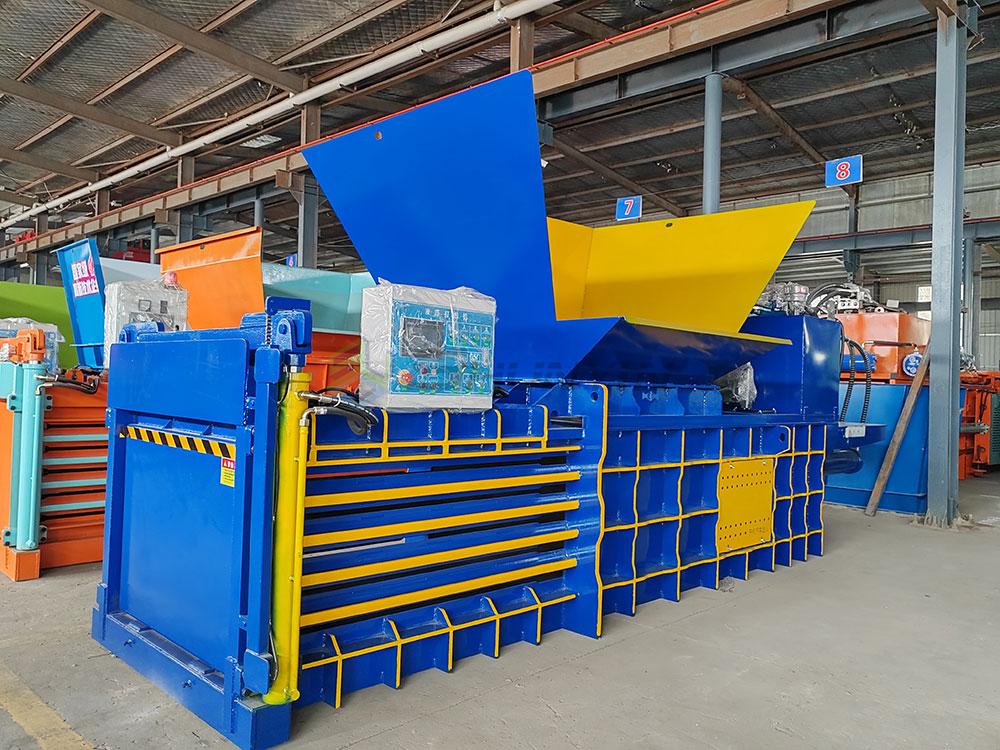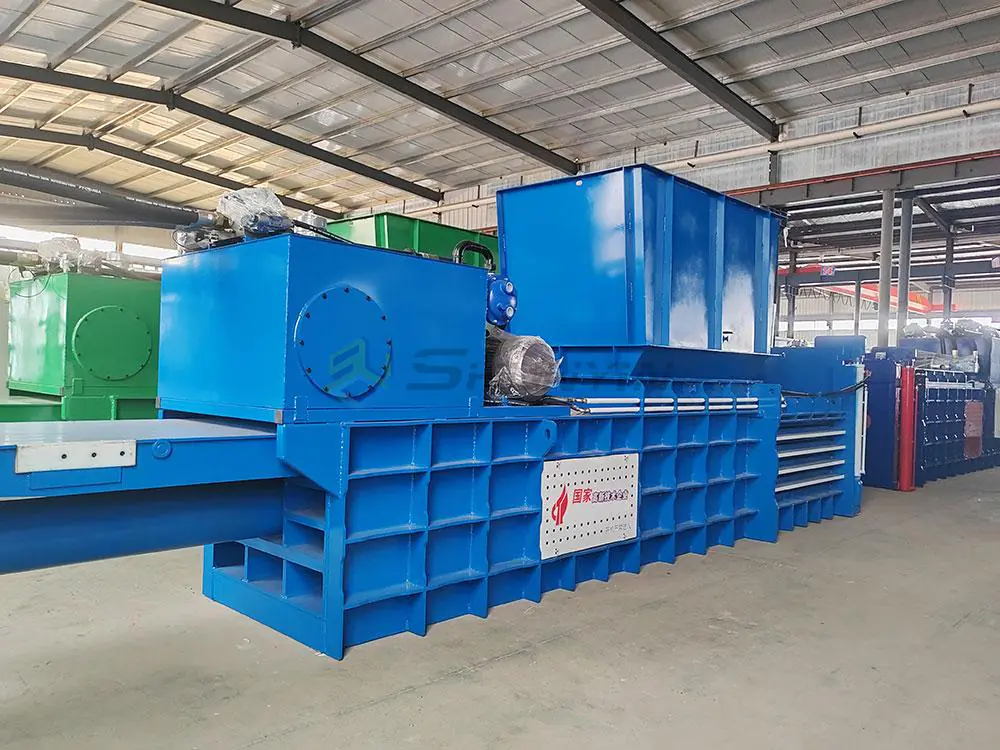

Choosing the right cardboard baler isn’t just about finding the cheapest price. The true cost depends on factors like material throughput, bale specifications, feeding methods, and labor requirements. A misaligned purchase can lead to operational inefficiencies, higher costs, and unusable bales. Let’s break down all the considerations to find the real answer.
The cost of a cardboard baler typically ranges from $5,000 to $150,0001 depending on its type, capacity, compression force, level of automation, and customization. Smaller vertical balers are at the lower end of the spectrum, while industrial horizontal balers with automated feeding systems are at the higher end.
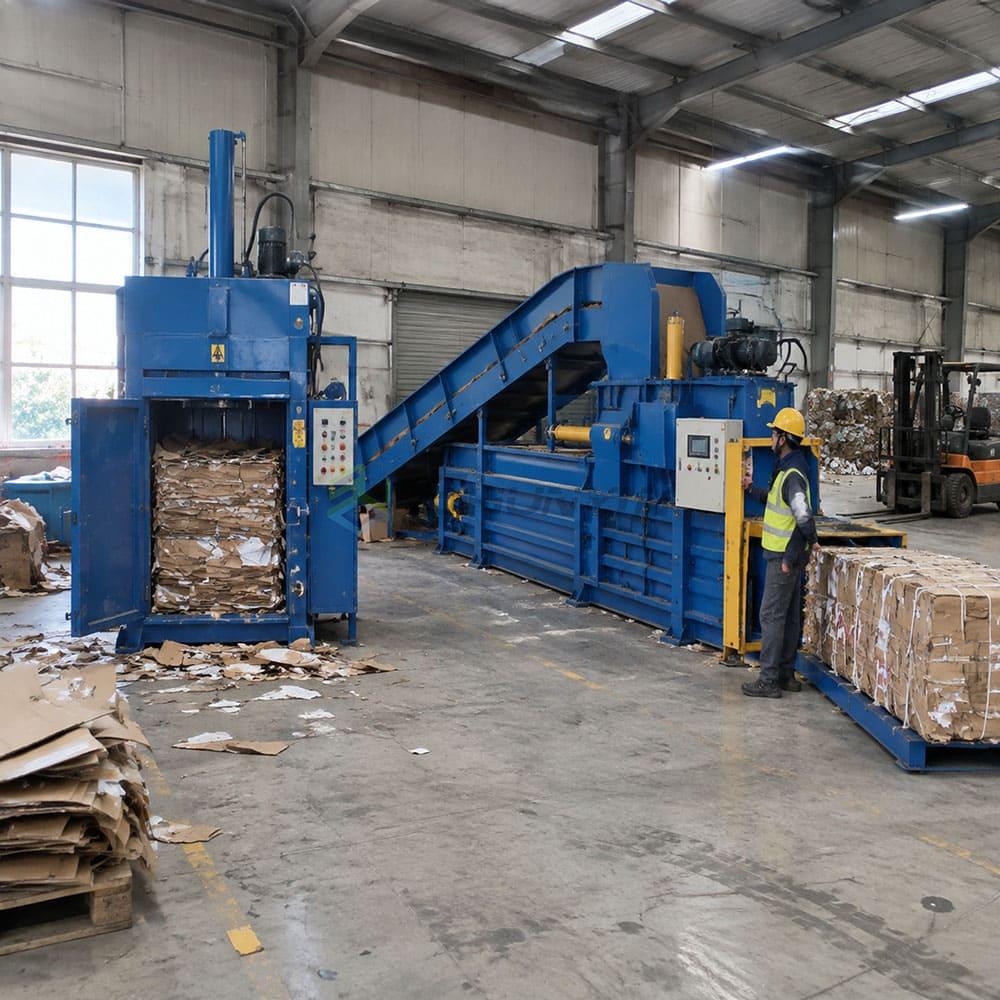
Pricing for cardboard balers varies not just by type but by what the machine offers. Below, we dive deeper into how price aligns with performance to help you make an informed decision.
What drives the price of a cardboard baler?
A cardboard baler’s price reflects its operational capability: the machine type, throughput capacity, bale density, feeding system, and level of automation shape both upfront cost and long-term value.
Cardboard baler pricing is influenced by several factors, including machine type (vertical vs. horizontal), bale size and density, required processing capacity, feeding method (manual vs. automated), and any additional customizations.
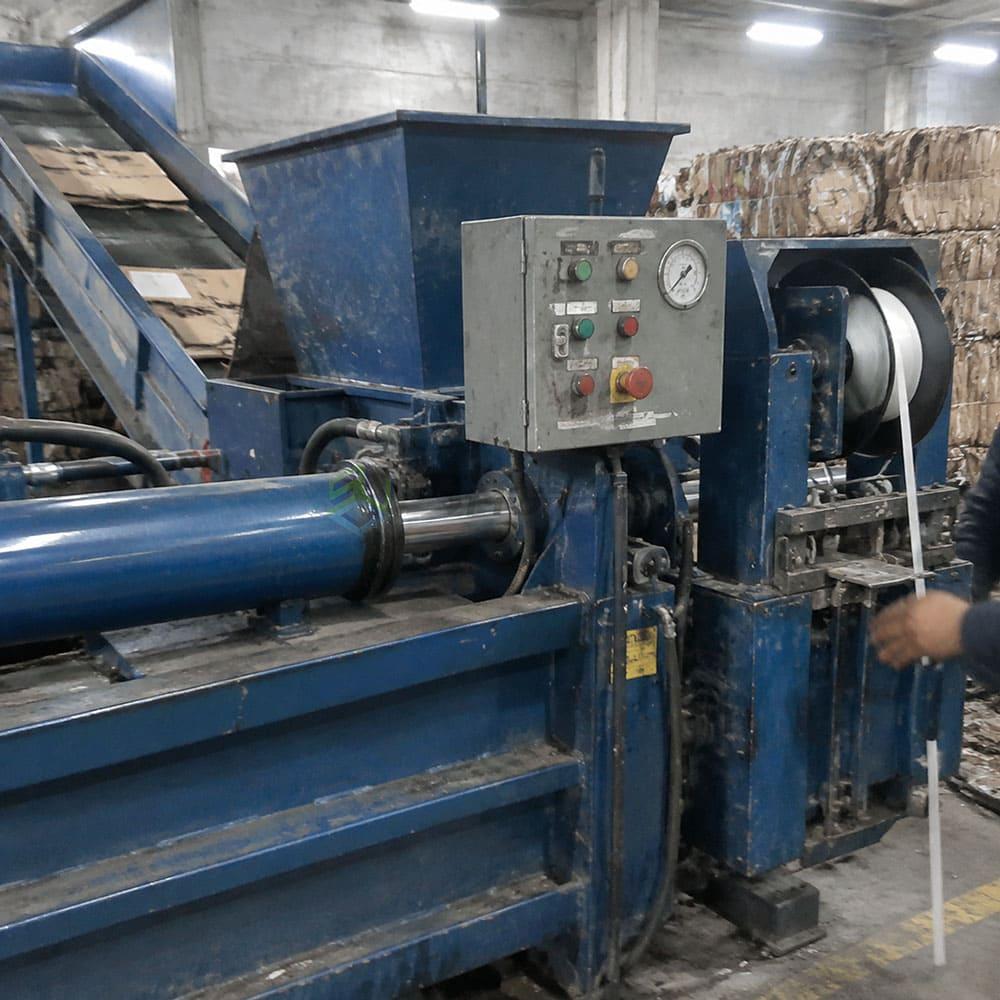
Key cost components:
-
Machine type:
Vertical balers ($5,000–$25,000) are more affordable but typically suiting lower-volume operations.2 Horizontal balers ($30,000–$150,000) handle higher throughput efficiently and include automated systems. -
Throughput capacity:
Processing higher volumes requires more robust machinery, driving up cost. For example, a machine baling 5–10 tons daily will cost significantly more than a unit suited for 1–2 tons3. -
Compression force:
Higher compression forces create heavier, denser bales — essential for transport and downstream acceptance4 but often increasing machinery cost. -
Automation features:
A fully automated baler reduces labor costs but commands a higher initial price.5 Conveyors or auto-tie systems can add $10,000–$50,000 depending on configuration.6 -
Customization:
Customizations such as bale size adjustments, specialized feeding systems, or safety compliance for specific markets add costs but ensure suitability for unique applications.
Understanding these factors ensures you focus on value rather than price alone.
Where does a vertical baler fit in cost considerations?
Vertical balers are typically an entry-level option, ideal for low-volume operations, tight spaces, and manual feeding.
Vertical balers cost between $5,000 and $25,000, offering a compact and cost-effective solution for smaller operations handling 1–2 tons of cardboard daily.
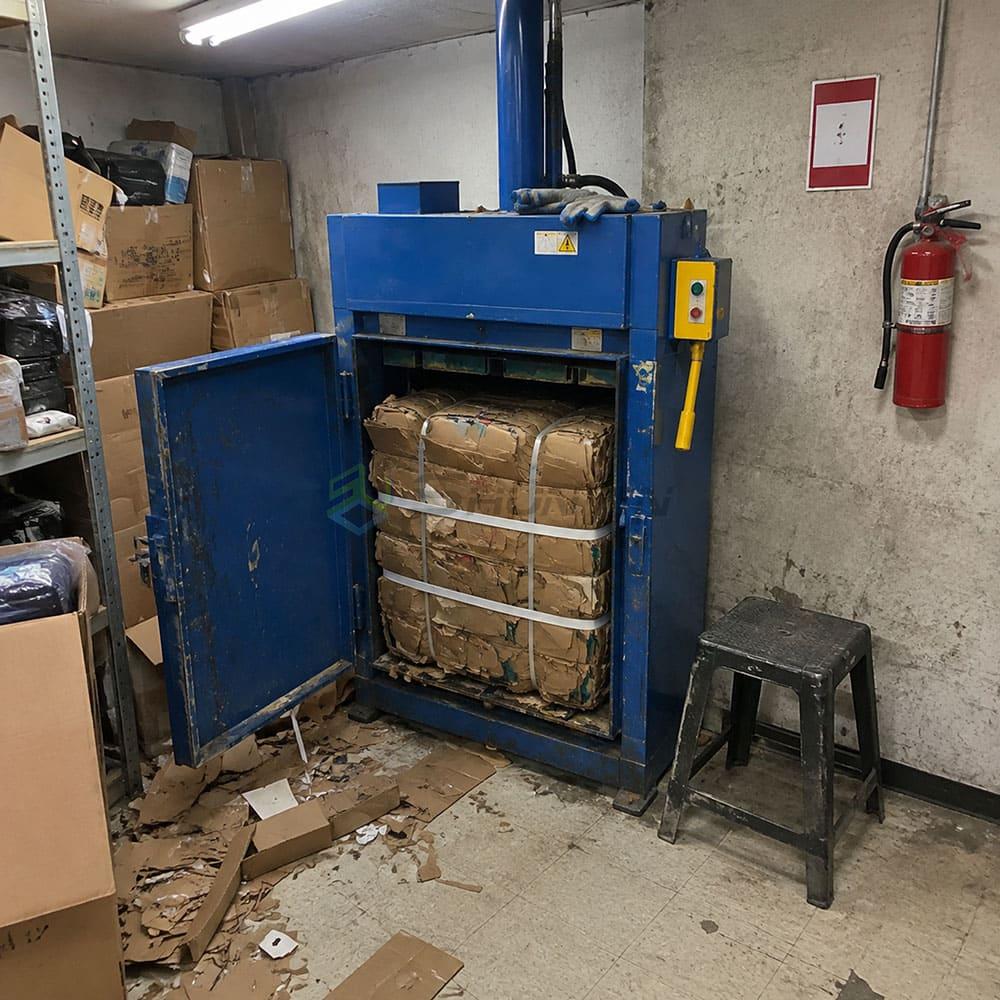
Benefits and limitations:
-
Advantages:
- Affordable price range makes it easier for small businesses to access baling technology.
- Suitable for below 5 tons of cardboard per week.7
- Compact size simplifies installation in tight spaces.
-
Limitations:
- Labor-intensive: Manual feeding and strapping increase handling costs.
- Limited throughput capacity restricts use in high-volume scenarios.
- Smaller, lighter bales may be unsuitable for bulk transport.
A vertical baler is a great starting solution but may hinder efficiency if your operation grows beyond its limits.
Are horizontal balers worth their higher cost?
Horizontal balers are premium equipment designed for high-volume operations that demand automation and robust performance.
Horizontal balers typically range from $30,000 to $150,0008 based on daily capacity, feeding method (manual or conveyor), compression force, and additional features such as auto-tie systems.
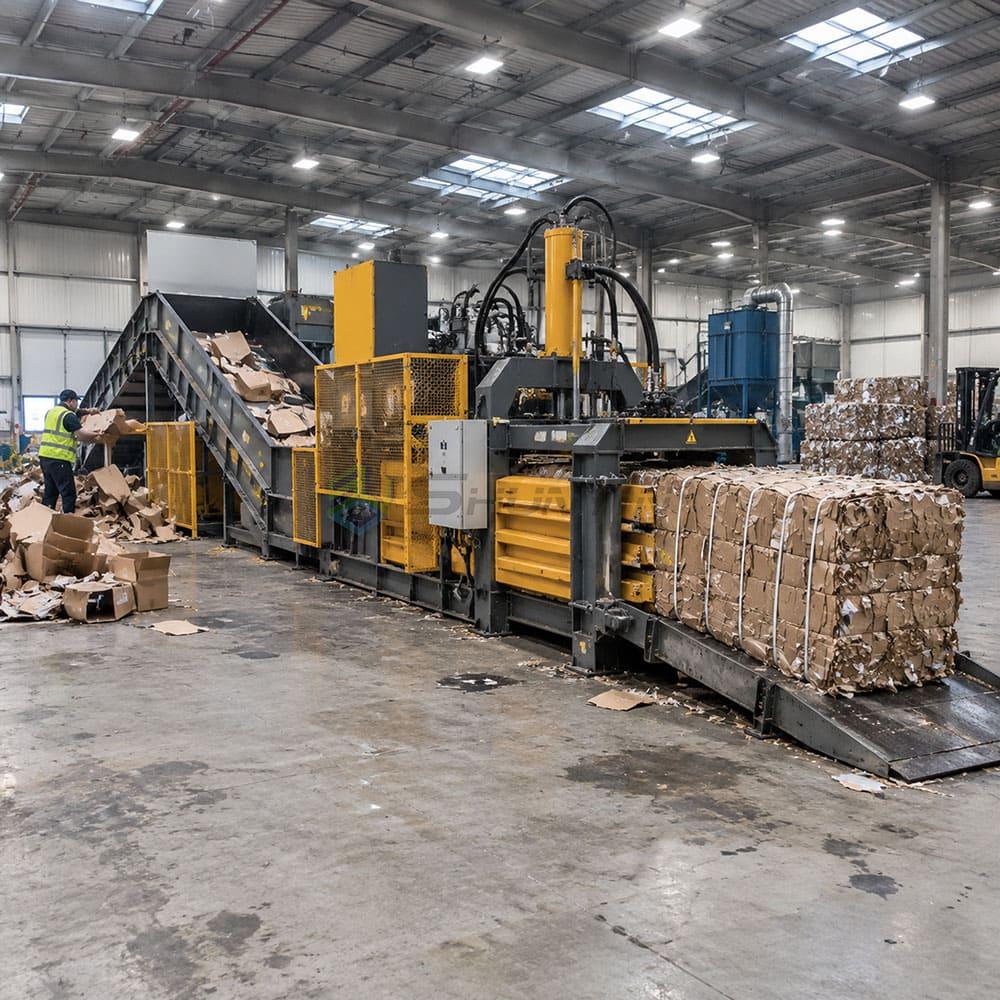
Why choose a horizontal baler?
- Higher throughput: These balers handle up to 10 tons per day or more, depending on model9, ensuring smoother workflows for recycling facilities or manufacturers.
- Automation options: Adding conveyors, auto-feeders, or auto-tie systems reduces labor costs and improves efficiency.
- Superior bale quality: Denser, heavier bales meet transport weight standards and are accepted widely by recyclers.10
- Long-term ROI: While the upfront costs are steep, savings on labor and transport improve total cost-effectiveness.
However, horizontal balers require clear needs assessment. Buying excessive capacity can inflate upfront costs unnecessarily.
Beyond the baler’s purchase price, ancillary costs can impact overall budgets.
Hidden costs include freight, import duties, installation/setup fees, power consumption, ongoing maintenance, consumables like strapping, and labor costs for manual processes.
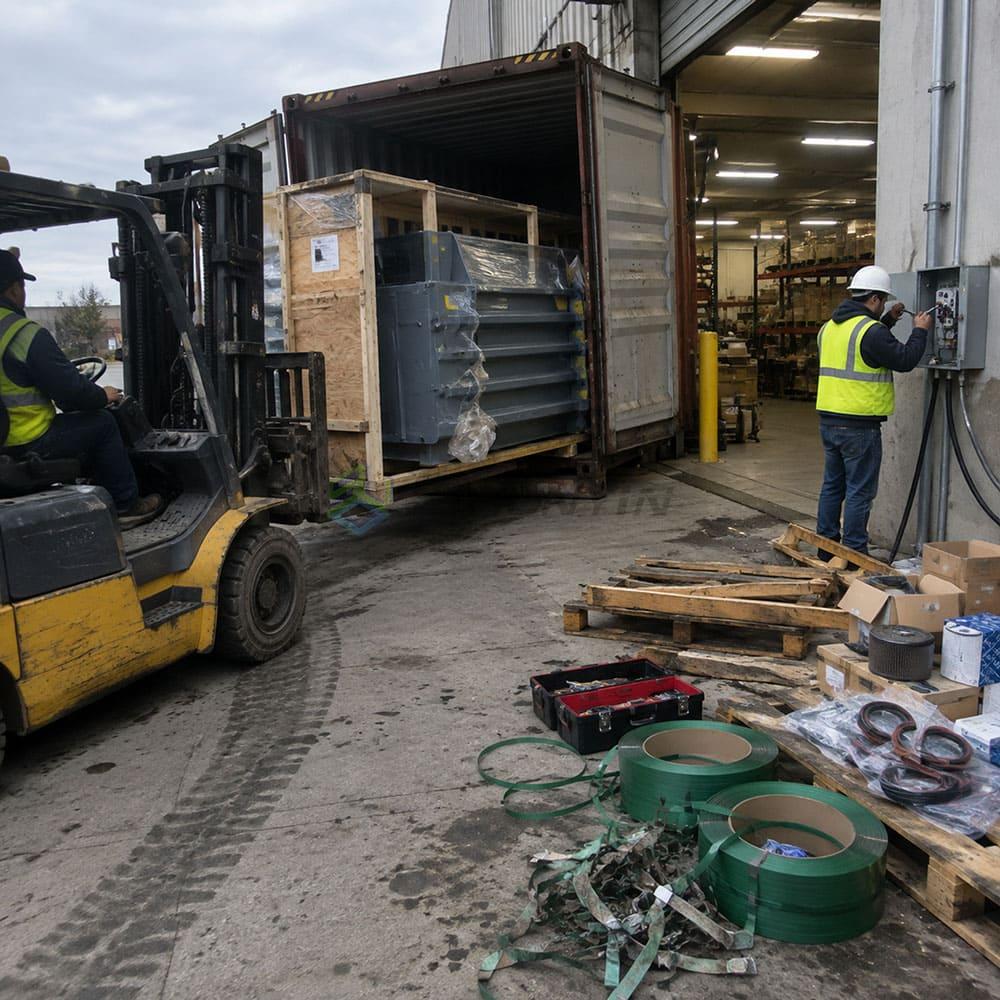
Examples of hidden costs:
- Freight & duties: International shipping and destination-specific import taxes can add 10–20% to the base price.11
- Installation fees: Professional setup ensures proper functioning but typically incurs additional charges.
- Downstream handling issues: Subpar bale density may lead to rejection by recyclers or increased transport costs.
- Operating costs: Higher-capacity balers may require greater power inputs over time — an important long-term budgeting factor.
These costs highlight why careful budgeting and supplier communication are critical.
How can I balance cost and performance?
Balancing cost means avoiding under- or over-specification. Start with clear metrics for your operation.
Define daily cardboard volume, handling capacity, bale weight and size, feeding method, labor availability, and downstream transport to guide the selection process.
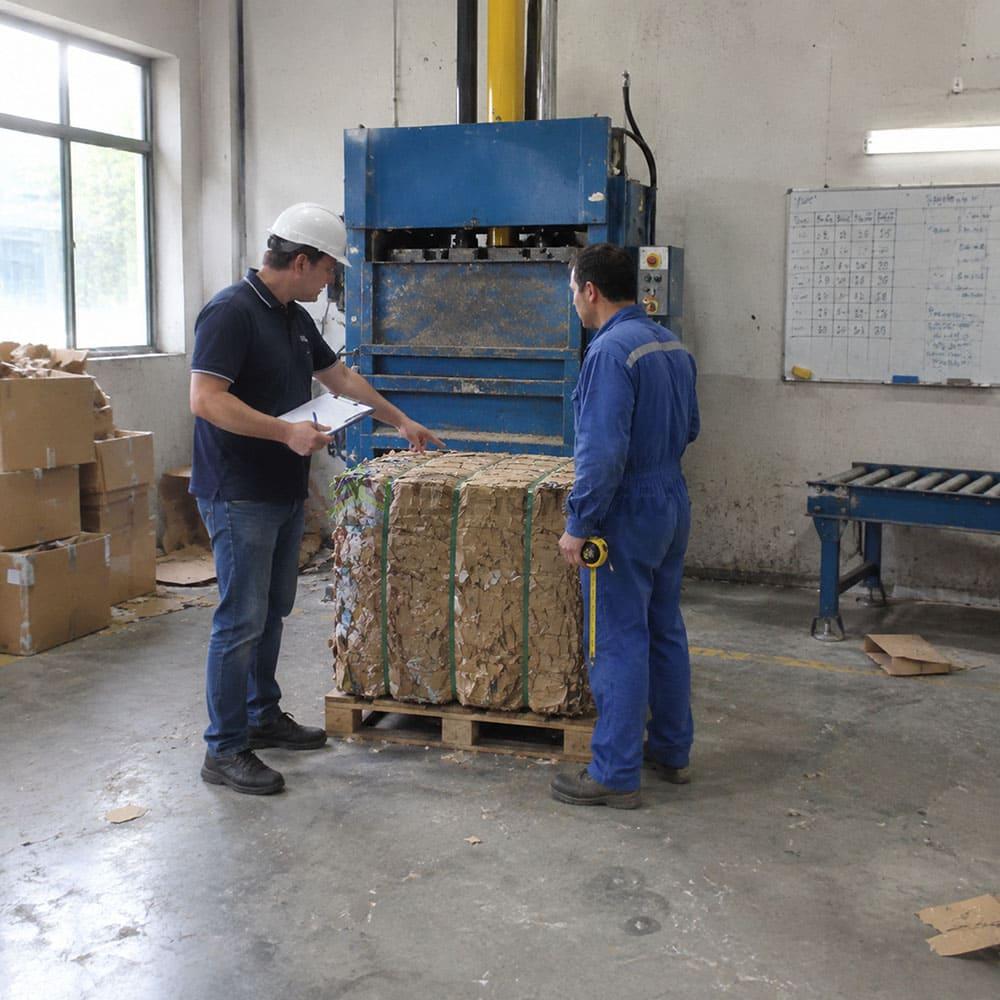
Practical tips for evaluation:
- Calculate daily cardboard tonnage and match it to baler capacity.
- Check bale requirements for transport or downstream recycler compliance.
- Compare manual vs. automated feeding processes based on labor costs.
- Run total cost analysis (purchase + operating costs) over 3–5 years.
- Request detailed quotations and specify shipping, installation, and warranty terms upfront.
A well-suited baler ensures efficient processing, minimal waste, and optimal downstream value.
Frequently Asked Questions
What is the cheapest cardboard baler I can buy?
The cheapest cardboard balers are compact vertical balers priced around $5,000, ideal for small operations handling a few hundred pounds of material daily. However, such units have limitations in throughput and bale quality, making them less suitable for larger facilities.
Are used cardboard balers worth considering?
Used cardboard balers can be cost-effective, often offering savings of 30–50% off new equipment prices.12 However, buyers should thoroughly inspect the machine’s condition, compression capacity, and compatibility with their application to avoid high repair or replacement costs.
How long does a cardboard baler last?
With proper maintenance, cardboard balers typically last 7–15 years depending on the frequency of use and quality of components. Annual inspections and timely spare part replacements can extend operational life while preventing costly downtime.
Conclusion
Cardboard baler costs vary significantly based on type, capacity, and features, ranging from $5,000 for compact vertical balers to $150,000 for fully automated horizontal balers. Budgeting should consider not just upfront price but also throughput, bale specifications, feeding methods, and downstream requirements. A properly selected baler reduces long-term expenses while maximizing operational efficiency. If you'd like expert guidance tailored to your facility's needs, reach out for a personalized recommendation.
"[PDF] FORM A - Forms & Applications", https://programs.iowadnr.gov/swap/OpenText/DownloadDocument/4055. Public procurement records show that baler acquisition costs vary substantially with machine configuration and capacity; however, individual contract prices may include delivery, installation, or optional equipment and therefore provide contextual rather than definitive market-wide support for the stated range. Evidence role: statistic; source type: government. Supports: Public procurement records or contract awards should document observed purchase prices for multiple baler types.. Scope note: Procurement prices may be dated, region-specific, or bundled with services and accessories. ↩
"[PDF] invitation to bid vertical balers tamworth, new hampshire", https://www.tamworthnh.gov/DocumentCenter/View/3966. Institutional waste-management guidance commonly characterizes vertical balers as manually loaded equipment for comparatively modest material volumes, while procurement records provide examples of lower acquisition costs than for automated horizontal systems; these sources do not establish a universal $5,000–$25,000 price band. Evidence role: general_support; source type: institution. Supports: Institutional purchasing records and waste-management guidance should support the lower-volume use case and provide contextual price observations for vertical balers.. Scope note: Equipment prices depend on date, location, condition, capacity, and included services. ↩
"Evaluation Of Solid Waste Baling and Balefills, Volume 1 and 2", https://nepis.epa.gov/Exe/ZyPURL.cgi?Dockey=2000TC07.TXT. Facility-design and procurement evidence indicates that higher-throughput baling systems generally require larger hydraulic, feeding, and handling components and consequently entail greater capital expenditure; it does not by itself quantify the price difference between every 1–2-ton and 5–10-ton installation. Evidence role: general_support; source type: research. Supports: A facility-cost study or procurement analysis should show how rated throughput and capital cost vary across baler configurations.. Scope note: Throughput is only one cost determinant, and comparisons may be confounded by automation, compression force, and ancillary equipment. ↩
"Paper Grades and Collection | Paper Recycling | US EPA", https://archive.epa.gov/wastes/conserve/materials/paper/web/html/grade.html. Engineering studies of fibrous-material compaction report that applied pressure influences resulting bale density, while denser loads can improve vehicle payload utilization; downstream acceptance nevertheless depends on buyer-specific dimensions, contamination limits, and quality specifications rather than density alone. Evidence role: mechanism; source type: paper. Supports: Experimental or engineering research should explain the relationship among compaction pressure, bale density, storage, and transport efficiency.. Scope note: The source may demonstrate the physical and logistical relationship without proving that high density is mandatory in every recycling market. ↩
"[PDF] Transfer Network/Logistics/Export", https://boc.bentoncountyor.gov/wp-content/uploads/2025/04/Regional-Waste-4.7.2025-Presentation-of-Research-Final.pdf. Studies of materials-handling automation indicate that conveyors, automatic feeding, and automatic tying can reduce direct manual handling, although these systems add equipment and integration costs; realized labor savings depend on utilization, staffing patterns, maintenance, and workflow design. Evidence role: mechanism; source type: research. Supports: A comparative operational study should show that automated feeding and tying can reduce manual handling while requiring additional capital equipment.. Scope note: General automation evidence does not establish a guaranteed net saving for every baling operation. ↩
"SAM.gov", https://sam.gov/workspace/contract/opp/b20795c808714dda8551257e9b672031/view. Itemized public procurement documents can establish that conveyor feeding and automatic-tying equipment materially increase project cost; any observed $10,000–$50,000 increment is contextual because conveyor length, controls, installation, and system integration vary by project. Evidence role: statistic; source type: government. Supports: Itemized public bids or contract awards should provide observed costs for conveyor and automatic-tying options.. Scope note: A small set of bids cannot establish a stable universal price range, particularly across countries and procurement years. ↩
"[PDF] Barriers to solid waste reduction in small businesses", https://scholarworks.umt.edu/cgi/viewcontent.cgi?article=2665&context=etd. Waste-management guidance generally places manually fed vertical balers in lower-volume applications, but suitability at a five-ton weekly threshold depends on loading rate, cycle time, labor availability, and the selected machine's rated capacity. Evidence role: general_support; source type: education. Supports: University or extension guidance should describe the waste-volume conditions under which vertical balers are ordinarily used.. Scope note: The source may support the low-volume classification without validating five tons per week as a universal cutoff. ↩
"[PDF] OUTAGAMIE COUNTY REQUEST FOR BID FOR HORIZONTAL ...", https://www.outagamie.gov/files/assets/county/v/1/finance/documents/bidsrfps/2025-start-date/january/baler-rfb-2025.pdf. Public bid and contract records demonstrate that horizontal-baler prices span a wide range according to capacity, tying system, feed equipment, and installation scope; such records provide contextual support for the stated range but do not constitute a comprehensive market-price survey. Evidence role: statistic; source type: government. Supports: Public bid tabulations and contract awards should document purchase prices for horizontal balers with identifiable specifications.. Scope note: Contract totals may include site work, freight, warranties, or related equipment and may not be directly comparable. ↩
"Baling Solid Waste to Conserve Sanitary Landfill Space, A ...", https://nepis.epa.gov/Exe/ZyPURL.cgi?Dockey=9100FLI3.TXT. Facility specifications and operating reports document horizontal balers with rated hourly capacities that can exceed ten tons over a normal operating day; actual output may be lower because of feed consistency, material properties, downtime, and staffing. Evidence role: statistic; source type: institution. Supports: Independent facility documentation or technical specifications should report horizontal-baler throughput sufficient to exceed ten tons during a working day.. Scope note: Rated capacity is not equivalent to sustained real-world throughput. ↩
"Evaluation Of Solid Waste Baling and Balefills, Volume 1 and 2", https://nepis.epa.gov/Exe/ZyPURL.cgi?Dockey=2000TC07.TXT. Recovered-paper specifications commonly address bale integrity, dimensions, grade, and contamination, while transport guidance recognizes that load density affects payload utilization; these materials do not establish that denser or heavier bales are universally accepted, because purchaser and carrier requirements differ. Evidence role: general_support; source type: institution. Supports: Recovered-paper specifications and transport guidance should show how bale density, dimensions, weight, and quality affect handling and acceptance.. Scope note: Acceptance depends on multiple quality and handling criteria, not bale density or weight alone. ↩
"Determine Total Export Price - International Trade Administration", https://www.trade.gov/determine-total-export-price. Customs guidance and international trade data confirm that freight, tariffs, import taxes, brokerage, and related charges can materially increase the landed cost of industrial machinery; they do not support a uniform 10–20% increment across destinations and transactions. Evidence role: statistic; source type: institution. Supports: International trade data or customs guidance should document how freight, tariffs, taxes, and fees contribute to landed machinery cost.. Scope note: The stated percentage can only be validated for defined trade routes, tariff codes, dates, and tax treatments. ↩
"GAP 200.090, Plant & Equipment Depreciation | Finance", https://finance.duke.edu/accounting/gap/m200-090/. Industrial-equipment resale evidence shows that used machinery is generally discounted relative to comparable new equipment, but a 30–50% saving for cardboard balers specifically requires matched observations by age, condition, capacity, and refurbishment status. Evidence role: statistic; source type: research. Supports: Research on industrial-equipment depreciation or matched auction and acquisition records should quantify the price discount for used machinery.. Scope note: General depreciation research cannot establish a baler-specific discount without comparable new and used transaction data. ↩