

Horizontal balers are hydraulic machines designed to compact recyclable or waste materials efficiently, forming dense, transportable bales. By compressing materials horizontally into a chamber, these balers provide high throughput and are ideal for processing large volumes. But choosing the right horizontal baler requires more than understanding its basic design—you need to evaluate your material, output goals, and operation needs carefully.
A horizontal baler uses hydraulic pressure to compress materials horizontally within a chamber, forming bales of predetermined sizes and weights. These machines feature automated feeding systems, continuous compression, and efficient discharge mechanisms, making them suitable for high-volume recycling operations.
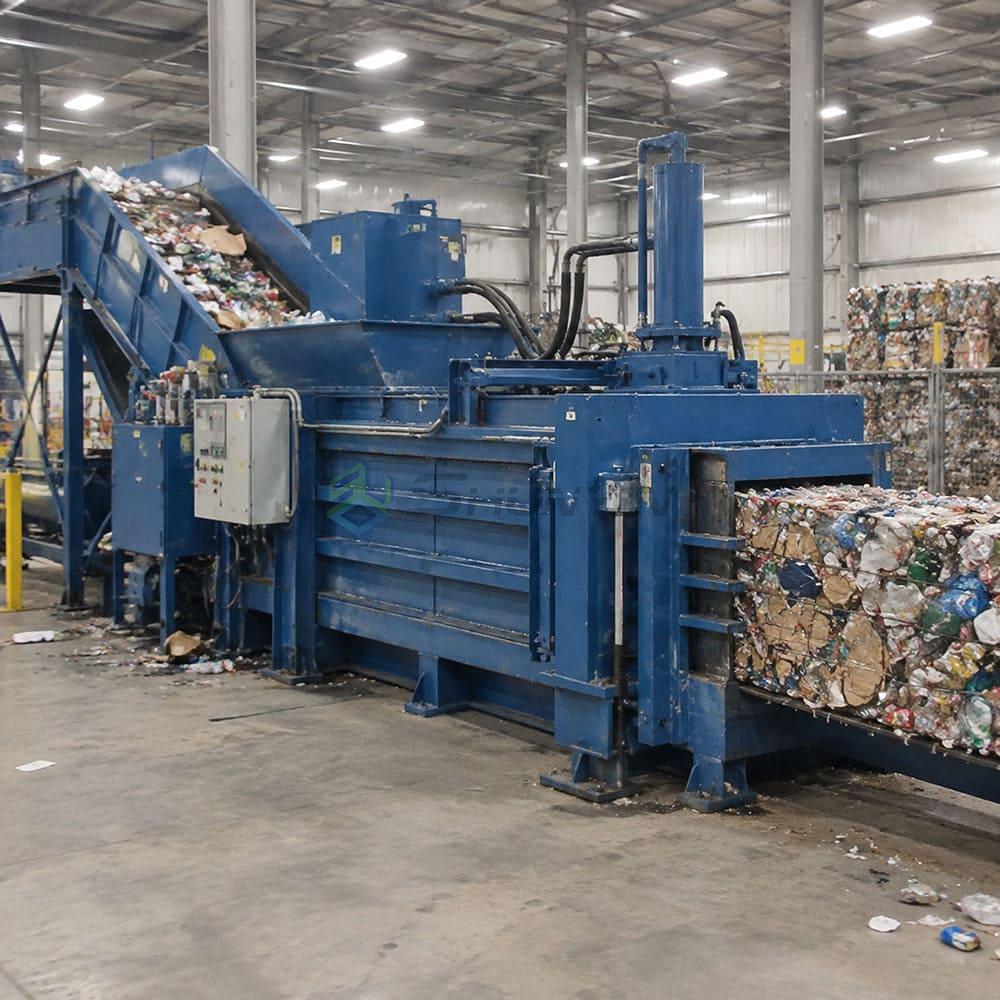
Horizontal balers can outperform their vertical counterparts for large-scale recycling needs. By evaluating your material type, required bale specifications, feeding method, and desired automation, you can determine whether a horizontal baler matches your operational goals.
How does a horizontal baler work?
Horizontal balers operate through a structured workflow, which ensures consistent bale formation. This process is more suited to continuous material feeding and large-scale output compared to vertical balers.
Horizontal balers process materials by feeding them into a horizontal chamber, compacting them using hydraulic pressure, binding the formed bale, and discharging it for storage or transportation. This workflow allows efficient high-volume recycling.

Let’s break the process down into key steps:
- Material feeding: The baler is equipped with a conveyor or hopper that ensures continuous feeding.
- Compression: Hydraulic pressure horizontally compresses the material within the chamber.
- Bale formation: The material is shaped into a compressed block based on the chamber dimensions.
- Binding: The formed bale is tied using wires or straps to maintain its structure during transportation.
- Discharge: The bale is pushed out for easy removal.
This horizontal workflow contrasts with vertical balers, which use downward force, compressing material into smaller chambers designed for lower volumes or manual feeding.
When should you choose a horizontal baler?
Choosing the right baler isn’t just about machine orientation—it’s about whether the baler can deliver the bale specifications and throughput required for your material.
Opt for a horizontal baler when high-volume, consistent feeding, and tight packing are critical for your operation. Material type, bale dimensions, desired weight, and hourly processing capacity must be compatible with the machine’s capabilities.
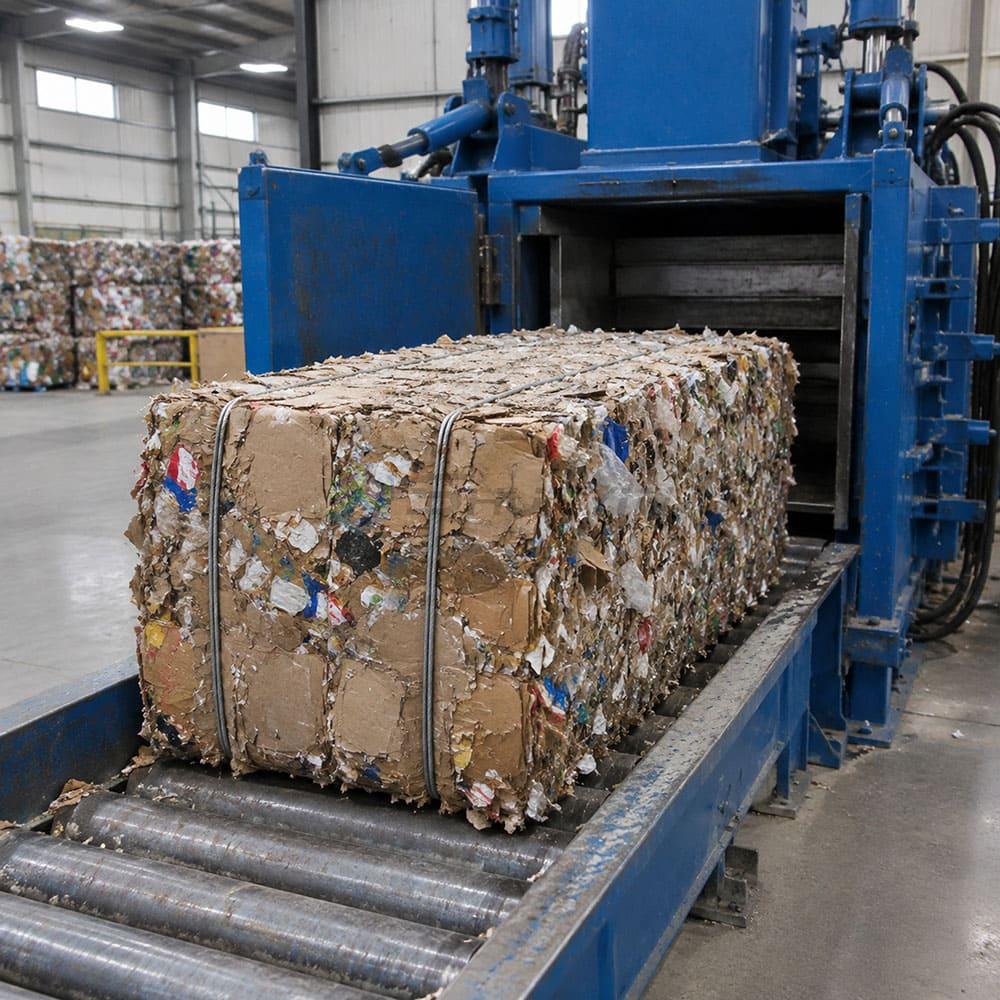
Horizontal balers are ideal for:
- Materials with high bulk density like OCC, PET bottles, and metal scraps.
- Large-scale facilities needing faster processing and automation, such as material recovery facilities (MRFs) or recycling plants.
- Bale specs requiring a larger chamber size, such as bales used for export or high-weight applications.
However, you must also examine additional factors:
- Feed consistency: Batch-fed or conveyor-fed operations work best with horizontal balers.
- Cycle time: Faster cycles improve throughput but depend on hydraulic efficiency and material flow.
- Tying methods: Wire, strap, or manual tying must align with your bale structure preferences.
Does compression force determine bale quality?
Compression force is often viewed as the deciding factor in bale formation, but it is just one piece of the puzzle.1 Chamber size, cycle time, and material properties are equally crucial.
While compression force plays a role in achieving bale density, chamber design, material characteristics, and feeding efficiency ultimately shape bale quality, weight, and throughput.
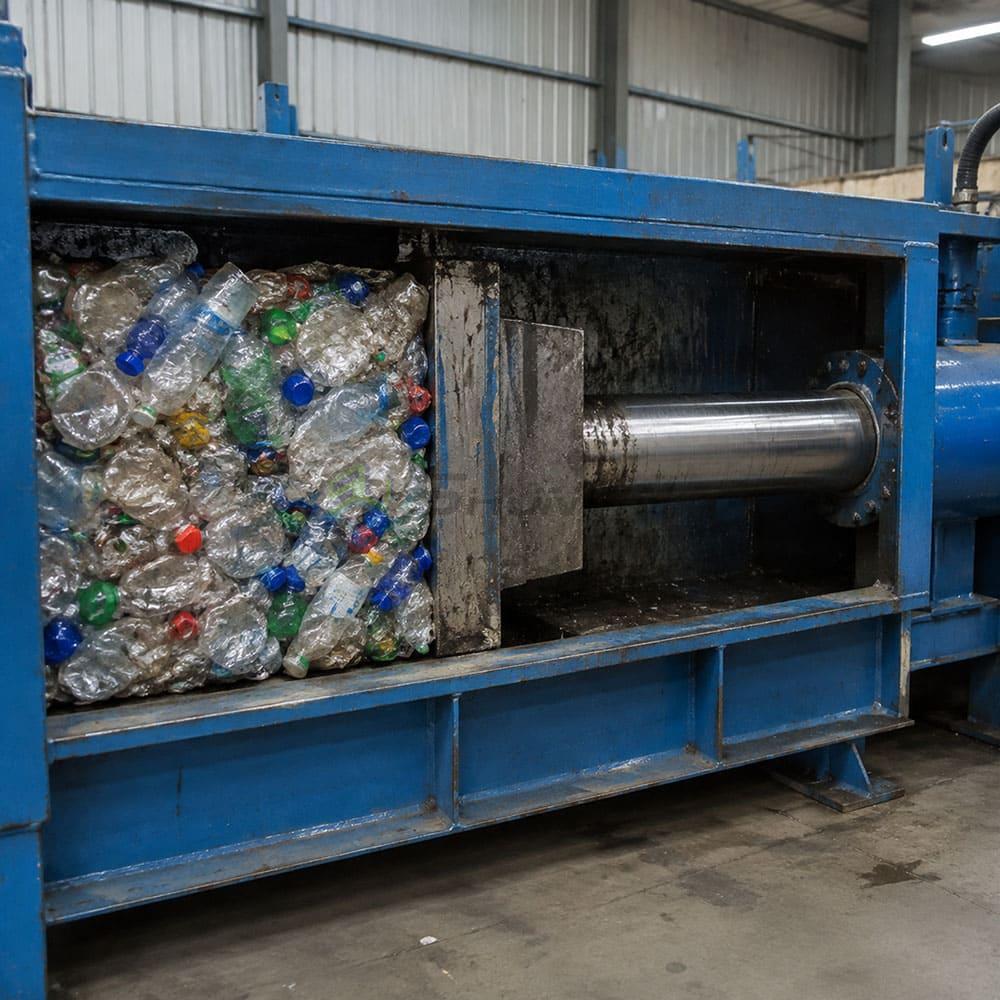
Here’s why compression force alone cannot determine bale success:
- Material behavior: Materials like PET bottles or coconut shells have unique compaction properties.
- Chamber dimensions: A larger horizontal chamber accommodates more material but requires optimized compression techniques.
- Feed uniformity: Inconsistent feeding impacts how the material compacts within cycles.
For example, in a Philippine coconut-shell application we handled, the material required a horizontal chamber to achieve desired bale dimensions and weight. Initial tests with a vertical baler produced inconsistent results due to the shells' density and irregular shape. By test-baling locally, we confirmed the horizontal baler could meet the buyer’s requirements.
Are horizontal balers suitable for all materials?
Horizontal balers excel with certain materials but may not match every recycling or waste processing demand. Consider specific material properties before investing in one.
Horizontal balers are ideal for high-volume materials like cardboard, PET bottles, plastics, textile waste, and metal scraps. However, materials with low density or inconsistent feeding requirements may require different equipment.
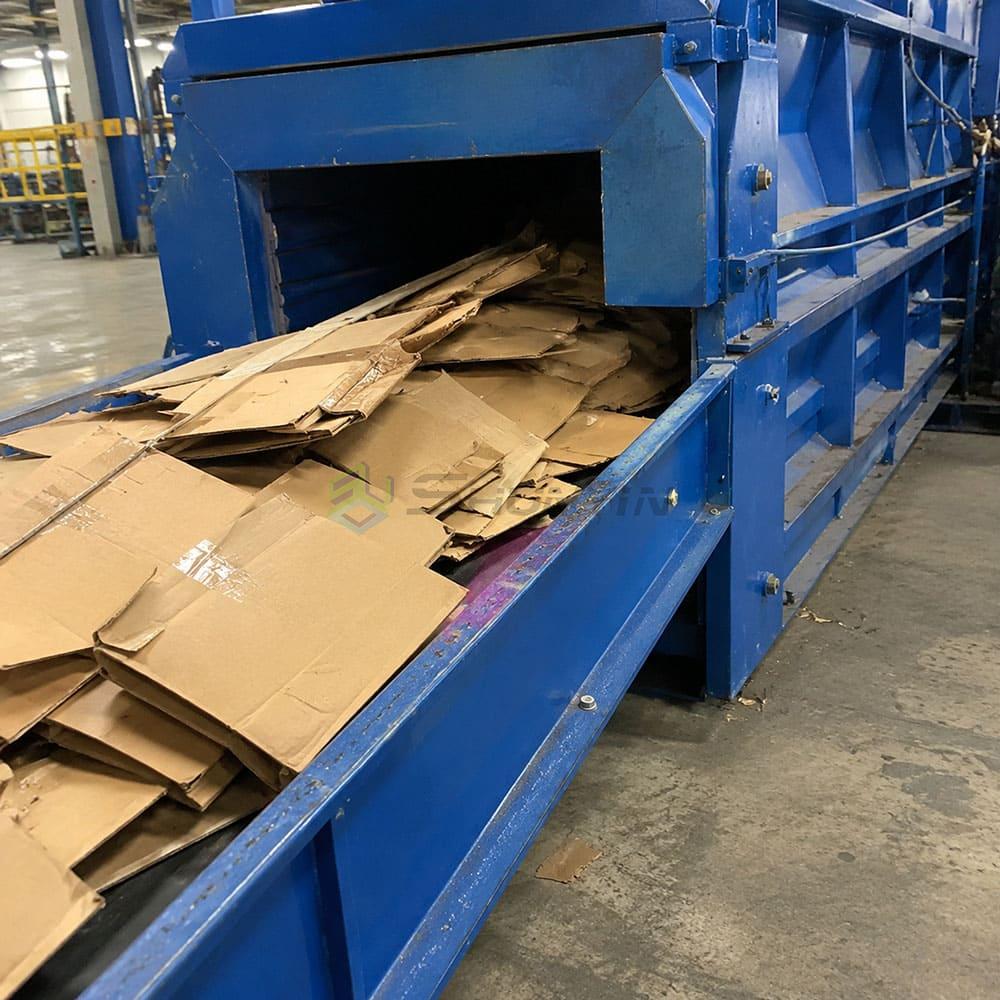
Certain materials like foam or film might need specialized balers tailored to their lightweight nature. For materials with unique challenges—such as oversized dimensions, low-speed feeding, or specific packing requirements—a preliminary test or consultation with the manufacturer can help guide your decision.
What lessons can be learned from real-world applications?
Real-world example validation brings confidence when selecting equipment, showing how baler performance meets output goals.2
Verified field tests and case studies provide critical insights into how horizontal balers process specific materials. Customer feedback helps align machine recommendations with practical outcomes.
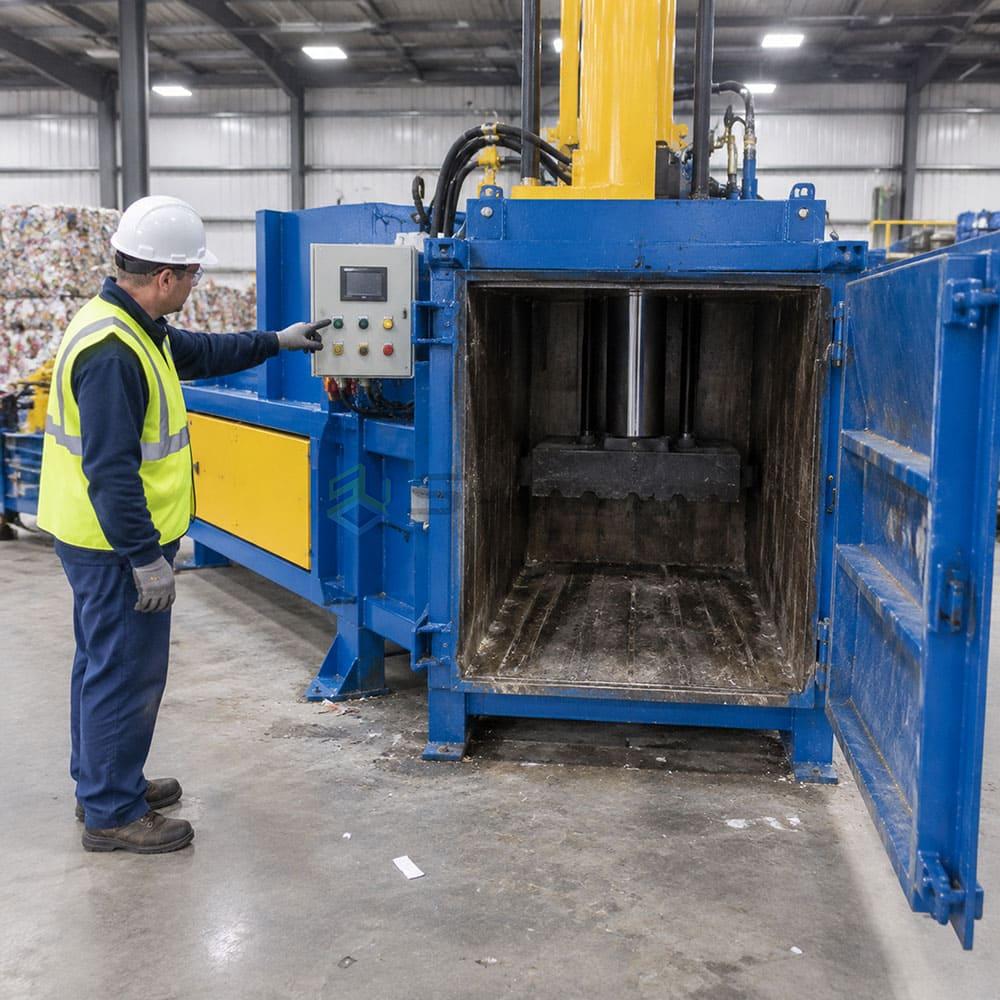
The coconut-shell case mentioned earlier illustrates this point well. A customer initially requested a vertical baler but expressed concerns about achieving desired bale weight for export logistics. After test-baling the shells using both vertical and horizontal models, the horizontal baler showed superior results for density, consistency, and discharge efficiency.
This highlights the value of matching baler type to material and bale specifications rather than focusing on machine labels alone.
Frequently Asked Questions
What is the key difference between horizontal and vertical balers?
Horizontal balers compress materials horizontally while vertical balers use downward pressure. Horizontal balers excel in high-volume operations with automated feeding, while vertical balers suit smaller-scale manual processes.
Can horizontal balers handle lightweight materials like foam?
While horizontal balers are optimized for dense materials, they can process lightweight materials with specialized configurations. Foam may require custom chambers or feeding adjustments for consistent bale formation.
How do I determine the right baler for my material?
Evaluate factors including material type, bulk density, target bale dimensions, weight, hourly volume, feeding method, and desired automation level. Test-baling is helpful when dealing with unique materials or operational constraints.3
Are horizontal balers more expensive than vertical balers?
Horizontal balers typically cost more due to their larger size, automation features, and higher throughput capacity. However, they offer better efficiency and bale quality for large-scale operations.
Can a horizontal baler be customized for specific needs?
Yes, horizontal balers can be tailored to fit unique material properties, chamber dimensions, tying configurations, and feeding methods. Discuss your requirements with the manufacturer before purchasing.
Conclusion
Horizontal balers are hydraulic machines that compress recyclable materials efficiently through horizontal chambers, making them ideal for high-volume operations. Choosing the right baler involves evaluating material type, bale dimensions, weight, and automation needs—not just the machine’s orientation. If you work with bulk recycling volumes and demanding bale specifications, a horizontal baler may be the solution for your operation. Contact us to discuss your requirements and receive tailored recommendations!
"Analysis of different polypropylene waste bales - PMC - NIH", https://pmc.ncbi.nlm.nih.gov/articles/PMC11373154/. Experts in recycling technology emphasize that while compression force is important, chamber design and material properties significantly influence bale quality and consistency. Evidence role: expert_consensus; source type: research. Supports: Compression force is not the sole determinant of bale formation; other factors like chamber design and material properties are also crucial.. Scope note: Specific material behaviors may require tailored compression settings. ↩
"Design and Experiments of a Real-Time Bale Density ... - PMC", https://pmc.ncbi.nlm.nih.gov/articles/PMC9965362/. Institutional case studies on recycling equipment highlight the importance of real-world testing to confirm baler performance and compatibility with operational requirements. Evidence role: case_reference; source type: institution. Supports: Real-world examples validate equipment selection by demonstrating how baler performance aligns with output goals.. Scope note: Results may depend on specific operational contexts and material types. ↩
"Selecting a Round Baler | UGA Forage Extension Team", https://site.extension.uga.edu/forageteam/2017/08/selecting-a-round-baler/. Institutional guidelines on recycling equipment recommend test-baling as a practical approach to assess baler compatibility with specific materials and operational needs. Evidence role: case_reference; source type: institution. Supports: Test-baling is an effective method for evaluating baler compatibility with unique materials or operational constraints.. Scope note: Test results may vary based on material properties and machine settings. ↩