

Understanding horizontal baler parts is essential for buyers looking to optimize waste processing performance. Each component—from feeding systems to bale discharge—works as part of a cycle tailored to your material type, throughput requirements, and desired bale output. Let’s break down these parts and their critical functions in the baling process.
A horizontal baler comprises systems for feeding, compression, bale formation, tying, bale discharge, and control. Each part works in sequence to efficiently process materials into dense, manageable bales, minimizing labor and transport costs.1 Selecting the right configuration depends on material properties, processing capacity, and downstream requirements.
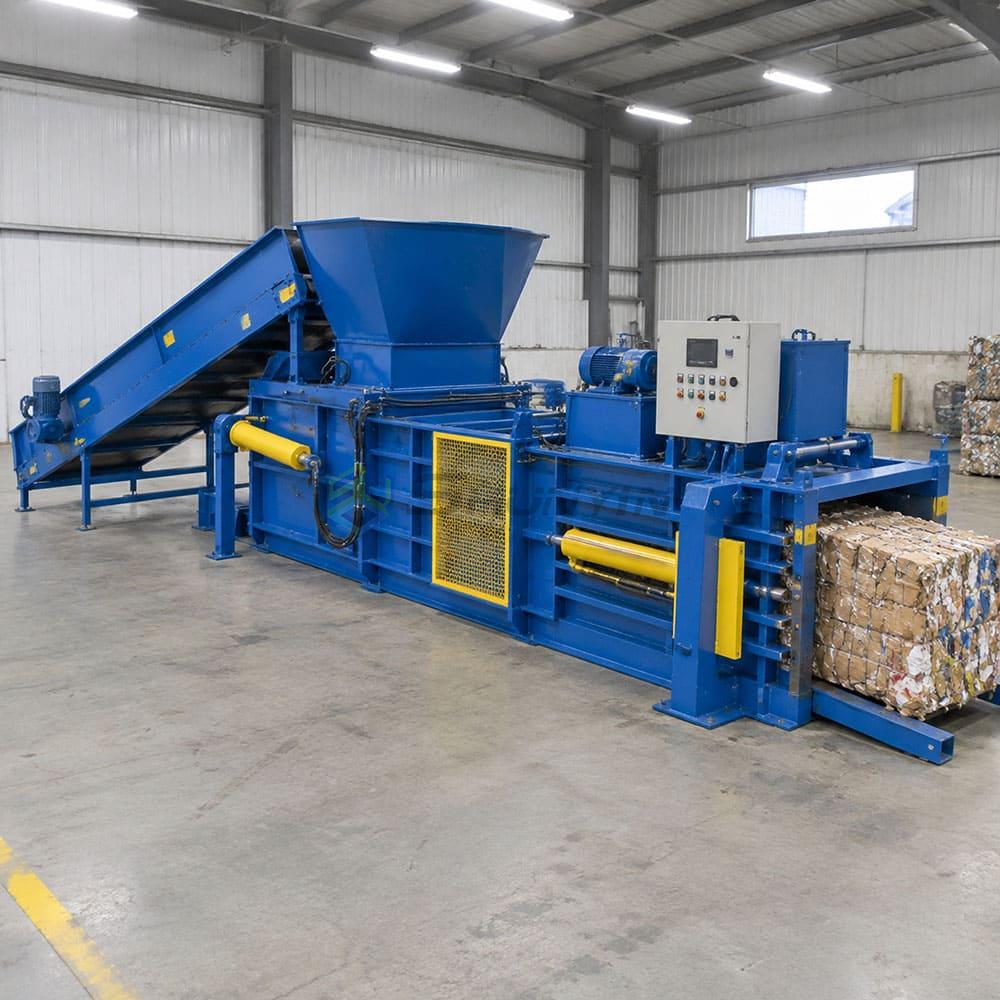
Rather than just listing components, I’ll show how each system integrates into the baling process. Whether you’re evaluating options for cardboard, PET bottles, metals, or textiles, this guide will help you select a baler suited to your needs.
What is the feeding system, and why is it important?
Feeding systems bring material into the baler for compression—a critical first step in efficient baling.
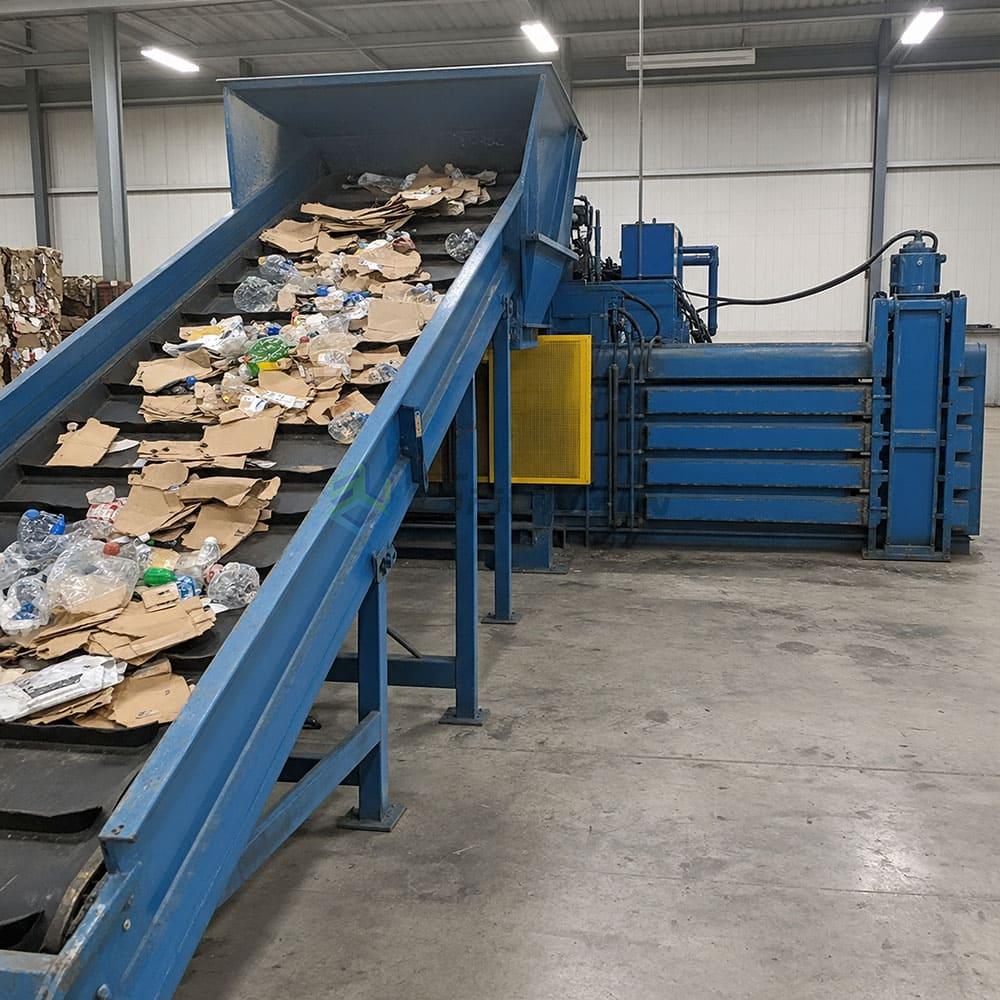
Feeding systems vary widely depending on the material type and automation level. Options include conveyor belts, hydraulic loaders, hoppers, and manual feeding chutes, each suited to specific applications and capacities.
Key feeding system considerations
The feeding system directly impacts throughput and operator labor requirements.2 Common feeding options include:
- Conveyor belts: Ideal for high-volume facilities, conveyor belts continuously feed material into the baler without interruption.
- Hydraulic loaders: These handle heavier scrap materials, such as metals, utilizing a hydraulic arm to load material efficiently.
- Hopper designs: Dry materials like paper or textiles are often fed manually into hoppers, making this a cost-effective solution for smaller facilities.
For example, one of my customers processing lightweight plastic film opted for a horizontal baler with a large hopper equipped with automatic leveling sensors. This ensured consistent feeding, avoiding material jams that could disrupt operations.
How does the compression chamber function?
Compression chambers compact loaded material into dense shapes that meet bale specifications.
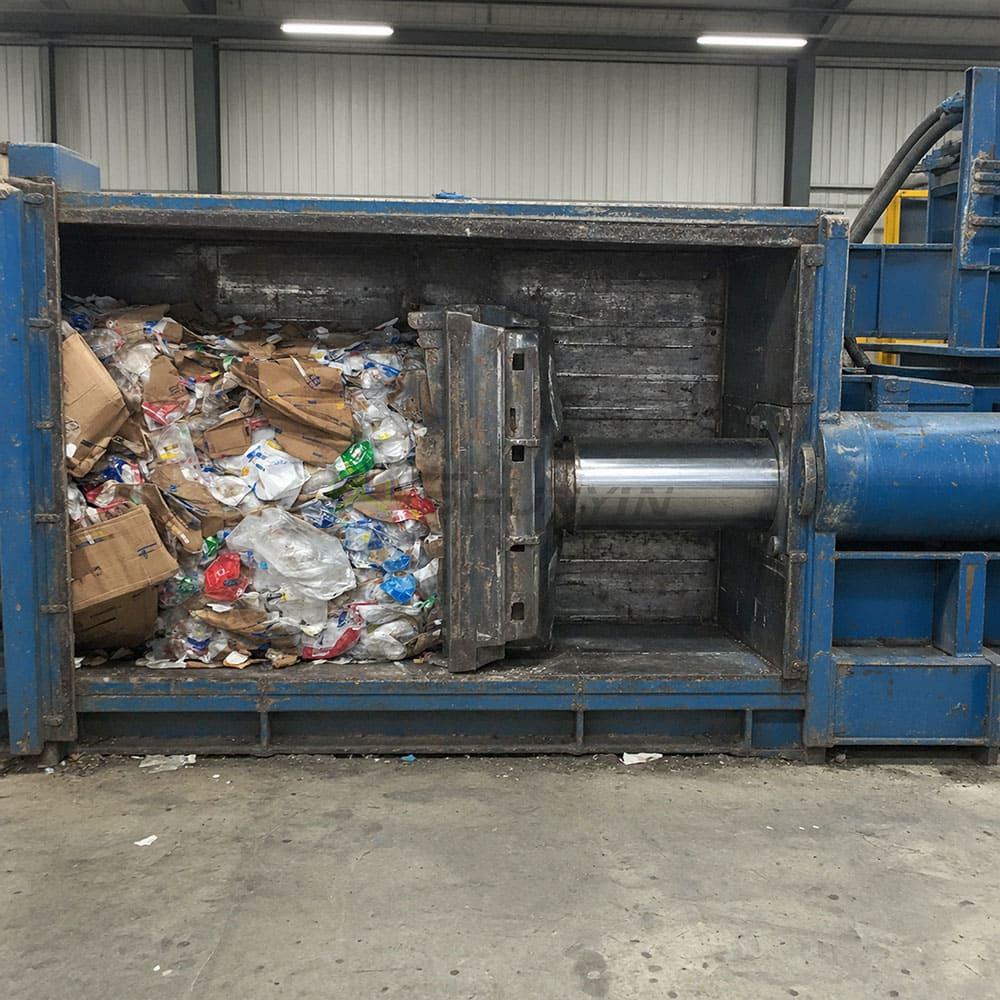
The compression chamber includes a hydraulic ram that applies immense pressure to the material, shaping it into uniform bales.3 Its design varies based on material hardness, bulk density, and bale requirements.4
Compression chamber configurations
Compression chambers are designed to ensure optimal pressure distribution for various materials:
- High-pressure rams: These are necessary for difficult-to-compact materials like scrap metal or rigid plastics.
- Side-loading mechanisms: Often used for cardboard and paper to minimize material bunching.
- Adjustable guides: Ensure consistent bale dimensions even when materials have uneven density.
A buyer handling scrap aluminum in bulk might require higher tonnage capacity to ensure complete compression. Identifying the right configuration comes down to material characteristics and desired bale density.
What are bale formation and tying systems?
These systems finalize bale production by ensuring proper dimensions and secure integrity during handling.
Bale formation systems include guides and tying mechanisms like automatic wire-binding systems or manual tying stations, depending on the baler’s automation level and your bale handling needs.
![Bale formation and tying]https://sybalingmachine.com/wp-content/uploads/2026/09/6-placeholder-iphone-understanding-horiz_image-004_20260929_58c7db85.jpg "Tying mechanism for horizontal balers")
Common systems for tying and bale formation
Standard bale formation and tying mechanisms found in horizontal balers include:
- Automatic wire-binding systems: Usually preferred for high-throughput environments, offering consistent and durable bindings.
- Manual tying systems: Suitable for lower-capacity balers or operators requiring customization for bale transportation.
- Adjustable bale guides: These ensure bales meet specific dimensions required for stacking or shipment.
For example, in textile waste baling, automating the tying system was critical for one customer to reduce handling time by 30%, thus improving operational throughput.
What is the bale discharge system and its role?
The bale discharge system removes completed bales from the baler, preparing them for storage or shipment.
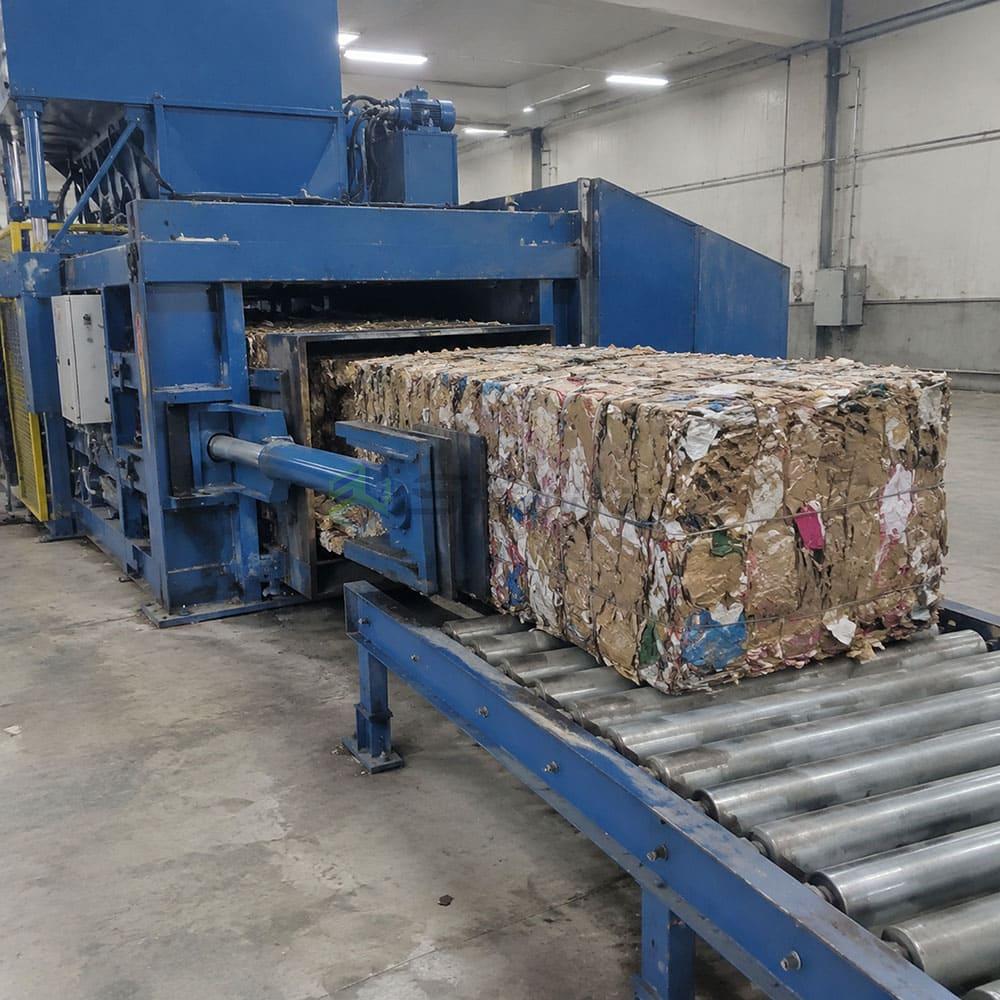
Bale discharge systems include hydraulic ejectors, sliding platforms, or drop-down dischargers. These vary significantly based on bale size and handling needs.
Bale discharge system features
Choosing the right discharge mechanism ensures efficiency during bale handling. Common options include:
- Hydraulic ejectors: Used for heavy or rigid bales such as scrap metal.
- Sliding discharge platforms: Ideal for lightweight or smaller bales like cardboard and plastic.
- Automatic roller exits: Streamline bale removal, reducing downtime between cycles.
One of my packaging industry customers opted for an exit conveyor system to handle lightweight carton bales. This automated system reduced manual handling and supported faster throughput during peak operational hours.
How do control systems optimize baler operations?
Control systems manage baler functions, ensuring efficiency, safety, and operational reliability.
Modern control systems feature programmable logic controllers (PLCs) with automation settings to adjust cycle timing, pressure levels, and fault management.5
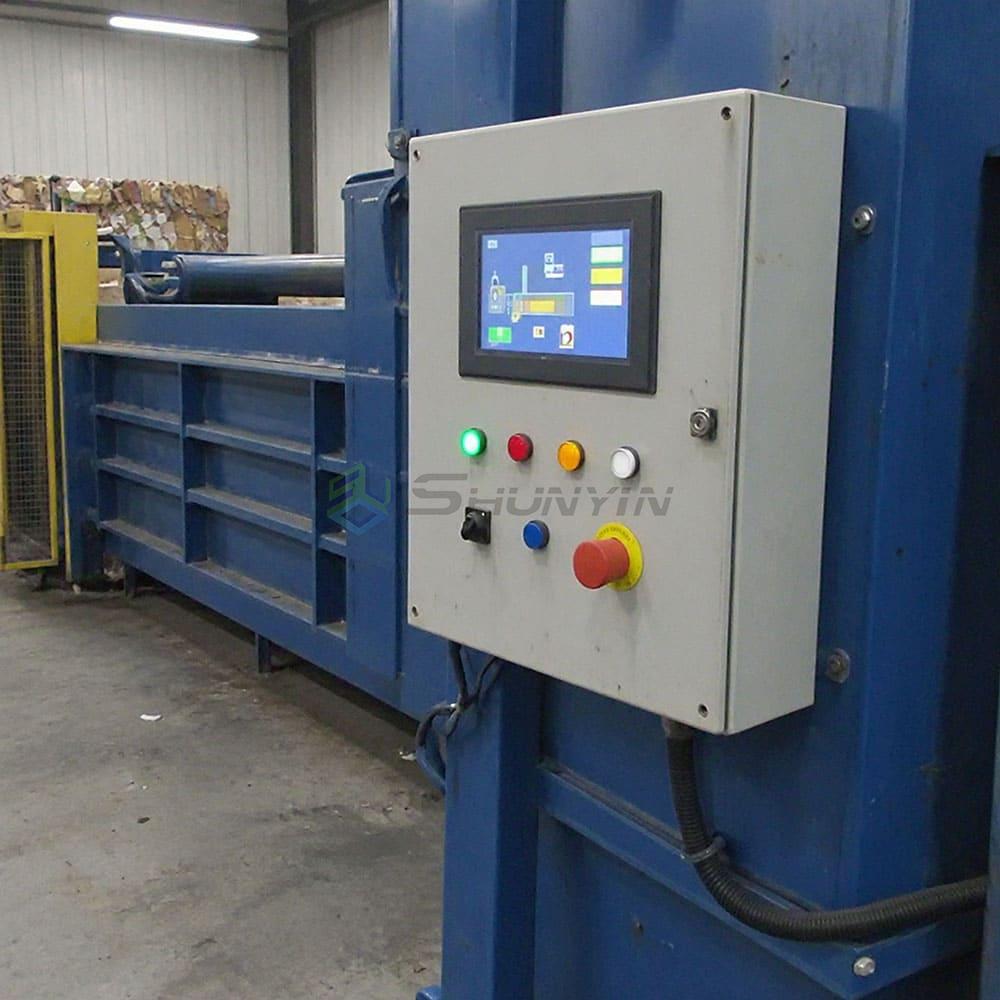
Features of advanced control systems
Control panels include several features catering to facility-specific demands:
- Automated cycle optimization: Adjusts compression and tying settings based on material type.
- Safety features: Emergency stop buttons and fault detectors increase operational safety.
- Monitoring systems: Provide real-time data on bale production, equipment diagnostics, and maintenance reminders.
In one recycling facility processing mixed waste streams, upgrading to a PLC panel allowed the operators to pre-program material-specific settings, improving bale uniformity by 25%.
Frequently Asked Questions
How do I choose the right horizontal baler parts?
Evaluate parts based on your material type, hourly capacity requirements, bale dimensions, and automation needs. Confirm supplier availability for spare parts and long-term support to minimize downtime risks.
Can baler parts be customized?
Yes, most horizontal baler manufacturers offer customization for feeding systems, compression power levels, and tying mechanisms based on your operational needs. Always discuss specifications specific to your material and facility with the supplier.
Are all horizontal balers suitable for scrap metal?
No, scrap metal requires higher compression forces and robust feeding systems, such as hydraulic loaders. Choose a model specifically designed for heavy materials with high durability standards.
How do spare parts affect operating costs?
Critical wear parts, such as hydraulic seals or wire-binding components, significantly impact maintenance costs and downtime risks. Ensure access to quality spare parts and skilled after-sales support to avoid disruptions.
Is automation always necessary for horizontal balers?
Not always. Automation is ideal for high-throughput operations but may not be required for smaller facilities handling lighter materials or manual feeding processes.
Conclusion
Horizontal baler parts and functions work together to process materials efficiently—whether cardboard, PET bottles, or scrap metal. Feeding, compression, tying, discharge, and control systems must be designed to match your material’s properties, production capacity, and bale requirements. Partnering with a reliable supplier ensures optimized configuration, reliable performance, and reduced operational downtime.
If you’re evaluating horizontal baler options, feel free to reach out—we’re here to help you select the perfect solution for your recycling challenges!
"Baling Solid Waste to Conserve Sanitary Landfill Space, A ...", https://nepis.epa.gov/Exe/ZyPURL.cgi?Dockey=9100FLI3.TXT. Research on waste compaction indicates that increasing material bulk density can reduce storage volume and improve vehicle payload utilization, although the resulting labor and transport savings depend on facility layout, material type, and logistics. Evidence role: general_support; source type: research. Supports: Compaction increases the bulk density of recyclable materials and may improve handling and transportation efficiency.. Scope note: General compaction research supports the mechanism but does not establish cost savings for every horizontal-baler installation. ↩
"Ergonomic Guidelines for Manual Material Handling", https://www.cdc.gov/niosh/media/pdfs/Ergonomic-Guidelines-for-Manual-Material-Handling_2007-131.pdf. Research on mechanized material handling shows that feed continuity and automation can influence production throughput while reducing some manual loading tasks; the magnitude of the effect varies with material flow and system integration. Evidence role: mechanism; source type: research. Supports: Mechanized and continuous material handling can increase feed consistency and reduce manual handling tasks.. Scope note: The evidence may concern industrial material handling generally rather than horizontal balers specifically. ↩
"Steel work design and analysis of a 40-ton constant ...", https://www.academia.edu/101028475/Steel_work_design_and_analysis_of_a_40_ton_constant_temperature_hydraulic_press. Engineering references explain that hydraulic pressure acting on a piston produces ram force, which baling presses use to compact material within a confined chamber. Evidence role: mechanism; source type: education. Supports: Hydraulic systems transmit fluid pressure to a piston or ram, generating the force used for compression.. Scope note: The reference explains the compression mechanism; bale uniformity also depends on feed distribution, chamber geometry, and material behavior. ↩
"High-pressure Compaction & Bailing Of Solid Waste", https://nepis.epa.gov/Exe/ZyPURL.cgi?Dockey=2000PVVW.TXT. Compaction studies report that achievable density and required pressure vary with initial bulk density and other material properties, supporting the need to match chamber and ram specifications to the feedstock and desired bale. Evidence role: mechanism; source type: paper. Supports: Material compressibility, initial bulk density, moisture, and applied pressure affect compacted density and press requirements.. Scope note: Findings for a particular waste or biomass material may not transfer quantitatively to metals, plastics, paper, or textiles. ↩
"programmable logic controller - Glossary | CSRC", https://csrc.nist.gov/glossary/term/programmable_logic_controller. Industrial-control guidance defines programmable logic controllers as devices that process field inputs and execute programmed control logic, enabling sequence timing, actuator control, alarm handling, and related machine functions. Evidence role: definition; source type: government. Supports: PLCs are industrial digital controllers that execute programmed logic using sensor inputs to control machinery and process sequences.. Scope note: This establishes PLC capabilities generally, not that every modern horizontal baler includes all listed functions. ↩