

Baler manufacturers design and produce equipment that compresses recyclable or waste materials into manageable bales. However, buyers often struggle to separate genuine factories from trading companies and resellers. That uncertainty can cause specification errors, delivery delays, and unclear support responsibilities. I recommend using a structured supplier qualification process before requesting quotations.
Baler manufacturers are companies that build vertical, horizontal, hydraulic, cardboard, waste, or scrap metal balers for specific processing requirements. The right manufacturer is not simply a well-known name. It is a verified supplier whose production, customization, export, communication, and service capabilities match the buyer’s material, throughput, bale, automation, and operating requirements.
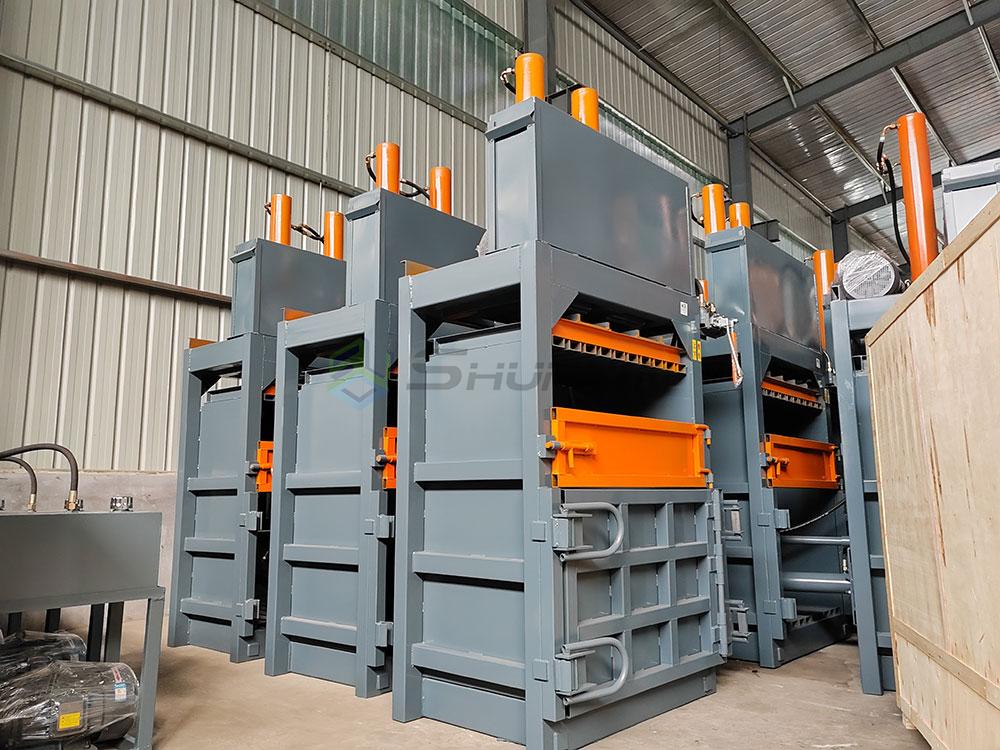
I have handled inquiries that began with only one sentence: “We need a baler.” Turning that request into a useful proposal required much more detail. Below, I explain who manufactures balers, how supplier roles differ, and how I believe overseas buyers should verify factories before making a purchasing decision.
Who Are Baler Manufacturers, and What Do They Actually Do?
The term “manufacturer” sounds straightforward, but it can hide several different business models. A supplier may assemble complete machines, outsource major components, customize an existing design, or simply coordinate production through another factory. If I do not clarify the supplier’s actual responsibilities, I cannot evaluate its technical or commercial value accurately.
I define baler manufacturers as businesses that control or directly manage the production of baling equipment. Their responsibilities may include machine design, material selection, fabrication, hydraulic integration, electrical installation, assembly, testing, customization, and technical documentation. Buyers should verify which activities the supplier performs rather than relying on the word “factory.”
Common Types of Baling Equipment
Manufacturers may focus on one product category or offer several types of recycling equipment. Common product groups include:
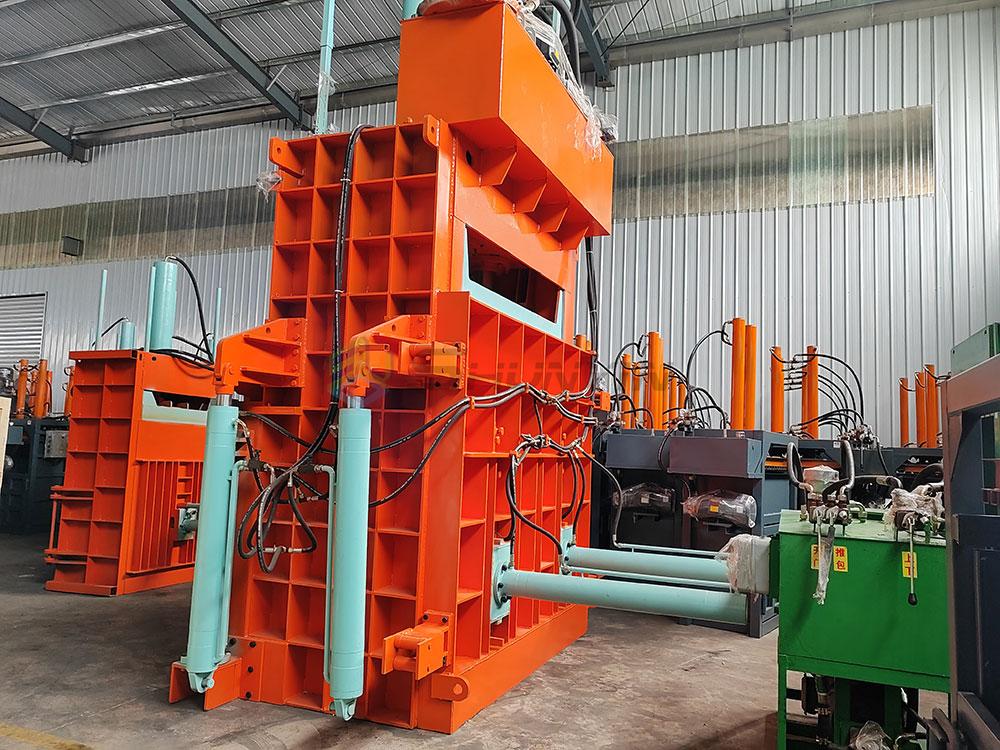
- Vertical balers for facilities with moderate waste volumes and limited floor space
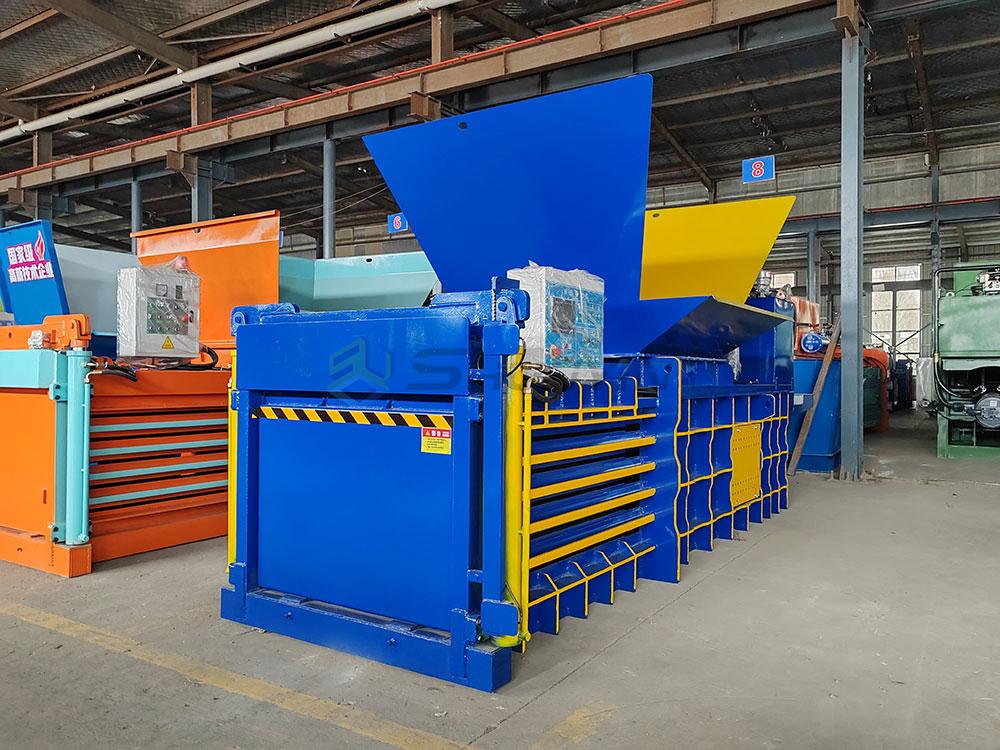
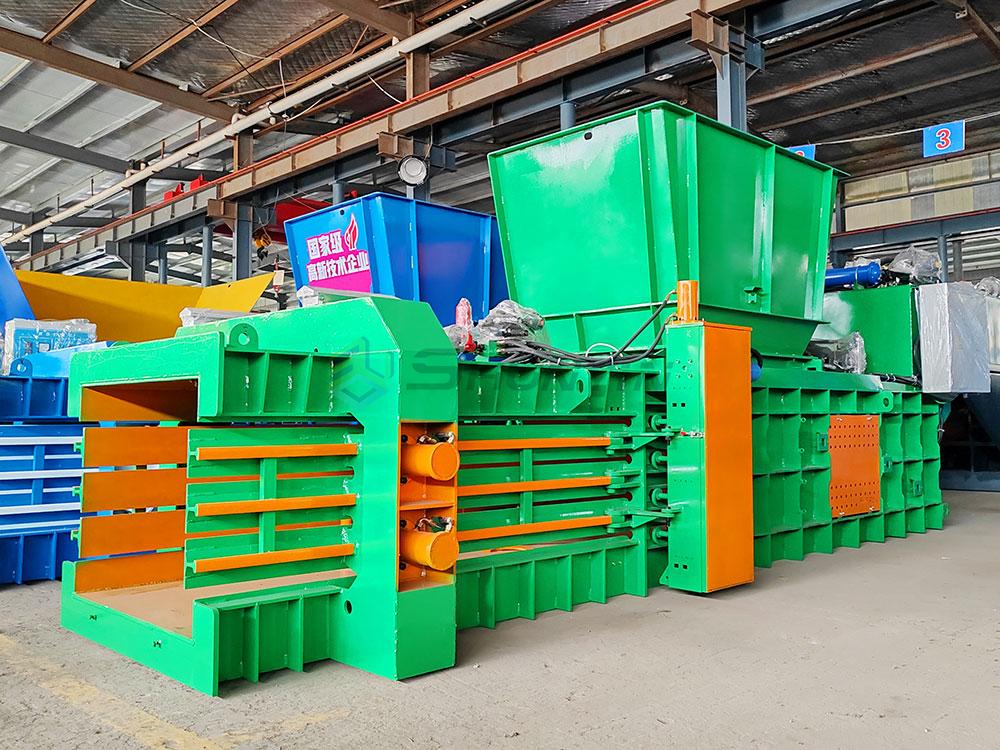
- Horizontal balers for higher-throughput recycling and industrial operations
- Cardboard and OCC balers for warehouses, packaging plants, distribution centers, and paper recyclers
- Waste paper balers for printing plants, paper mills, and material recovery facilities
- Plastic and PET bottle balers for plastic recycling operations
- Textile balers for fabric waste, clothing, fibers, and similar materials
- Scrap metal balers for compressing selected metal scrap
- Automatic channel balers for continuously fed processing lines
- Related shredders and conveyors for integrated material-handling systems
These labels do not guarantee that every model suits every material. For example, loose cardboard, shredded paper, PET bottles, plastic film, textile waste, and metal scrap behave differently during feeding and compression1. I always treat the material description as the starting point rather than assuming that one “waste baler” can process everything effectively.
What Production Control Should Mean
A credible manufacturer should be able to explain which stages it controls. I normally ask about:
- Machine design responsibility
- Steel structure fabrication
- Hydraulic system selection and assembly
- Electrical cabinet and control programming
- Final assembly
- No-load and material testing
- Packing and export preparation
- Technical support after delivery
A supplier does not necessarily need to manufacture every pump, motor, sensor, or electrical component internally. Industrial machinery commonly includes purchased components.2 The important issue is whether the supplier selects them appropriately, integrates them correctly, documents the configuration, and accepts clear responsibility for the finished equipment.
I do not treat in-house production as an automatic guarantee of quality. I look for traceable responsibility, suitable quality controls, and evidence that the proposed machine matches the application.
Manufacturers Are Not Automatically the Best Choice
Direct access to production can improve technical communication and customization. However, a capable distributor may provide better local installation, language support, spare-parts availability, or response times in a particular market3. I therefore compare the entire supply arrangement rather than assuming that direct factory purchasing always carries less risk.
How Do Baler Manufacturers Differ From Traders and Distributors?
Supplier labels can create unnecessary confusion. Some traders describe themselves as factories, while some manufacturers use export companies to manage international sales. Distributors may also provide valuable local engineering and service. The problem is not the business model itself. The problem appears when buyers cannot identify who controls each responsibility.
Baler manufacturers control machine production, while trading companies usually source equipment from one or more factories. Distributors normally sell equipment within a defined territory and may provide local inventory or service. I recommend identifying who handles specifications, modifications, quality control, documentation, delivery, installation, spare parts, warranty claims, and technical troubleshooting.
Comparing Supplier Roles
The following table shows typical role differences. These are general patterns rather than universal rules, so I verify each supplier individually.
| Evaluation point | Manufacturer | Trading company | Distributor or dealer |
|---|---|---|---|
| Controls production | Usually | Usually not directly | Usually not directly |
| Offers customization | Often possible | Depends on factory access | Depends on supplier agreement |
| Manages export documents | May do so internally or through an agent | Often a core capability | Depends on location and contract |
| Provides local service | Depends on market coverage | Sometimes through partners | Often a key advantage |
| Represents multiple brands | Less common | Common | Common |
| Holds spare parts locally | Varies | Varies | More likely in its territory |
| Makes final technical decisions | Usually | Often refers decisions to factory | Often coordinates with factory |
| Handles warranty communication | Usually | May coordinate claims | May provide first-line support |
Questions That Reveal the Real Supply Chain
I use practical questions instead of asking only, “Are you a manufacturer?” Useful questions include:
- Where will the machine be fabricated and assembled?
- Which legal entity will appear on the contract and commercial invoice?
- Who will approve technical changes?
- Can the production site join a video meeting?
- Who will conduct final inspection and testing?
- Who will provide drawings, manuals, and electrical documents?
- Who holds responsibility if the delivered specification differs from the approved specification?
- Where will replacement parts be shipped from?
- Who will answer troubleshooting questions after delivery?
The quality of the answers often matters more than the supplier category. A trader with direct, transparent factory access may be more reliable than a poorly organized factory export department. Likewise, a distributor with trained service staff may reduce operational risk for a buyer who requires local support.
Follow the Responsibility, Not the Label
I once received an inquiry in which the buyer had already collected several quotations. The prices looked easy to compare, but the quoted machine types, feeding arrangements, and included accessories were different. The buyer had supplier names but did not yet have comparable proposals.
That pattern is common in international equipment sourcing. I recommend creating a responsibility matrix before choosing a supplier. The matrix should identify who is responsible for:
- Technical confirmation
- Production and component procurement
- Factory inspection
- Export packing
- Customs and shipping documents
- Installation guidance
- Operator training
- Warranty decisions
- Spare-parts supply
- Long-term technical support
This approach lets me judge the actual commercial structure without assuming that one type of supplier is always superior.
Which Requirements Should I Define Before Contacting Baler Manufacturers?
A vague inquiry usually produces a vague quotation. If a buyer requests only “a cardboard baler” or “a 100-ton baler,” suppliers may make different assumptions about capacity, pressure, feeding, bale size, and automation. Those assumptions make prices difficult to compare and increase the risk of purchasing unsuitable equipment.
Before contacting baler manufacturers, I recommend defining the processed material, material condition, required throughput, operating hours, target bale dimensions and weight, feeding method, automation level, available power, site limitations, destination country, and service expectations. These details allow suppliers to recommend a model and explain any required customization.
Start With the Material
The material name alone is not always enough. I ask buyers to describe its condition as precisely as possible.
For example, “plastic” could mean:
- Loose PET bottles with caps
- Flattened bottles
- Mixed rigid plastics
- LDPE film
- Woven bags
- Shredded plastic
- Plastic mixed with moisture or contaminants
Likewise, “paper” could refer to OCC cartons, office paper, newspaper, paper trim, printing waste, or shredded confidential documents. Each material may require different feeding, retention, tying, or compression arrangements.
Photos and short videos can help the supplier understand material condition. However, I do not use images as a substitute for measurable requirements. Bulk density, moisture, contamination, and particle size may affect performance and should be discussed when relevant.
Prepare a Structured Inquiry Sheet
I suggest including the following information:
| Requirement | Information to provide |
|---|---|
| Material | Name, composition, condition, and contamination |
| Daily volume | Tonnes, kilograms, or cubic metres per day |
| Target throughput | Required tonnes or kilograms per hour |
| Operating schedule | Hours per shift and shifts per day |
| Feeding method | Manual, conveyor, loader, air system, or other method |
| Target bale | Preferred dimensions, weight, and density |
| Tying method | Manual or automatic; wire, strap, or another material |
| Site conditions | Available space, floor, temperature, dust, and moisture |
| Utilities | Voltage, frequency, phase, and available electrical capacity |
| Destination | Country, delivery point, and applicable import requirements |
| Support | Installation, training, spares, and response expectations |
| Integration | Conveyor, shredder, hopper, platform, or production line |
Buyers should treat target bale weight carefully. Actual bale weight can vary with the material, moisture, feed consistency, operator practice, and machine settings.4 I ask suppliers to state the assumptions behind any performance claim. If a particular figure is contractually important, the buyer should define an agreed test method and acceptance criteria.
Separate Mandatory and Preferred Features
I divide requirements into three groups:
- Mandatory: The machine cannot be accepted without these items.
- Preferred: These features improve the project but allow alternatives.
- Optional: The buyer wants separate pricing before making a decision.
This method prevents optional equipment from distorting quotation comparisons. It also helps baler manufacturers identify where a standard model may work and where engineering changes may be necessary.
Application-specific decisions should be reviewed by qualified technical personnel. Buyers should also have local professionals check foundations, electrical connections, guarding, fire risks, and workplace safety requirements before installation.5
How Can I Verify Baler Manufacturers and Their Customization Claims?
Websites, catalogues, and marketplace profiles can support initial research, but they are not proof of manufacturing capability.6 Product images may be outdated, shared, or supplied by another factory. The word “customized” can also mean anything from changing paint color to redesigning an entire feeding and control system.
I verify baler manufacturers by requesting evidence tied to the proposed machine. Useful evidence includes relevant production information, comparable models, technical drawings, detailed clarification responses, component lists, testing procedures, modification responsibility, inspection access, and clear documentation. Buyers should verify claimed certificates with the issuer or applicable database whenever possible.
Ask for Model-Relevant Evidence
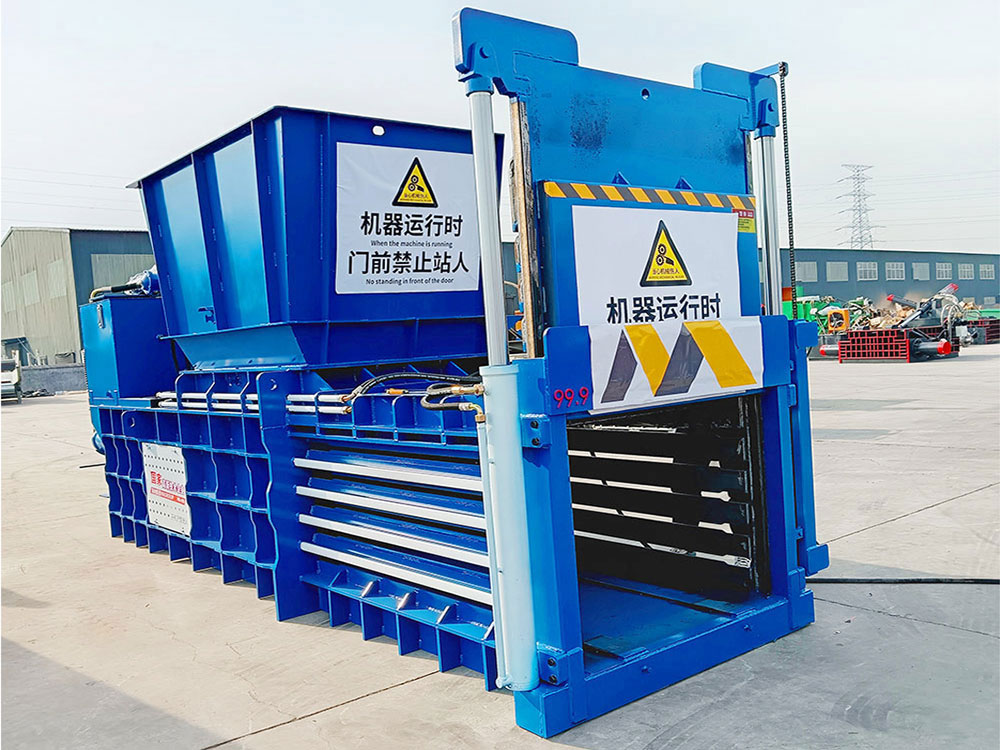
A general factory video can show that a production site exists, but it may not prove that the supplier can build the required model. I prefer evidence connected to the quotation, such as:
- Images or video of the same or a comparable baler type
- A general arrangement drawing
- A technical data sheet with defined units
- Proposed hydraulic and electrical component information
- An explanation of the machine’s operating sequence
- A list of included and excluded accessories
- A description of the testing procedure
- Photos or video of assembly and quality-control stages
- Packing dimensions and shipping configuration
- A draft manual or document list
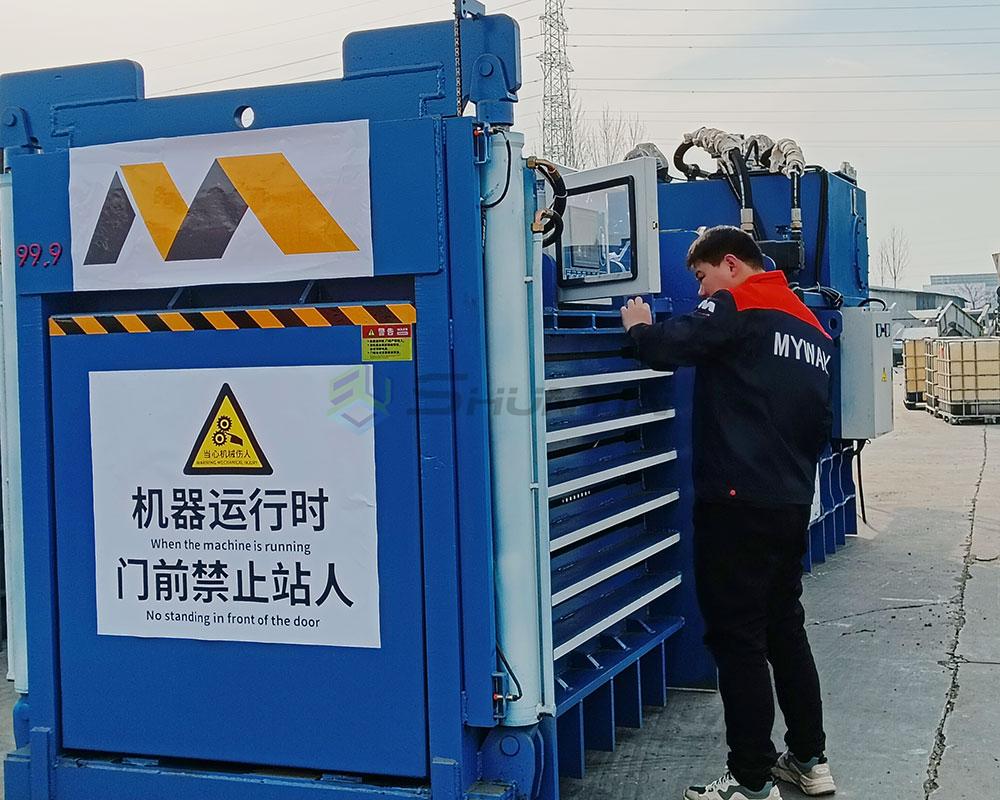
A live video call can also help. During the call, I may ask the supplier to show the fabrication, assembly, testing, or finished-machine area. A video tour is not a complete audit7, but it can clarify whether the supplier’s explanations match the visible operation.
For higher-value projects, buyers may consider an independent factory audit or pre-shipment inspection. The inspection scope should be agreed in writing. A general visual inspection will not confirm every structural, hydraulic, electrical, or performance requirement.
Evaluate Technical Clarification Quality
Strong technical communication usually follows a logical sequence. The supplier should ask questions before finalizing a recommendation. I become cautious when a supplier offers a fixed model immediately without confirming the material, throughput, bale requirements, or local power supply.
I also look for clear explanations of trade-offs. For example:
- Higher automation may reduce routine labor but increase system complexity.8
- Larger feeding openings may help with bulky material but must fit the overall machine design.
- A heavier bale may improve transport efficiency, but actual weight depends on material behavior.9
- A customized line may improve workflow but require more detailed site and integration planning.
A credible answer should define conditions and limitations. It should not promise universal performance.
Verify Documents Instead of Collecting Logos
Certificates and compliance documents may be important for import, installation, insurance, or workplace requirements. However, a logo on a brochure is not sufficient evidence10.
I recommend checking:
- The issuing organization
- Certificate number
- Covered company name and address
- Product or model scope
- Issue and expiry dates
- Referenced standards
- Supporting reports or declarations
- Whether the destination market requires additional assessment
Buyers should consult qualified compliance, safety, and engineering professionals for their specific jurisdiction. I treat certificates as documents to verify, not as automatic proof that a machine is suitable for every application.
How Should I Evaluate Overseas Baler Manufacturers?
Overseas sourcing adds responsibilities that may not appear in the machine specification. A factory can produce suitable equipment and still create problems through incomplete documents, weak packing, unclear shipping coordination, slow spare-parts supply, or poor troubleshooting communication. I therefore evaluate export execution alongside manufacturing capability.
When evaluating overseas baler manufacturers, I review technical suitability, export experience, communication ownership, contract clarity, packing, shipping documents, inspection options, installation support, spare-parts plans, warranty procedures, and response channels. The purchase agreement should identify who handles each task and what evidence is required before production, shipment, and final acceptance.
Use a Weighted Supplier Scorecard
A scorecard helps me avoid choosing a supplier on price alone.11 Buyers can adjust the following sample weights to suit their projects:
| Evaluation category | Example weight |
|---|---|
| Technical match | 25% |
| Manufacturing and quality evidence | 20% |
| Customization capability | 15% |
| Export and documentation capability | 10% |
| After-sales and spare-parts support | 15% |
| Delivery plan | 5% |
| Commercial terms and total cost | 10% |
Each score should have supporting evidence. For example, I would not award a high customization score only because a salesperson says, “No problem.” I would expect a revised drawing, written change list, responsibility statement, and updated price or delivery impact.
Define Inspection and Acceptance Stages
I recommend establishing checkpoints before the machine ships:
- Design confirmation: Both parties approve specifications, drawings, utilities, and included accessories.
- Production updates: The supplier provides agreed progress evidence.
- Factory acceptance review: The parties check functions and available test conditions.
- Document review: The buyer receives the packing list, manuals, drawings, and other agreed documents.
- Pre-shipment approval: The buyer or appointed inspector confirms that stated release conditions are met.
- Arrival inspection: The buyer checks packaging, visible damage, and delivered items.
- Installation and commissioning: Qualified personnel complete site-specific work and record unresolved issues.
The test material matters. A no-load cycle can confirm basic movement, but it cannot establish production performance with the buyer’s actual material.12 If practical, the buyer and supplier should agree on representative test material, quantity, operating time, measurement method, and acceptance limits. Independent technical advice may be necessary when performance guarantees are critical.
Confirm Post-Delivery Responsibility
Before placing an order, I ask who will answer when the machine stops or produces an unexpected result. The supplier should explain:
- The support contact and working language
- Normal response channels and hours
- Remote troubleshooting procedures
- Warranty claim evidence requirements
- Which parts are considered consumables
- Recommended spare-parts packages
- Lead times and shipping methods for replacements
- Availability of on-site support
- Responsibility for local labor and travel costs
- Software access and control-system backup arrangements
These details help turn general after-sales promises into assessable commitments. They also allow buyers to compare the total sourcing risk, not just the purchase price.
Frequently Asked Questions
What types of machines do baler manufacturers produce?
Baler manufacturers may produce vertical balers, horizontal balers, cardboard balers, waste paper balers, plastic balers, textile balers, scrap metal balers, and automatic channel balers. Some also supply shredders, conveyors, hoppers, and complete recycling lines. The suitable equipment depends on the material and required processing conditions.
Is buying directly from a baler factory always better?
No. Direct factory access may improve customization and technical communication, but a trader or distributor may offer stronger local service, language support, financing, or spare-parts availability. I recommend comparing production control, communication, service responsibility, and total cost instead of choosing solely by supplier category.
How can I tell whether a baler supplier is a real manufacturer?
I ask for model-specific production evidence, drawings, testing information, a live factory video, and clear answers about fabrication and assembly. Buyers can also commission an independent factory audit. Company registration, certification, and export documents should be checked independently where they are relevant.
What information should I send when requesting a baler quotation?
I recommend sending the material type and condition, daily volume, required throughput, operating schedule, feeding method, target bale size and weight, automation preference, electrical supply, site limitations, destination country, and support requirements. Photos and videos can help suppliers understand the application.
Should I choose a baler based on compression force?
No. Compression force is only one purchasing factor. Buyers should also assess material behavior, chamber and feed-opening dimensions, cycle design, throughput, bale specifications, tying method, automation, power requirements, reliability, safety, maintenance access, and service support. A qualified professional should review application-specific requirements.
Conclusion
Baler manufacturers are not simply companies that display baling machines in a catalogue. The right supplier should demonstrate relevant production control, technical understanding, customization responsibility, export capability, and dependable after-sales communication. I recommend defining your material, capacity, bale, automation, site, and support requirements before comparing quotations. Then verify every important claim through drawings, documents, testing options, and clear contractual responsibilities. Contact our team with your application details to discuss a suitable baler configuration and receive a structured technical proposal.
"Resistance to Compaction/Baling of Recyclable Cardboard ...", https://www.academia.edu/123234311/Resistance_to_Compaction_Baling_of_Recyclable_Cardboard_Waste_Using_Stationary_Horizontal_Presses. Studies of waste compaction report that achievable density and compression behavior vary with material composition, initial bulk density, particle geometry, moisture content, and applied pressure. Evidence role: mechanism; source type: paper. Supports: Material composition, shape, bulk density, moisture, and mechanical properties affect feeding and compaction behavior.. Scope note: Compaction studies may examine selected waste streams under laboratory or specific operating conditions rather than every material and baler configuration listed here. ↩
"Supply Chain Management | NIST", https://www.nist.gov/mep/supply-chain. Manufacturing research describes industrial production as a networked process in which original equipment manufacturers integrate components and subsystems obtained from specialized suppliers. Evidence role: general_support; source type: research. Supports: Industrial equipment production commonly relies on supply networks and the integration of externally sourced components.. Scope note: This evidence supports the general manufacturing model, not the sourcing practices of any particular baler manufacturer. ↩
"Manage Consolidation in the Distribution Channel", https://sloanreview.mit.edu/article/manage-consolidation-in-the-distribution-channel/. Research on industrial distribution channels identifies local inventory, technical assistance, customer communication, and after-sales service as functions that distributors may perform on behalf of manufacturers. Evidence role: general_support; source type: paper. Supports: Local distributors can perform service, inventory, communication, and customer-support functions within industrial distribution channels.. Scope note: The presence and quality of these services depend on the distributor agreement, staffing, inventory, and geographic coverage; distributor status alone does not establish superior support. ↩
"High-pressure Compaction & Bailing Of Solid Waste", https://nepis.epa.gov/Exe/ZyPURL.cgi?Dockey=2000PVVW.TXT. Baling and compaction studies show that final bale density and mass can vary with material type, moisture content, feed preparation, compression conditions, and operating practice. Evidence role: mechanism; source type: paper. Supports: Bale density and weight are influenced by material properties and operational variables rather than compression force alone.. Scope note: The magnitude of each effect is machine- and material-specific, so published results do not by themselves predict the output of a particular baler. ↩
"Operating Hazards of Baler Discharge-Door Locks", http://www.osha.gov/publications/shib081313. Occupational-safety authorities identify balers as hazardous machinery requiring effective guarding, control of hazardous energy, safe installation, and assessment of site-specific electrical and operational risks. Evidence role: expert_consensus; source type: government. Supports: Baling machinery presents recognized crushing, electrical, fire, and installation hazards that require guarding, safe procedures, and site-specific assessment.. Scope note: Applicable duties and technical standards vary by jurisdiction, machine design, and installation environment. ↩
"Due diligence for responsible business conduct", https://www.oecd.org/en/topics/due-diligence-for-responsible-business-conduct.html. Institutional due-diligence guidance recommends corroborating supplier representations through documentary review, risk assessment, and, where proportionate, independent verification rather than relying solely on promotional materials. Evidence role: general_support; source type: institution. Supports: Supplier due diligence should corroborate self-reported claims with records, inspections, audits, references, or other independent evidence.. Scope note: General due-diligence guidance establishes an evidentiary principle but does not prove that any specific supplier website or catalogue is inaccurate. ↩
"Costs, Benefits and Effectiveness of Remote Audits for ...", https://www.oecd.org/content/dam/oecd/en/publications/reports/2023/06/costs-benefits-and-effectiveness-of-remote-audits-for-international-food-safety_058a7284/fef97106-en.pdf. Audit guidance defines an audit as a systematic, documented, and evidence-based process; remote observation can contribute evidence but may not provide the access, sampling, record review, or physical verification available during a comprehensive on-site assessment. Evidence role: definition; source type: institution. Supports: A formal audit involves systematic evidence gathering and evaluation that is broader than a visual walkthrough.. Scope note: A well-designed remote audit can still provide meaningful assurance, and whether on-site access is necessary depends on the audit objectives and risk. ↩
"Learn more about studying smart manufacturing and ...", https://news.umflint.edu/2025/06/17/learn-more-about-studying-smart-manufacturing-and-automation-at-um-flint/. Research on industrial automation finds that automated systems can reduce repetitive manual work while increasing requirements for systems integration, maintenance, diagnostics, and specialized technical skills. Evidence role: mechanism; source type: research. Supports: Automation can transfer routine tasks from operators to machinery while creating additional integration, maintenance, programming, and diagnostic requirements.. Scope note: The labor and complexity effects depend on the process design, automation level, workforce organization, and reliability of the installed system. ↩
"alternatives", https://www.eldoradocounty.ca.gov/files/assets/county/v/1/documents/health-amp-wellbeing/hazardous-waste/final_eir_section5-alternatives.pdf. Waste-logistics research indicates that compaction can reduce transported volume and improve vehicle utilization, while the attainable bale mass and density remain dependent on material properties and compression conditions. Evidence role: mechanism; source type: paper. Supports: Compaction can reduce the volume of low-density materials and improve payload or space utilization during transport.. Scope note: Heavier bales do not always lower total logistics costs because vehicle weight limits, handling equipment, bale dimensions, and route conditions may become constraining factors. ↩
"IAF CertSearch", https://iaf.nu/en/certsearch/. Official conformity guidance distinguishes the display of a mark from the underlying evidence of compliance and directs purchasers to examine declarations, technical documentation, certificate scope, and the authority of the issuing body where certification is required. Evidence role: general_support; source type: government. Supports: Conformity claims must be checked against the relevant declaration, certificate, issuer, product scope, and applicable legal framework.. Scope note: Not every conformity regime requires third-party certification, so the appropriate verification method depends on the product, market, and cited standard. ↩
"developing an effective supplier scorecard process to measure", https://scholarworks.calstate.edu/downloads/t722h954j. The supplier-selection literature treats procurement as a multi-criteria decision problem and commonly evaluates quality, delivery, capability, service, risk, and cost rather than purchase price alone. Evidence role: general_support; source type: paper. Supports: Supplier-selection research commonly evaluates multiple criteria, including quality, delivery, technical capability, service, risk, and cost.. Scope note: Research supports the multi-criteria approach, but the article's proposed categories and percentage weights are illustrative rather than universally validated. ↩
"Caltech Commissioning Guideline", https://fpdc.caltech.edu/documents/17843/Caltech_Cx_Guidelines_-_Final.pdf. Engineering test practice distinguishes no-load functional checks from performance testing under representative loads: the former can verify motion, controls, and basic operation, while the latter is needed to evaluate capacity, stability, energy use, and product output. Evidence role: mechanism; source type: education. Supports: No-load testing verifies basic operation, whereas loaded performance testing is needed to assess behavior under representative process conditions.. Scope note: Even a factory test using representative material may not reproduce all site conditions, operator practices, feed variability, or long-term production demands. ↩