

The top cardboard baler manufacturers are not always the companies with the largest machines or lowest quotations. Buyers can easily select an unsuitable baler, which leads to capacity shortages, labor problems, and service risks. I recommend comparing manufacturers according to your cardboard volume, bale requirements, automation needs, site conditions, and long-term support expectations.
The top cardboard baler manufacturers are genuine equipment producers that can match a baler to your material, required throughput, bale specifications, labor availability, factory layout, and local operating conditions. I believe buyers should also verify engineering capability, manufacturing evidence, quality control, spare-parts availability, warranty terms, and after-sales support before selecting a supplier.
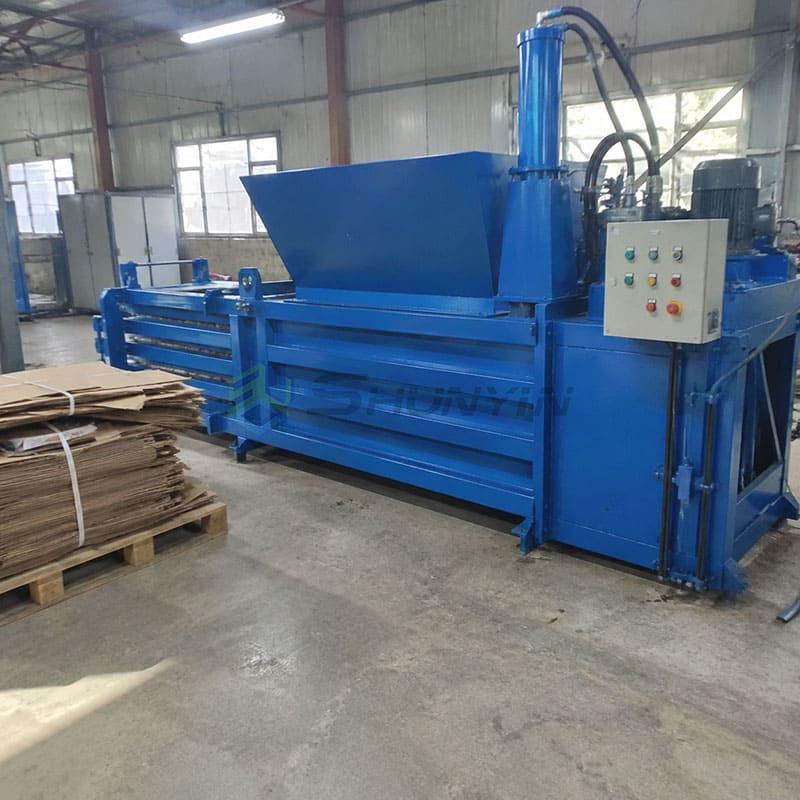
A brand name alone cannot confirm whether a cardboard baler will perform well in a specific facility. I prefer to begin with the application and work backward. The following criteria can help purchasing managers, engineers, and distributors create a practical shortlist without relying on unsupported rankings.
How Should I Compare the Top Cardboard Baler Manufacturers?
Comparing the top cardboard baler manufacturers becomes difficult when quotations use different machine configurations and technical definitions. A low initial price can look attractive, but an incomplete specification may hide additional labor, conveyors, electrical changes, installation costs, or spare-parts requirements. I recommend standardizing the application before comparing offers.
A buyer should compare cardboard baler manufacturers by material type, hourly throughput, bale size and weight, bale density, feed method, automation level, labor needs, power supply, installation space, and service capability. I also recommend reviewing the machine structure, hydraulic system, control components, safety documentation, warranty boundaries, delivery scope, and total operating cost.
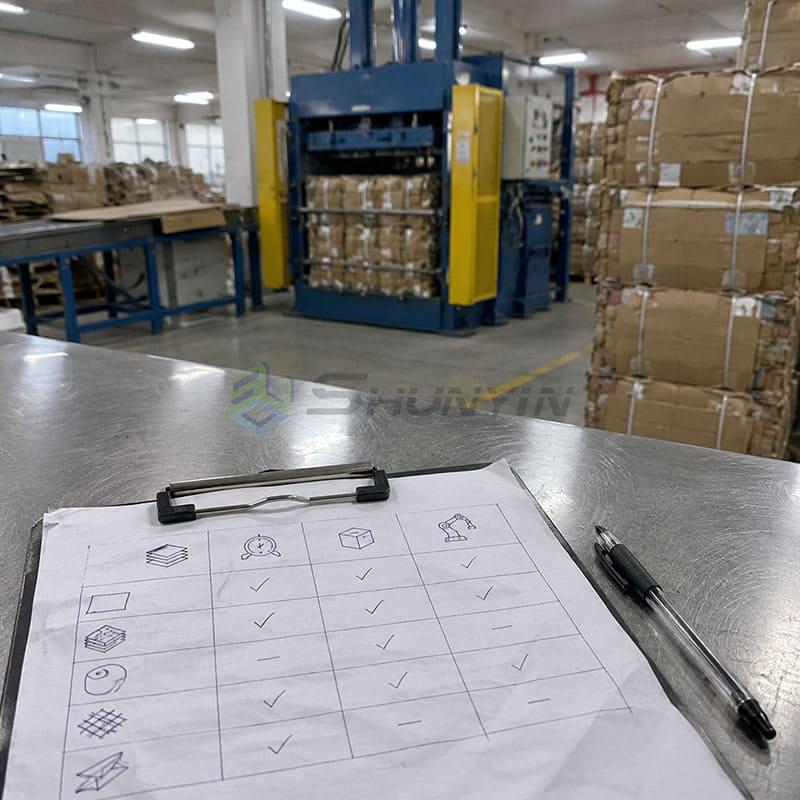
Start With the Cardboard, Not the Machine
I often see inquiries that begin with a request such as “Send me your 100-ton baler price.” That request sounds specific, but compression force alone does not define a suitable machine.1 I would first clarify what the customer means by cardboard and how the material reaches the baler.
For example, an operation may process:
- Loose old corrugated containers, commonly called OCC2
- Flattened cartons from a warehouse
- Corrugated production trim
- Mixed paper and cardboard
- Coated packaging waste
- Shredded cardboard
- High-moisture or contaminated material
These materials have different feeding and compression characteristics. Loose cartons can bridge inside a small feed opening. Production trim may require a continuous conveyor. Mixed material can produce less consistent bale weights. Moisture can affect bale density, storage, and downstream acceptance.3
Define the Required Output
I recommend giving every shortlisted supplier the same operating data. A basic request for quotation should include:
- Material composition: State the percentage of OCC, paper, film, or other materials.
- Material condition: Explain whether cartons are flattened, loose, shredded, wet, or contaminated.
- Hourly and daily volume: Provide both typical and peak figures.
- Operating schedule: State the number of shifts and hours per day.
- Target bale specification: Include preferred dimensions, weight range, and tying method.
- Available labor: Explain how many operators can feed and manage the machine.
- Site limits: Provide door sizes, ceiling height, floor details, and installation drawings.
- Electrical supply: Confirm voltage, frequency, phase, and applicable local requirements.
- Downstream requirements: Identify truck, container, warehouse, or recycler constraints.
I have found that buyers sometimes describe volume in truckloads or monthly tonnage. Those figures help, but they do not show peak feeding demand. A facility handling 80 tonnes per month in short production bursts may need a different baler from a facility processing the same weight steadily.4
Use a Common Comparison Table
I suggest converting each quotation into a table like the one below.
| Evaluation item | What I would request | Why it matters |
|---|---|---|
| Rated throughput | Material-specific estimate and test conditions | Theoretical capacity may differ from operating output5 |
| Main compression force | Rated force and hydraulic design basis | Force affects compaction but does not determine performance alone |
| Bale size | Fixed or adjustable dimensions | Bale dimensions affect storage and transport |
| Bale weight | Expected range for the stated material | Weight changes with material and operating conditions |
| Feeding system | Manual, conveyor, loader, or air-fed | Feeding can become the production bottleneck |
| Tying system | Manual or automatic; wire or strap details | Tying affects labor and bale handling |
| Motor and power | Installed power and expected operating pattern | Power affects electrical planning and operating cost |
| Control system | Functions, language, diagnostics, and component details | Controls influence operation and troubleshooting |
| Delivery scope | Machine, conveyor, cooler, tools, and spare parts | Missing items can increase final project cost |
| Support | Installation, training, remote service, and parts process | Support reduces commissioning and downtime risk |
I would not select among the top cardboard baler manufacturers from a single specification. I would score the complete system against the actual operation.
How Can I Verify the Top Cardboard Baler Manufacturers?
Supplier identity is a major concern in international equipment procurement. A polished website does not prove that a company designs or manufactures the equipment it offers.6 However, I do not assume that every intermediary is unsuitable. I recommend verifying each supplier’s role, responsibilities, and technical capability through neutral evidence.
Buyers can verify the top cardboard baler manufacturers by reviewing company registration details, factory videos, production equipment, engineering drawings, quality-control records, machine identification, and live technical communication. I also recommend requesting a video factory inspection, relevant project references where available, and documents that clearly identify who manufactures, sells, warrants, and supports the baler.
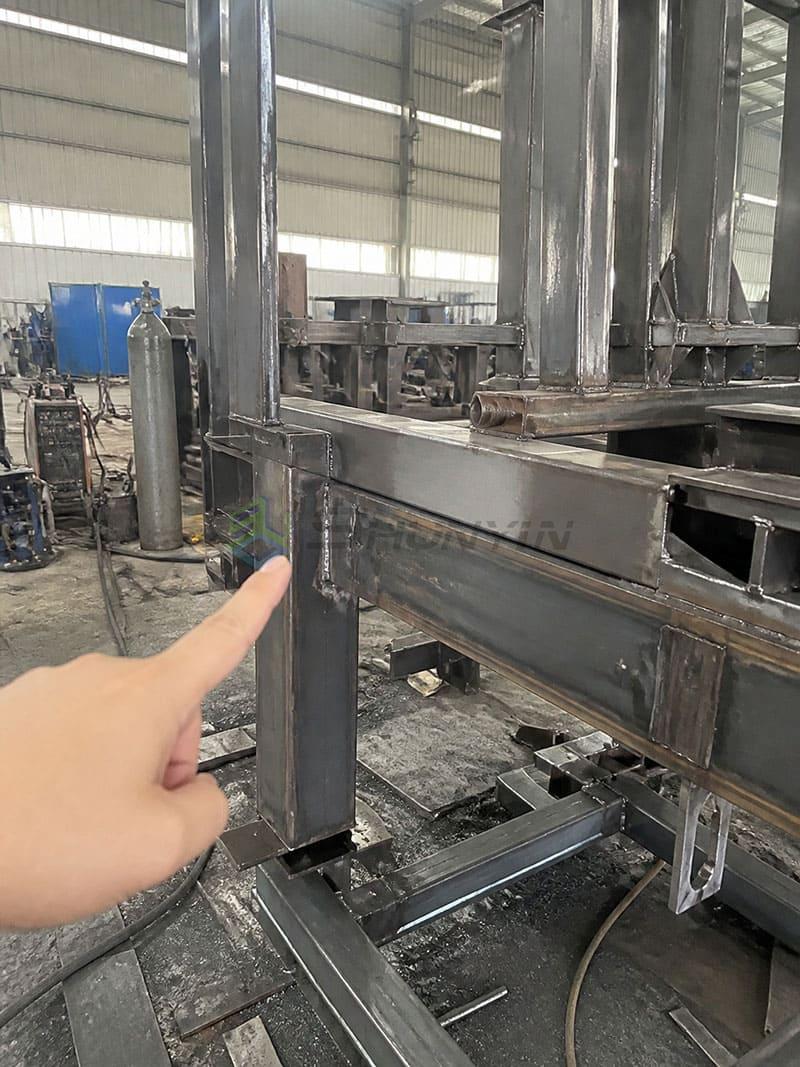
Look for Consistent Manufacturing Evidence
As a cardboard baler manufacturer and exporter, we expect serious buyers to ask detailed questions about our production process. I view this verification as normal procurement practice rather than a sign of mistrust.
I suggest requesting evidence across several stages:
- Raw-material preparation
- Steel cutting and forming
- Welding and frame assembly
- Hydraulic cylinder installation
- Hydraulic piping
- Electrical cabinet assembly
- Machine painting
- No-load testing
- Material testing when applicable
- Packing and container loading
A single factory photograph provides limited evidence. I prefer a live video call or a dated video that follows the machine through identifiable production areas. Buyers can ask the presenter to show the factory exterior, current machines, serial plates, welding areas, component storage, and test procedures.
The supplier should also explain which work it performs internally and which processes it outsources. Outsourcing is not automatically a quality problem. The important issue is whether the supplier controls specifications, incoming inspection, traceability, and final acceptance.7
Test the Engineering Conversation
The questions a supplier asks can reveal as much as the answers it gives. When we receive a cardboard baler inquiry, we normally need application details before recommending a configuration. A quotation issued without questions may be based on assumptions that the buyer has never approved.
I would expect a competent supplier to ask about:
- Material type and bulk density
- Peak and average feeding rates
- Required bale dimensions
- Target bale weight
- Container or truck loading plans
- Manual versus automatic tying
- Conveyor width and length
- Hopper dimensions
- Ambient temperature
- Dust and moisture conditions
- Electrical standards
- Local safety requirements
- Integration with existing lines
I recall reviewing anonymized inquiries in which two buyers requested similar horizontal cardboard balers. One type of inquiry came from a warehouse with intermittent carton accumulation and limited labor. Another came from a packaging operation with continuous production trim. Although the requested compression force appeared similar, the feeding pattern and automation priorities were different. I would not treat those projects as interchangeable.
This example reflects our inquiry experience, not an independent performance test or a guaranteed outcome. Final sizing should rely on confirmed project data and, when needed, qualified engineering evaluation.
Verify Documents Instead of Accepting Labels
Buyers often ask whether a machine is “certified.” I recommend asking a more precise question: Which documents apply to this exact model, configuration, and destination market?
Depending on the project, buyers may need to review:
- Declaration or certificate details
- Applicable standards
- Electrical schematics
- Hydraulic diagrams
- Component lists
- Risk assessment documentation
- Operation and maintenance manuals
- Inspection records
- Factory acceptance test criteria
- Machine serial and nameplate information
Certification requirements can change by country and application.8 I advise buyers to verify every document with the issuing or responsible organization and consult a qualified local professional before importation or installation.
What Configurations Should Top Cardboard Baler Manufacturers Offer?
A manufacturer does not need an unlimited catalog to serve every buyer. However, it should be able to explain why a vertical baler, semi-automatic horizontal baler, or fully automatic baling system fits the project. I become cautious when every application receives the same recommendation regardless of material flow or labor conditions.
The top cardboard baler manufacturers should offer configurations that address different material volumes, feed methods, bale requirements, and automation targets. Buyers commonly compare vertical balers, closed-door horizontal balers, and automatic channel balers. The correct option depends on throughput, available space, operator involvement, bale logistics, and integration with upstream equipment.
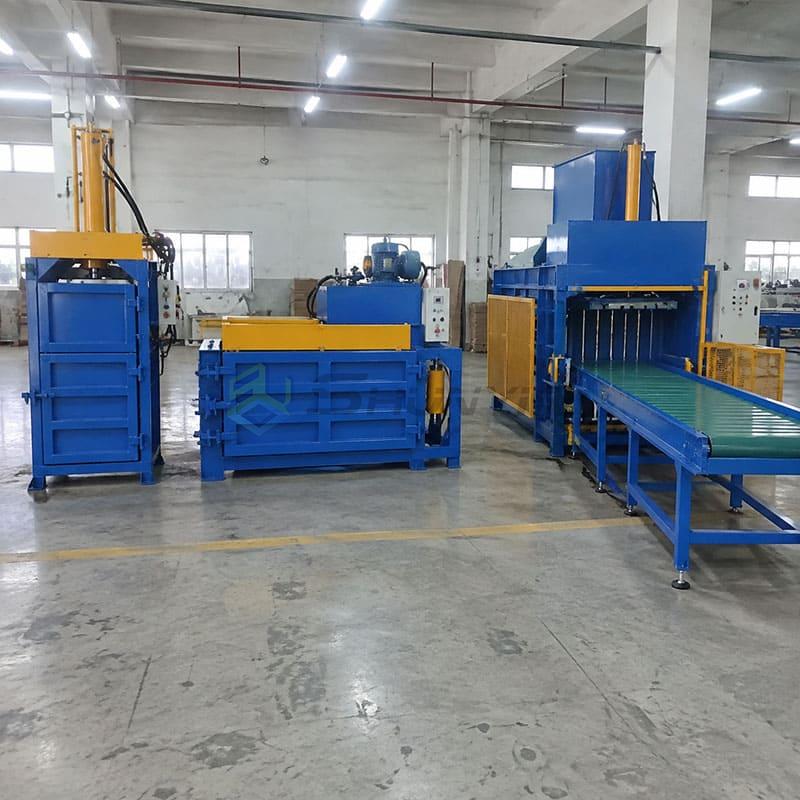
Compare the Main Baler Categories
| Baler type | Common application profile | Main advantages | Points I would verify |
|---|---|---|---|
| Vertical cardboard baler | Lower or intermittent volume | Small footprint and simpler operation | Chamber size, manual handling, tying process, and bale removal |
| Closed-door horizontal baler | Medium-volume batch processing | Larger feed opening and denser output potential | Door cycle, manual tying, feeding labor, and floor space |
| Semi-automatic horizontal baler | Regular industrial cardboard flow | Balance between capacity and investment | Operator tasks, tying time, and conveyor control |
| Automatic channel baler | Continuous, higher-volume operation | Automated feeding and tying | Material consistency, line integration, controls, and service needs |
I use these categories as a starting point, not a universal sizing rule. Actual output depends on the machine design, material condition, operator practices, and feeding system.9
Treat the Feeding System as Part of the Baler
A powerful baler cannot achieve its expected throughput if material reaches it too slowly.10 For that reason, I ask buyers to consider the baler, conveyor, hopper, controls, and discharge area as one system.
Common feeding options include:
- Hand loading
- Forklift or loader feeding
- Pit-mounted conveyor feeding
- Above-floor conveyor feeding
- Sorting-line integration
- Air-conveyed production trim
- Shredder-to-baler integration
Each option creates different safety, layout, and maintenance requirements. A manual system may have a lower initial cost, but it can create higher labor demand. A conveyor can improve flow, but its speed, width, incline, sidewalls, and controls must match the material.
Ask What “Customized” Really Means
Many suppliers use the word customized. I recommend defining the exact customization scope in writing. Meaningful cardboard baler customization may include:
- Feed opening dimensions
- Hopper shape
- Conveyor size and layout
- Bale dimensions
- Tying arrangement
- Motor voltage and frequency
- Control language
- Oil cooling or heating provisions
- Guarding and access platforms
- Integration signals
- Wear-part selection
- Paint and labeling requirements
Some changes are simple production options. Others require structural or control engineering. I would ask the manufacturer to identify which modifications are proven options and which require new design validation.
I also recommend requesting updated general arrangement drawings before production. The buyer, supplier, building contractor, and electrical installer should review the same version. This step helps prevent disagreements over floor space, conveyor position, maintenance access, and power connections.
How Should Top Cardboard Baler Manufacturers Provide After-Sales Support?
A cardboard baler is a long-term industrial asset, so the supplier relationship should continue after shipment. Weak support can turn a minor sensor, valve, or control issue into extended downtime.11 I recommend evaluating the service process before placing the order rather than negotiating it after a machine stops.
Top cardboard baler manufacturers should define installation responsibilities, commissioning support, training, warranty coverage, response channels, remote diagnostics, spare-parts supply, and destination-country limitations. Buyers should request these commitments in the contract. They should also identify critical wear parts and confirm who will provide local electrical, hydraulic, and mechanical assistance when on-site support is unavailable.
Clarify Installation Responsibilities
The word “installation” can describe very different service scopes. A supplier may provide drawings and remote guidance, send a technician, or work with a local service partner. I would ask for a responsibility matrix covering:
| Task | Buyer | Supplier | Local contractor |
|---|---|---|---|
| Foundation preparation | Confirm responsibility | Confirm responsibility | Confirm responsibility |
| Machine unloading | Confirm responsibility | Confirm responsibility | Confirm responsibility |
| Mechanical assembly | Confirm responsibility | Confirm responsibility | Confirm responsibility |
| Electrical connection | Confirm responsibility | Confirm responsibility | Confirm responsibility |
| Hydraulic oil filling | Confirm responsibility | Confirm responsibility | Confirm responsibility |
| Conveyor alignment | Confirm responsibility | Confirm responsibility | Confirm responsibility |
| Commissioning materials | Confirm responsibility | Confirm responsibility | Confirm responsibility |
| Operator training | Confirm responsibility | Confirm responsibility | Confirm responsibility |
I recommend replacing every “confirm responsibility” entry before contract approval. The parties should also specify travel costs, visas, accommodation, daily service charges, tools, and expected site readiness where on-site technicians are involved.
Examine Warranty Boundaries
A warranty headline has limited value without its terms. I would verify:
- Warranty start and end dates
- Covered machine components
- Excluded wear parts
- Labor responsibility
- International freight responsibility
- Diagnostic procedure
- Evidence required for a claim
- Treatment of third-party components
- Effect of unauthorized modification
- Response and replacement process
A longer warranty is not automatically better if the claims process is unclear. I prefer specific responsibilities and realistic support channels.
Build a Spare-Parts Plan
I advise buyers to divide parts into three groups:
- Consumable or wear parts: Items expected to require periodic replacement.
- Critical downtime parts: Components that can stop production and may have long delivery times.
- Standard local parts: Components that a buyer may be able to source in the destination market.
The supplier should provide part numbers, specifications, drawings where appropriate, and recommended stocking quantities. Buyers should confirm whether replacement components are proprietary or commercially available.
At Shunyin Machinery, we present ourselves as a candidate for projects where our manufacturing scope, available customization, and export support fit the buyer’s requirements. I do not claim that this makes us universally superior. I encourage customers to verify our current capabilities, documentation, delivery scope, warranty, and destination-specific support during procurement.
Frequently Asked Questions
Is a higher compression force always better for cardboard?
No. I consider compression force only one part of baler selection. Feed opening, chamber design, hydraulic cycle, bale dimensions, tying method, material condition, and feeding speed also affect performance. An oversized machine may increase purchase and power requirements without solving the buyer’s actual bottleneck.
Should I buy a vertical or horizontal cardboard baler?
I usually recommend a vertical baler for lower or intermittent volumes and a horizontal baler for larger or more continuous flows.12 However, available labor, floor space, bale handling, feed method, and growth plans can change the choice. I would confirm these variables before requesting a final quotation.
How can I confirm a supplier is the actual manufacturer?
I suggest checking company records, requesting a live factory tour, reviewing production areas, and discussing drawings directly with technical staff. Buyers can also request quality records, machine nameplate details, manufacturing schedules, and contract language identifying the producer, seller, warranty provider, and after-sales contact.
What information should I send to cardboard baler manufacturers?
I would send material photographs or videos, composition, hourly and daily volume, operating hours, target bale size and weight, preferred automation, available labor, power supply, floor plan, feed method, and destination country. Better input allows manufacturers to prepare more comparable and application-specific proposals.
How many cardboard baler quotations should I compare?
I normally recommend comparing several qualified proposals rather than collecting many unverified prices. Buyers should give each supplier the same project information and use a weighted scorecard. The evaluation should cover technical fit, manufacturing evidence, service, delivery scope, commercial terms, and lifecycle risk.
Conclusion
The top cardboard baler manufacturers cannot be identified through a universal ranking. I believe the right manufacturer is the one that can document a genuine production process, understand your cardboard flow, recommend an appropriate configuration, and support the equipment after shipment. Buyers should verify technical claims, factory evidence, safety documents, warranty boundaries, and spare-parts plans before ordering. If you are evaluating a vertical or horizontal cardboard baler, contact Shunyin Machinery with your material details, capacity target, bale requirements, and site layout for an application-based proposal.
"High-pressure Compaction & Bailing Of Solid Waste", https://nepis.epa.gov/Exe/ZyPURL.cgi?Dockey=2000PVVW.TXT. Compaction studies indicate that final density is influenced by interacting variables such as applied pressure, material composition, moisture, and loading conditions; this supports treating nominal compression force as only one selection parameter, although laboratory compaction results do not directly establish the suitability of a specific commercial baler. Evidence role: mechanism; source type: paper. Supports: Compaction research should show that resulting density and performance depend on material properties, pressure, loading method, and other operating variables.. Scope note: General compaction research provides the mechanism but does not directly compare particular cardboard baler models. ↩
"Paper Grades and Collection | Paper Recycling | US EPA", https://archive.epa.gov/wastes/conserve/materials/paper/web/html/grade.html. Government waste-management documents use “OCC” as an abbreviation for old corrugated containers, a recovered-paper category consisting primarily of used corrugated packaging. Evidence role: definition; source type: government. Supports: An environmental or waste-management authority should confirm that OCC is the standard abbreviation for old corrugated containers.. ↩
"Recycling in Federal Offices: Resource Materials", https://nepis.epa.gov/Exe/ZyPURL.cgi?Dockey=900X0A00.TXT. Research on paper-based materials and recovered-paper quality specifications identifies moisture as a factor affecting measured mass, mechanical behavior, storage conditions, and compliance with purchaser limits; exact acceptance thresholds vary among mills and contracts. Evidence role: mechanism; source type: research. Supports: Research or recovered-paper specifications should document how moisture changes paper mass, mechanical behavior, storage risk, or compliance with processor quality limits.. Scope note: The effect is well established in context, but downstream acceptance limits are buyer- and market-specific. ↩
"Capacity Planning for Production", https://online.aurora.edu/capacity-planning/. Capacity-planning literature distinguishes average demand from peak load and shows that variability in arrivals can alter required processing capacity and queueing performance; this principle supports the example, although it does not determine a baler size without project-specific flow data. Evidence role: mechanism; source type: education. Supports: Operations and material-handling literature should establish that equipment capacity must account for peak flow and variability rather than average volume alone.. Scope note: The source would support the general capacity-planning principle rather than the article's illustrative 80-tonne scenario directly. ↩
"A Hierarchical structure of key performance indicators for ...", https://tsapps.nist.gov/publication/get_pdf.cfm?pub_id=919754. Manufacturing-performance frameworks distinguish rated capacity from realized throughput because availability losses, operating-speed variation, stoppages, and input conditions affect actual output; the size of this difference remains specific to the machine and operating environment. Evidence role: general_support; source type: research. Supports: Manufacturing-performance research should show that actual output is reduced or altered by operating speed, interruptions, setup, material variation, and equipment availability.. Scope note: General manufacturing metrics support the distinction but do not quantify the capacity gap for cardboard balers. ↩
"Supply Chain Management Guidance - Public Documents", https://thedocs.worldbank.org/en/doc/1c3b517f003b53a2e2e170e93124be84-0290032023/original/World-Bank-Supply-Chain-Management-Guidance.pdf. International procurement guidance evaluates suppliers through legal registration, financial standing, technical capability, experience, and production resources rather than marketing presentation alone; such checks reduce uncertainty but cannot by themselves prove future performance. Evidence role: expert_consensus; source type: institution. Supports: Public procurement guidance should establish that supplier qualification requires documentary and technical verification beyond marketing materials.. Scope note: Supplier qualification establishes evidence of capability, not a guarantee that a particular contract will be performed successfully. ↩
"Supply Chain Traceability Principles: A Manufacturing Meta ...", https://tsapps.nist.gov/publication/get_pdf.cfm?pub_id=962361. ISO 9001 requires organizations to control externally provided processes, products, and services according to their potential effect on conformity, supporting the view that outsourcing is compatible with quality management when appropriate controls are applied; the standard does not certify the quality of any individual baler. Evidence role: expert_consensus; source type: institution. Supports: A recognized quality-management framework should require organizations to define and apply controls to externally provided processes, products, and services.. Scope note: Compliance with a quality-management framework does not independently demonstrate product quality or effective implementation at a specific factory. ↩
"OSHA requirements for individuals interested in ...", http://www.osha.gov/laws-regs/standardinterpretations/2016-07-14-1. Official machinery-conformity guidance ties applicable obligations to the destination market, machine classification, configuration, and intended use; requirements described for one jurisdiction therefore should not be assumed to apply unchanged elsewhere. Evidence role: general_support; source type: government. Supports: Official machinery-safety guidance should show that conformity procedures depend on the governing jurisdiction, equipment category, configuration, and intended use.. Scope note: A source from one jurisdiction illustrates regulatory variation but cannot summarize every destination country's requirements. ↩
"Influence of the Feed Moisture, Rotor Speed, and Blades Gap ...", https://pmc.ncbi.nlm.nih.gov/articles/PMC3920810/. Studies of compaction and production systems show that realized throughput depends on equipment cycle characteristics, input properties, feeding continuity, and operating practices; this supports the stated factors but does not provide a universal output formula for all cardboard balers. Evidence role: mechanism; source type: paper. Supports: Research on baling, compaction, or production systems should show that throughput arises from interactions among machine cycles, feed rate, material properties, and operating practices.. Scope note: The supporting literature may address compaction or material-handling systems generally rather than the exact baler configurations discussed. ↩
"A Throughput-Based Technique for Identifying Production ...", https://scholarsjunction.msstate.edu/cgi/viewcontent.cgi?article=1331&context=td. Production-systems research holds that line output is constrained by bottlenecks and material availability, so downstream rated capacity cannot be realized when upstream feeding is insufficient; this is a general systems principle rather than a measured result for a particular baler. Evidence role: mechanism; source type: education. Supports: Operations research should establish that line throughput is constrained by the slowest effective stage or by inadequate input flow.. Scope note: The principle explains the mechanism but does not quantify how a specific conveyor or hopper will affect baler output. ↩
"Optimal spare parts management for vessel maintenance ...", https://pmc.ncbi.nlm.nih.gov/articles/PMC6394336/. Maintenance research identifies fault diagnosis, technician access, documentation, and spare-parts logistics as contributors to repair duration and equipment availability; consequently, a small component fault may cause prolonged downtime when support resources are unavailable, although the actual delay is site-specific. Evidence role: mechanism; source type: paper. Supports: Maintenance and reliability research should show that diagnostic delay, repair resources, and spare-parts lead times influence mean time to repair and equipment availability.. Scope note: The literature supports the maintenance mechanism but does not establish that every sensor, valve, or control failure will result in extended downtime. ↩
"SELCO BALERS INSTRUCTION MANUAL", https://old.lytlesrebc.edu/journal/py0pCU4AD155/Selco_Balers_Instruction_Manual. Waste-management guidance commonly characterizes vertical balers as suitable for smaller or intermittent waste streams and horizontal balers as better adapted to higher-volume or continuous handling; these are general application profiles rather than universal sizing rules. Evidence role: general_support; source type: education. Supports: University or public-sector waste-management guidance should describe the typical volume and feeding profiles associated with vertical and horizontal balers.. Scope note: Actual selection also depends on material, labor, space, bale specifications, and the design of the individual machine. ↩