

When it comes to material processing equipment, the similarities between balers and hydraulic presses can cause confusion for buyers. While both machines use hydraulic pressure, a baler is not simply a hydraulic press1. Instead, it’s an application-specific machine built to compress, bind, and discharge bales efficiently based on material type and workflow requirements.
A baler and a hydraulic press differ fundamentally in function and design. While a hydraulic press generates force for shaping, compressing, or bending materials, a baler handles multiple tasks tailored to waste or recycling processes, including feeding, compression, bale formation, and discharge. Choosing between them depends on your material type and application needs.
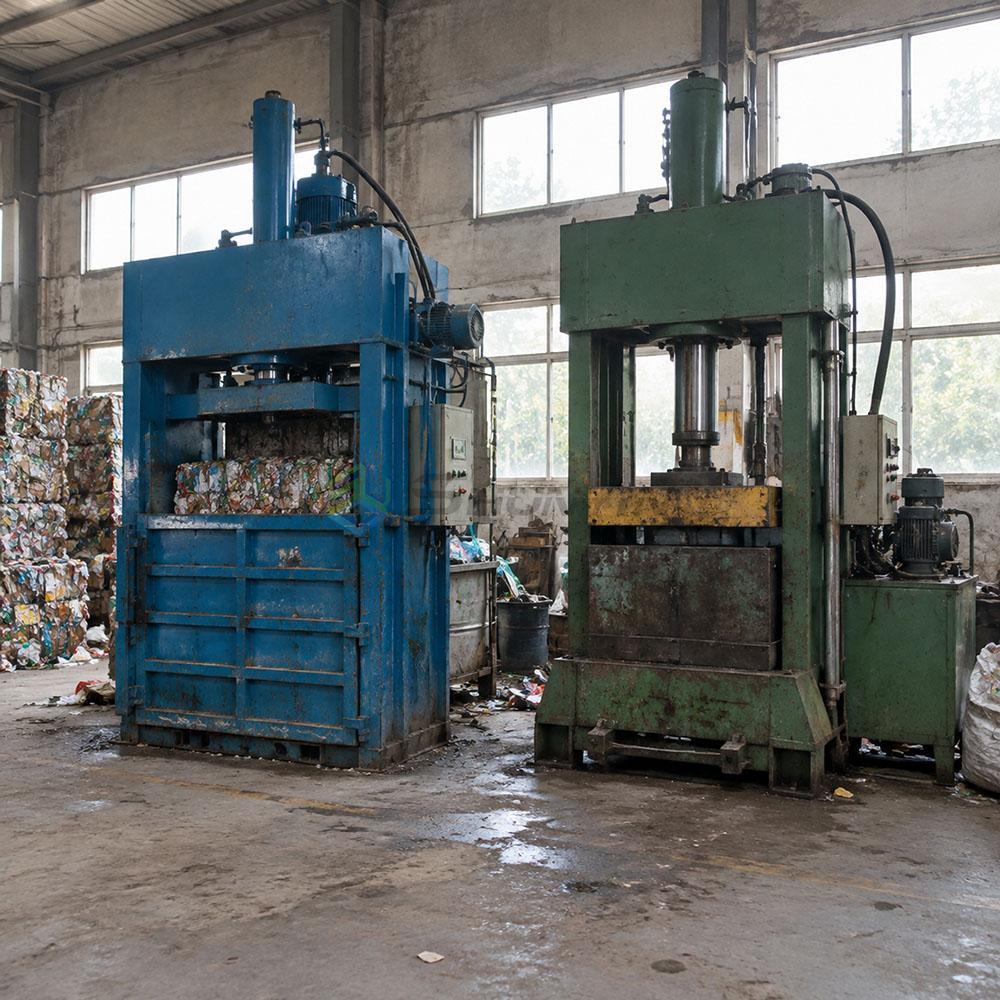
Understanding the distinction between these machines requires separating working principle from functional purpose. Let’s dive deeper into why a baler cannot be reduced to the same category as a hydraulic press and how buyers should approach equipment selection.
What is the working principle: Hydraulic pressure or specialized tasks?
Both balers and hydraulic presses often share hydraulic systems that generate compressive force, but their purposes diverge.
Hydraulic pressure enables both balers and presses to exert force2, but a baler integrates this principle into a full workflow tailored for recycling applications. A press simply creates force for tasks like stamping, bending, or compacting without addressing the baling process.
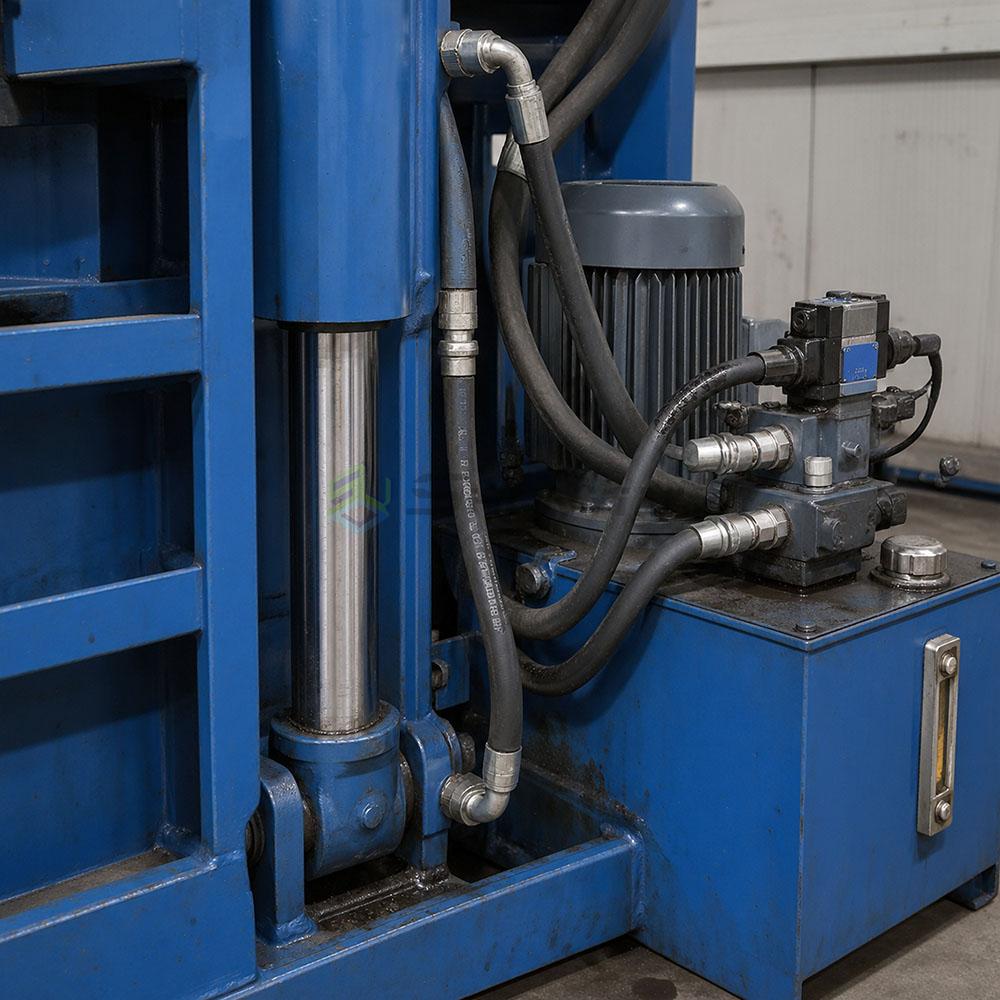
Breakdown of Functionality
Balers are purpose-built machines designed for recycling or waste management tasks:
- Feeding: Materials like cardboard, plastic, or scrap metal are manually or automatically loaded into a baling chamber.
- Compression: Hydraulics compact materials into dense bale shapes.
- Bale Formation and Tying: The baled material is tied or bound using wires or straps.
- Discharge: Finished bales are ejected efficiently for handling or transport.
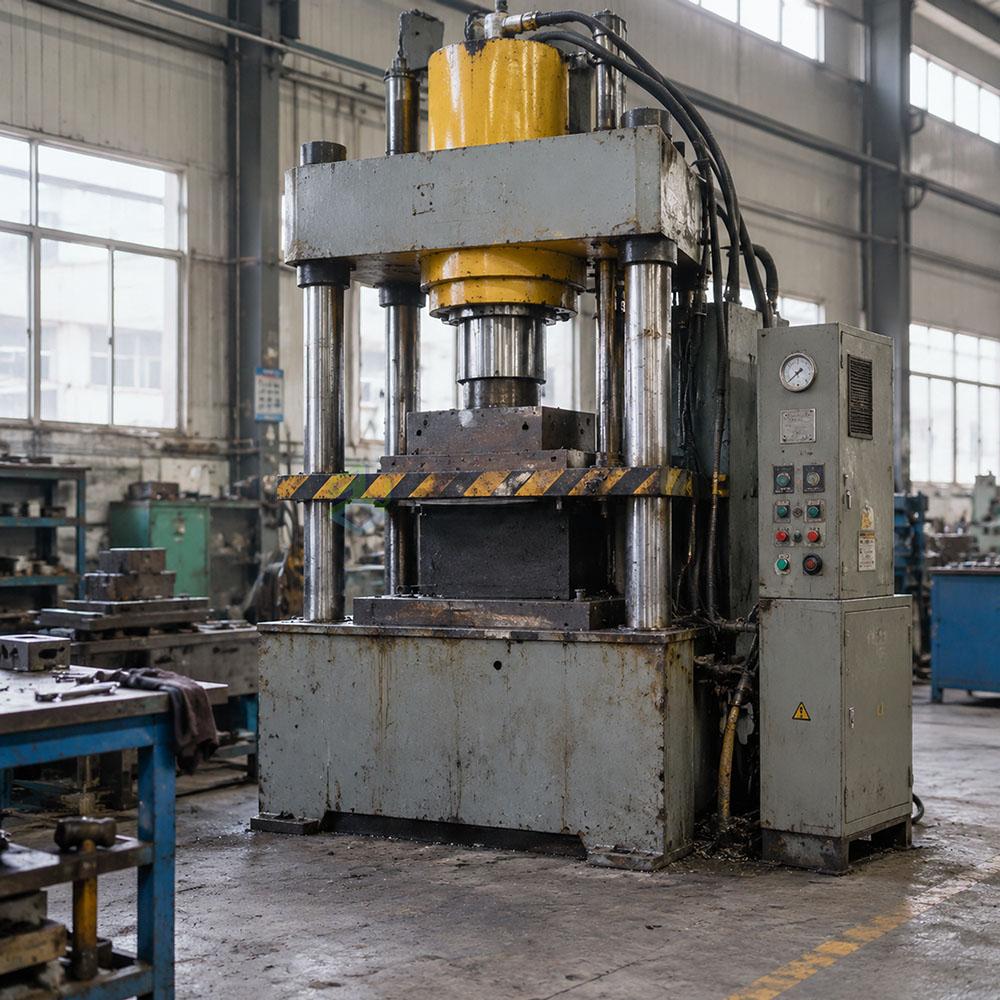
In contrast, a hydraulic press operates differently:
- Force Application: A hydraulic press uses pressure to perform shaping, stamping, or compacting work on metal or other solid materials.
- No Binding or Workflow Integration: It cannot execute end-to-end tasks required in waste management or recycling.
Despite overlapping principles of hydraulic force generation, a baler’s design and configuration are far more specialized. The tasks go beyond mere compression to create workflow efficiency for recyclers.
Is a general hydraulic press suitable for waste baling?
Not necessarily. Buyers must evaluate more than just the machine’s ability to compress; they need to assess material handling requirements and operational efficiency.
While a hydraulic press can technically compress waste, it lacks the integrated features of a baler. Without feeding systems, bale binding mechanisms, discharge capabilities, or automation options, hydraulic presses fall short of the practical needs of recycling operations.
Why Balers Are Purpose-Built for Recycling
- Material Versatility: Balers are tailored to specific materials like OCC/cardboard, plastic bottles, textile waste, or scrap metals3.
- Bale Density: Balers produce compact, dense bales that optimize transportation and storage efficiently4.
- Automation Capability: Semi-automatic and fully-automatic balers minimize labor costs and maximize throughput.
- Workflow Efficiency: Integrated material handling, tying, and discharge systems support seamless operation.
Hydraulic presses, by contrast, are often generic machines focused on compression tonnage without addressing specific recycling goals. For businesses that handle large volumes of recyclable waste or require mechanized workflows, substituting a hydraulic press for a baler would severely compromise efficiency.
How should buyers approach baler selection?
The key to choosing the right equipment begins with the material you’re processing, not the machine category.
Start by asking: "What material am I compressing?" Then assess machine attributes like automation level, bale specifications, daily throughput capacity, and feeding methods to ensure compatibility with your recycling workflow.
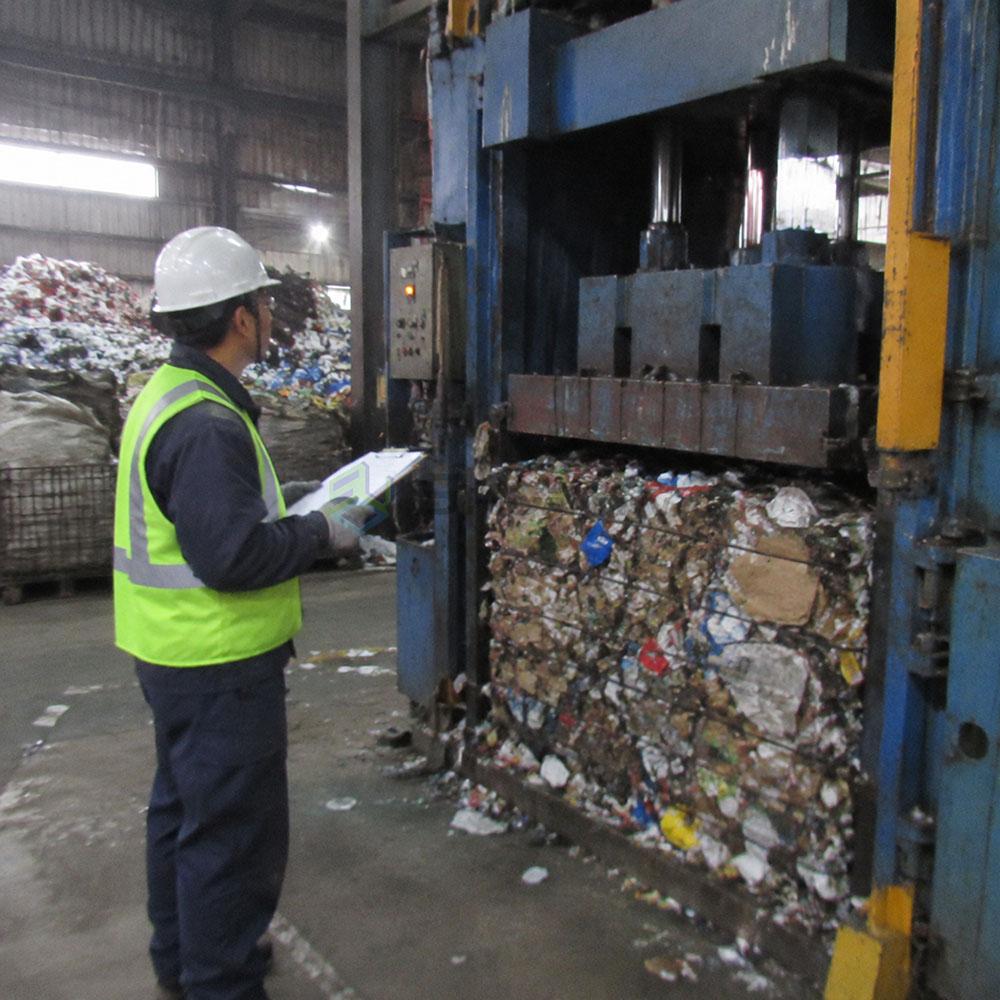
Detailed Factors to Evaluate
- Material Type: Identify whether you’re compressing OCC, plastic bottles, textile waste, or larger items like scrap metal.
- Certain balers are optimized for specific material types. For example, a PET bottle baler may include special configurations to enhance compaction.
- Volume/Capacity: Calculate your daily or hourly processing needs in tons or cubic meters.
- Bale Specifications: Determine the required bale size, density, and weight for optimal storage and transport.
- Feeding Method: Choose between manual, conveyor-fed, or hopper-fed options based on material handling efficiency.
- Automation vs. Manual Operation: Decide whether semi-automatic or fully-automated balers benefit your workflow most.
- Power Consumption: Assess energy requirements based on your facility’s capacities and operational goals.
Purchasing decisions should always focus on matching machine functionality to your specific recycling operation. While hydraulic pressure matters, buyers should evaluate how the equipment integrates this principle into a complete baling process.
Why this distinction matters for buyers?
Understanding the difference between balers and hydraulic presses prevents costly mistakes when investing in recycling equipment.
Misclassifying a baler as interchangeable with a hydraulic press can lead to operational inefficiencies and failed objectives. Buyers risk losing both productivity and material throughput5 if they purchase equipment unsuited for their workflow.
Balers are not one-size-fits-all equipment6
To illustrate, a customer recently inquired about using a high-tonnage hydraulic press for compacting waste textiles. While the press could technically compress the material, it lacked features for binding and bale discharge. The absence of workflow integration meant they would manually extract compressed materials, losing efficiency compared to a textile baler designed for automated binding and discharge.
A similar pitfall occurs when buyers rely solely on tonnage ratings, assuming higher pressure guarantees functionality. Waste materials like OCC or plastic film require specific chamber designs and feeding configurations for successful baling—not just raw force output.
Ultimately, assigning purpose-built machines like balers to recycling workflows ensures materials are processed cleanly, efficiently, and at optimized cost.
Frequently Asked Questions
Are all balers hydraulic-driven?
No, not all balers use hydraulic systems. Certain entry-level or low-capacity balers, such as hand-operated vertical balers, may operate mechanically. However, most industrial-grade balers, particularly horizontal balers and scrap metal balers, rely on hydraulics for powerful compression.
Can a hydraulic press bind and eject waste material?
No, hydraulic presses lack functionality for tying or binding bales and ejecting finished products. A baler, in contrast, integrates automated bindings and discharge mechanisms specifically designed for recycling workflows.
What is the main advantage of choosing a baler over a hydraulic press?
A baler offers full workflow efficiency—feeding, compressing, binding, and ejection—designed to handle recyclables like paper, plastic, and metals. Hydraulic presses, while capable of compressing materials, fail on workflow integration needed in recycling operations.
Conclusion
While balers and hydraulic presses both use hydraulic systems for compression, the baler is an application-specific machine built for recycling workflows, not a generic pressing tool. Buyers evaluating equipment must focus on material type, bale specifications, throughput, and automation needs—not merely compression force or machine labels. The right baler ensures efficiency in handling tasks like feeding, compression, binding, and bale discharge.
If you're ready to make an informed decision for your recycling operation, contact us now for expert baler selection guidance tailored to your needs!
"What is a Hydraulic Baling Press Machine?", https://sybalingmachine.com/what-is-a-hydraulic-baling-press-machine-3/. According to Encyclopedia Britannica, balers are specialized machines designed for compressing and binding recyclable materials, whereas hydraulic presses are general-purpose tools used for shaping or compressing solid materials. Evidence role: definition; source type: encyclopedia. Supports: The distinction between balers and hydraulic presses based on their functionality and workflow integration.. Scope note: The source provides general definitions but may not address specific workflow differences in detail. ↩
"Hydraulic machinery", https://en.wikipedia.org/wiki/Hydraulic_machinery. Educational resources from engineering institutions explain that hydraulic systems use fluid pressure to generate force, a principle applied in both balers and hydraulic presses. Evidence role: mechanism; source type: education. Supports: The shared use of hydraulic pressure in balers and hydraulic presses for force generation.. Scope note: The explanation may not detail specific applications in recycling or manufacturing contexts. ↩
"Baler", https://en.wikipedia.org/wiki/Baler. Industry research confirms that balers are configured to optimize compression and handling for materials like cardboard, plastics, and textiles. Evidence role: expert_consensus; source type: research. Supports: The material-specific design of balers for recycling applications.. Scope note: The research may not cover all material types mentioned in the claim. ↩
"Round or Square: A Look at Bale Geometry", https://cenusa.iastate.edu/blades-newsletters/round-or-square-look-bale-geometry. Research studies on recycling logistics show that compact bales reduce transportation costs and optimize storage space by increasing material density. Evidence role: statistic; source type: research. Supports: The efficiency gains in transportation and storage due to dense bales produced by balers.. Scope note: The findings may vary depending on material type and bale specifications. ↩
"A systematic review of plastic recycling: technology ... - PMC", https://pmc.ncbi.nlm.nih.gov/articles/PMC12301532/. Institutional case studies highlight productivity losses when hydraulic presses are used for tasks requiring baler-specific features like binding and discharge. Evidence role: case_reference; source type: institution. Supports: The operational inefficiencies caused by using hydraulic presses instead of balers for recycling.. Scope note: The case studies may focus on specific industries or materials. ↩
"Baler", https://en.wikipedia.org/wiki/Baler. Institutional guidelines emphasize that balers must be tailored to the material type and operational requirements of recycling facilities. Evidence role: expert_consensus; source type: institution. Supports: The need for matching balers to specific recycling workflows and material types.. Scope note: The guidelines may not provide detailed examples of customization. ↩